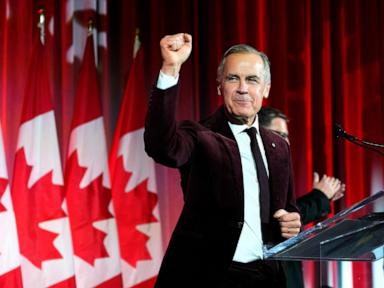
Canada and the United States will initiate formal discussions to review their free trade agreement in mid-January 2024. The announcement came from the office of Canadian Prime Minister Mark Carney, who informed provincial leaders during a meeting. Dominic LeBlanc, Canada’s lead negotiator for U.S.-Canada trade relations, is set to meet with U.S. counterparts to commence these discussions.
The agreement under review is the United States-Mexico-Canada Agreement (USMCA), which is scheduled for a formal review in 2026. This trade pact, negotiated during Donald Trump‘s first term as president, includes a clause that allows for renegotiation at that time. Carney’s discussions with provincial leaders highlighted the importance of these negotiations for Canada, which relies heavily on trade with the U.S., exporting more than 75% of its goods to its southern neighbor.
Background and Economic Context
Trade relations between Canada and the U.S. have faced challenges in recent months. In October 2023, talks to reduce tariffs on certain sectors were halted after an advertisement by the Ontario provincial government criticized tariffs in the U.S. This incident followed a period of tension during which Trump suggested that Canada should consider becoming the 51st U.S. state. Nevertheless, Carney noted that there was progress toward an agreement on sectoral tariff relief for industries such as steel and aluminum prior to the interruption.
Concerns regarding tariffs have significantly impacted various sectors of the Canadian economy, particularly in aluminum, steel, automotive, and lumber industries. Carney remarked that elements flagged by U.S. Trade Representative Jamieson Greer represent a “much bigger discussion” about continental trade. Greer indicated that the upcoming review of the Canada-U.S.-Mexico trade deal will depend on resolving U.S. concerns related to Canadian policies on dairy products, alcohol, and digital services.
Future Trade Dynamics
In a broader context, Canada serves as the top export destination for 36 U.S. states, with nearly $3.6 billion CAD (approximately US$2.7 billion) worth of goods and services crossing the border each day. Canada also supplies around 60% of U.S. crude oil imports and 85% of U.S. electricity imports. Furthermore, Canada is the largest foreign supplier of steel, aluminum, and uranium to the U.S. and possesses 34 critical minerals and metals that are crucial for U.S. national security.
Carney emphasized that access to Canada’s critical minerals is not guaranteed for the U.S. He stated, “It’s a potential opportunity for the United States, but it’s not an assured opportunity. It’s part of a bigger discussion in terms of our trading relationship.” He noted that Canada has other global partners, particularly in Europe, who are also keen to engage in trade discussions.
As discussions commence in January, the outcome will likely shape the economic landscape for both nations, particularly in terms of tariffs and trade policies. Carney and the provincial premiers plan to meet in person in Ottawa early in the new year to further address these matters and strategize on the best approach to the upcoming negotiations.