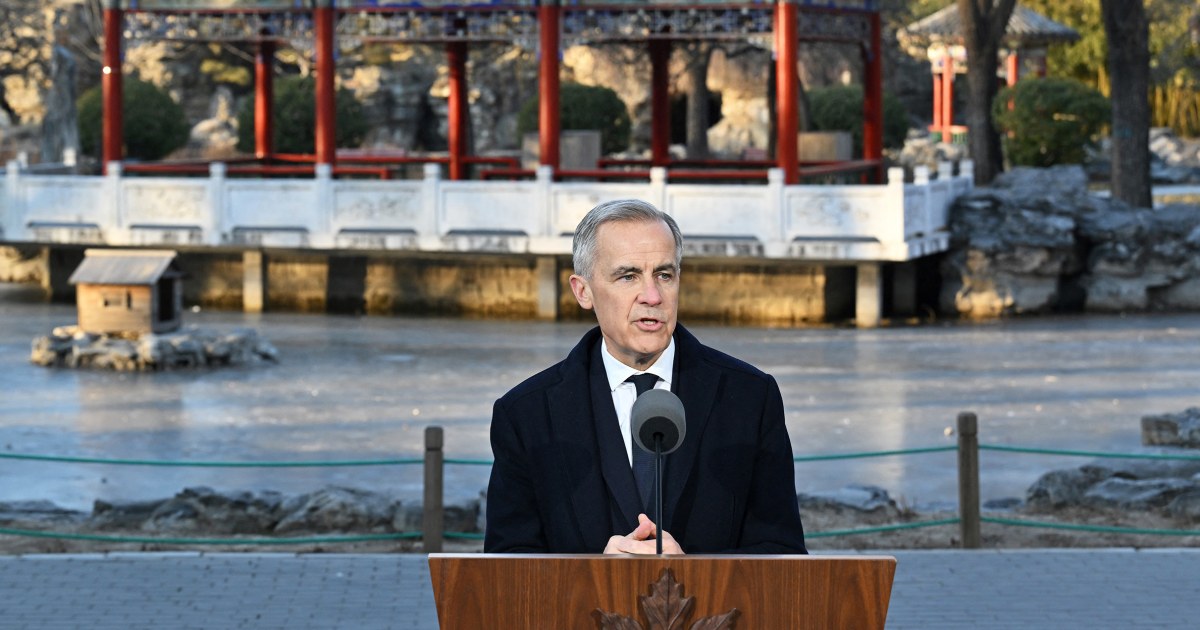
In a significant diplomatic shift, Canada is forging a new strategic partnership with China as its relationship with the United States reaches a historic low. Prime Minister Mark Carney announced this new direction during a visit to Beijing, marking the first time a Canadian prime minister has traveled to China since 2017. The partnership aims to recalibrate trade relations, particularly in light of the tariffs imposed by the U.S., which have adversely affected both the Canadian and Chinese economies.
Changing Dynamics in Trade Relations
During his meeting with President Xi Jinping at the Great Hall of the People, Carney emphasized the importance of a collaborative approach to address global challenges. This newly established partnership includes a commitment to cut Canada’s 100% tariff on Chinese electric vehicles in exchange for reduced tariffs on Canadian agricultural products. This agreement represents a major policy shift for Canada, which has primarily aligned its trade policies with the U.S.
Carney’s visit comes after a period of strained relations between Canada and China, largely due to the detention of two Canadians, Michael Kovrig and Michael Spavor, in 2018. Their arrests followed Canada’s detention of Meng Wanzhou, an executive at Huawei, at the request of U.S. authorities. This diplomatic crisis created a ‘deep freeze’ in relations that lasted until 2021, when Kovrig and Spavor were released shortly after Meng reached a deal with the U.S. Justice Department.
Despite the history of tensions, Carney noted that the current global security landscape is evolving. He acknowledged that while the relationship with the U.S. is deeper, ties with China are now viewed as “more predictable.” This shift in perception is reflected in recent polling data from the Pew Research Center, which indicates that favorable opinions of China among Canadians increased from 21% in 2024 to 34% last year, contrasting sharply with a decline in favorable views of the U.S. during the same period.
Strategic Economic Diversification
As Canada seeks to diversify its trade relationships, officials aim to grow non-U.S. trade by at least 50% over the next decade. Approximately 75% of Canada’s manufactured exports currently go to the U.S., while China accounts for roughly 4%. The Canadian government recognizes the need to broaden its economic partnerships, particularly as imports from China have seen a decline of more than 10% last year.
Carney’s swift visit to China underscores a sense of urgency within the Canadian government to explore alternative trade avenues. Former ambassador Guy Saint-Jacques remarked that demonstrating to the U.S. that Canada has other options could strengthen its negotiating position as discussions regarding the United States-Mexico-Canada Agreement (USMCA) progress.
While Canada acknowledges the complexities of engaging with China, including past experiences with international rule violations, officials are determined to pursue a balanced approach. Carney also raised human rights issues during his discussions, specifically mentioning the recent conviction of Hong Kong democracy activist Jimmy Lai.
As Canada navigates these new relations, the implications of this strategic partnership with China will be closely watched. The evolving geopolitical landscape presents both opportunities and challenges for Canada as it attempts to redefine its role on the global stage.