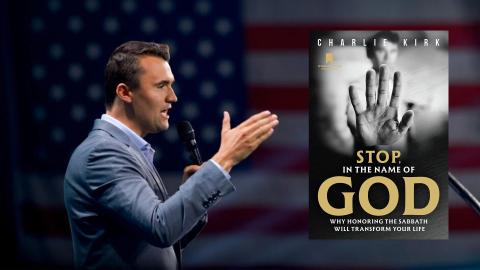
Charlie Kirk’s final book, titled Stop in the Name of God, reflects his profound transformation regarding the observance of the Sabbath. Kirk, a prominent conservative commentator and founder of Turning Point USA, passed away recently, leaving behind a legacy deeply intertwined with his faith and newfound understanding of rest and family life.
Pastor Rob McCoy, a close associate of Kirk, shared insights about the book and its significance. “It’s an amazing book. Charlie was so excited about it being published,” McCoy said. He recalled their time together in South Korea when Kirk signed off on the manuscript, emphasizing how the process of writing the book changed Kirk profoundly.
Kirk often expressed a deep connection to Israel, which he considered one of his most cherished travels. According to McCoy, this connection played a crucial role in Kirk’s understanding of the Sabbath. During a moment of personal crisis, Kirk reached out to his friend Dave Engelhart, who serves on the board at Turning Point. Engelhart prompted Kirk to consider the idea of taking a Sabbath, a practice that would ultimately transform his approach to life.
In Israel, the Sabbath, or Shabbat, is observed from sundown on Friday until sundown on Saturday, during which daily activities largely cease. Micha’el Ben-David, a Messianic Jew residing in the Galilee, described Shabbat as “the Kingdom of Heaven’s deepest secret that’s been hidden in plain sight.” He noted that keeping the Sabbath holy is essential, as it is the fourth commandment in the Bible.
Families in Israel often prepare special meals to celebrate Shabbat. Ben-David explained, “You approach it with great holiness and great reverence, and you acknowledge that God is our provider.” This sense of reverence and family connection resonated with Kirk as he began to research the importance of honoring the Sabbath.
Pastor McCoy elaborated on Kirk’s newfound understanding: “He started to realize that keeping the other commandments is imperative, but it is equally important to honor the Sabbath.” Kirk began to step back from his demanding schedule, turning off his phone and dedicating time to his family. This shift was vital, as McCoy highlighted the detrimental effects of a hectic lifestyle on both Kirk’s health and his relationships.
The observance of the Sabbath also emphasizes blessings and family time. Ben-David described the practice of praying over one’s spouse, saying, “It’s a beautiful thing, and we get to bless the children.” The rituals surrounding Shabbat create an atmosphere of rest and connection, allowing individuals to focus on spiritual and familial relationships.
As Kirk embraced these principles, he began to advocate for the importance of taking a break from the chaos of modern life. On his podcast shortly before his death, he advised listeners struggling with feelings of anxiety or depression to “turn your phone off for one day – no content, no social media, no work.” He emphasized that this simple act could lead to significant improvements in mental health.
Pastor McCoy reflected on the impact of Kirk’s dedication to the Sabbath, stating, “He saw the Sabbath for the man, not man for the Sabbath.” This perspective allowed Kirk to find balance and prioritize his spiritual well-being and family life.
Kirk’s book, set to be published posthumously, is described by McCoy as his “magnum opus.” It captures the essence of his journey towards understanding the importance of rest and spiritual reflection. “Stop in the Name of God” represents not only Kirk’s last work but also a testament to his dedication to a life rooted in faith and family.
As the world continues to navigate the complexities of modern life, Kirk’s message about the transformative power of the Sabbath serves as a reminder of the importance of rest and connection, both with God and with loved ones.