The U.S. Coast Guard has not met its drug interdiction objectives for a decade, primarily due to a significant diversion of resources towards migrant interdiction at sea. This finding comes from a recent report by the Government Accountability Office (GAO), which highlights the Coast Guard’s challenges in balancing its missions over the past ten years.
According to the GAO report published on October 3, 2023, the Coast Guard has struggled to meet its drug interdiction metrics between fiscal years 2015 and 2024. The agency also missed its migrant interdiction targets for six of those years, even after reallocating resources from drug seizure operations to focus on migrant issues. The shift in focus is attributed to several factors, including limited assets, workforce shortages, and rising operational demands.
Resource Allocation and Operational Challenges
The Coast Guard’s decision to redirect assets was partially driven by a shortage of vessels and aircraft, compounded by delays in acquiring new equipment. Between 2020 and 2024, operational availability of medium endurance cutters, crucial for drug interdiction, declined due to equipment failures. Additionally, the service faced difficulties in staffing, ending 2024 with a shortfall of 2,600 service members despite meeting recruitment goals in that fiscal year.
The report highlights that the Coast Guard had to lower its drug interdiction target three times over the decade to make the objectives more achievable. Despite these adjustments, the agency failed to meet its revised targets. The GAO noted that operational challenges were exacerbated by a surge in maritime migration, which peaked between 2022 and 2024, resulting in nearly 70,000 migrants attempting to reach the U.S. through the Caribbean Sea and Florida Straits.
From August 2022 to September 2024, the Coast Guard deployed 80 cutters as part of Operation Vigilant Sentry, which aimed to address both drug and migrant interdiction efforts. Of these, 38 cutters were reassigned from other missions, reflecting the prioritization of migrant interdiction as a “life-saving mission” according to Coast Guard officials.
Impact on Drug Seizures and Future Measures
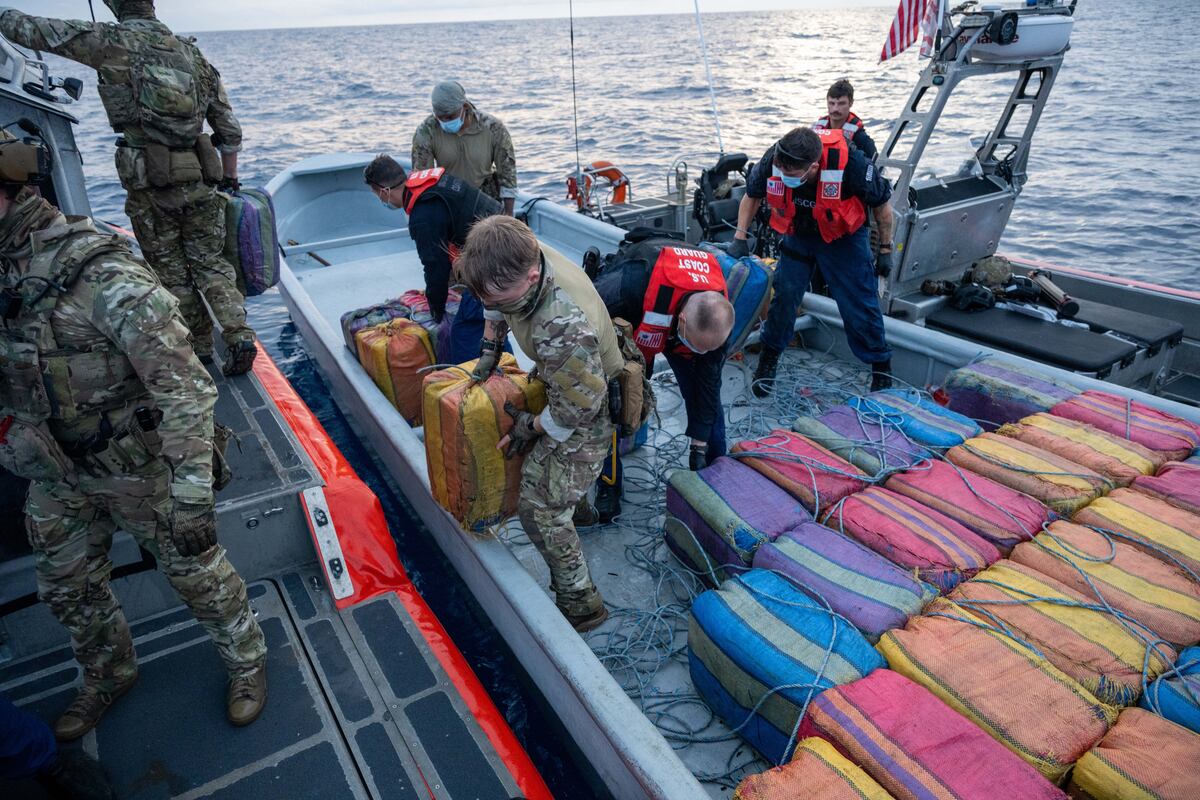
The redirection of resources had a marked impact on drug interdiction efforts. Between 2021 and 2023, operational hours dedicated to migrant interdiction increased by 66%, while those for drug interdiction decreased by 62%. As a result, drug seizures halved, dropping from 218 seizures in 2021 to just 112 seizures in 2023. The total weight of drugs seized also saw a decline, falling from 143,000 kilograms in 2021 to 110,000 kilograms in 2023.
The Coast Guard’s performance was further hindered by an increase in the need for search-and-rescue missions and improved evasion tactics employed by criminal organizations. Despite the increased focus on migrant interdiction, the Coast Guard only met its performance measure targets for those efforts in fiscal years 2016, 2017, 2022, and 2023.
GAO’s recommendations include a call for the Coast Guard to establish new performance measures for migrant interdiction and to enhance collaboration with other federal agencies. This effort aims to improve the overall effectiveness of both drug and migrant interdiction operations, ensuring that the Coast Guard can better fulfill its dual mission amidst rising challenges in maritime environments.