Denmark is preparing for a pivotal meeting with the United States next week to address President Donald Trump’s renewed interest in Greenland, a territory noted for its strategic and mineral-rich resources. Danish Defense Minister Troels Lund Poulsen expressed optimism about the discussions, stating, “This is the dialogue that is needed, as requested by the government together with the Greenlandic government.”
U.S. Secretary of State Marco Rubio confirmed on Wednesday that the meeting would take place, although details regarding the timing, location, and participants remain undisclosed. “I’m not here to talk about Denmark or military intervention. I’ll be meeting with them next week, we’ll have those conversations with them then,” Rubio told reporters on Capitol Hill.
The government of Greenland, which is largely self-governing, affirmed its participation in the upcoming talks. Greenland’s Foreign Minister Vivian Motzfeldt stated, “Nothing about Greenland without Greenland. Of course we will be there. We are the ones who requested the meeting,” underscoring the importance of Greenland’s involvement in discussions concerning its future.
Strategic Interests and Military Considerations
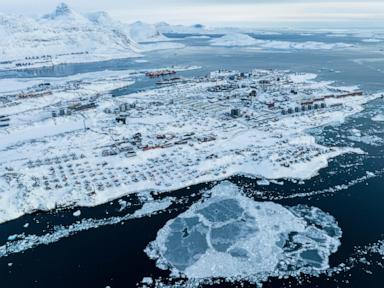
Greenland, an island predominantly situated above the Arctic Circle and home to approximately 56,000 residents, has become a focal point in U.S. strategic military planning. During a press briefing, Vice President JD Vance criticized Denmark’s management of Greenland, implying that the U.S. may need to assert its interests more forcefully. He remarked that President Trump is prepared to “go as far as he has to” to protect American interests in the Arctic.
Vance reiterated Trump’s assertion that Greenland plays a critical role in national security, noting, “The entire missile defense infrastructure is partially dependent on Greenland.” He pointed out that historical alliances, like Denmark’s role during World War II, do not guarantee effective management today. “Just because you did something smart 25 years ago doesn’t mean you can’t do something dumb now,” Vance added.
In a related context, Rubio has indicated that the current U.S. administration is not looking to use military force but is considering a potential purchase of Greenland, a sentiment that has drawn international attention and criticism. European Council President Antonio Costa emphasized the necessity of respecting Greenland’s sovereignty, stating, “Nothing can be decided about Denmark and about Greenland without Denmark, or without Greenland.”
International Response and Military Presence
The discussions surrounding Greenland’s future have elicited strong responses from various international leaders. Prime Minister Mette Frederiksen of Denmark received support from leaders of Canada, France, Germany, Italy, Poland, Spain, and the United Kingdom in affirming Greenland’s sovereignty following Trump’s remarks.
In light of recent discussions, Danish Foreign Minister Lars Løkke Rasmussen highlighted the historical defense agreement between Denmark and the U.S. established in 1951. He noted that American military presence in Greenland has significantly diminished over the decades, with only around 200 soldiers stationed at the Pituffik Space Base today, which supports missile warning and space surveillance operations.
Rasmussen stated, “The 1951 agreement offers ample opportunity for the United States to have a much stronger military presence in Greenland. If that is what you wish, then let us discuss it.”
Last year, Denmark’s parliament approved legislation allowing U.S. military bases on Danish soil, expanding previous agreements made with the Biden administration. This includes broad access for U.S. troops to Danish air bases, reflecting a commitment to bolster military cooperation in the Arctic region.
Denmark is also enhancing its military capabilities in the North Atlantic, with a significant investment of 14.6 billion kroner ($2.3 billion) aimed at improving surveillance and sovereignty maintenance in the area. This initiative includes the acquisition of three new Arctic naval vessels and additional long-range surveillance drones.
The Joint Arctic Command, based in Nuuk, is tasked with the defense and sovereignty assertion of Greenland and the Faroe Islands. Its operations are supported by smaller satellite stations across Greenland, while the elite Sirius Dog Sled Patrol unit is responsible for long-range reconnaissance in the Arctic wilderness.
The upcoming meeting between Denmark and the U.S. represents a critical juncture in the future of Greenland, as both nations navigate the complexities of international interests and regional security.