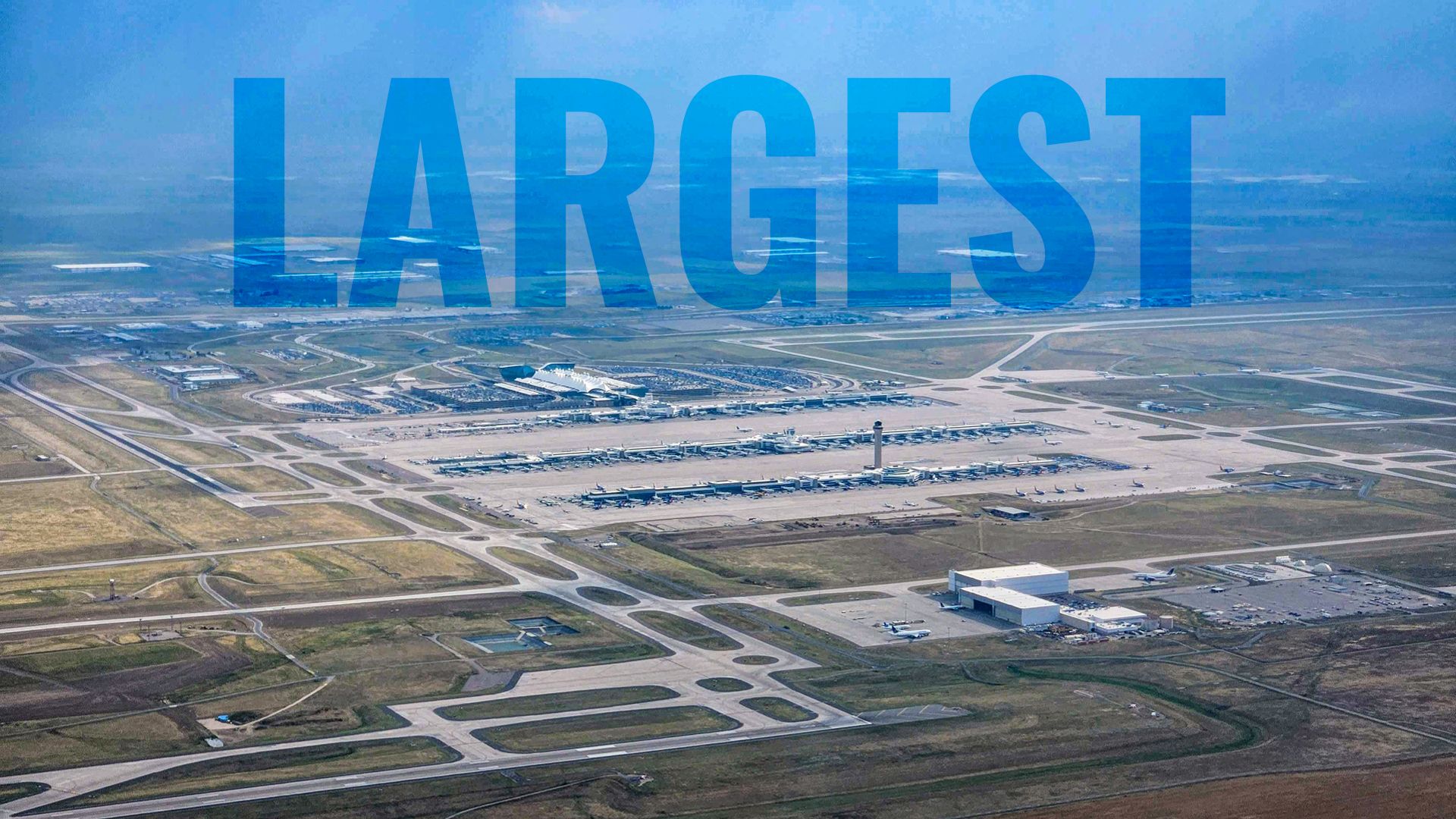
The United States is home to some of the largest airports in the world, not only in terms of passenger traffic but also by land area. This article examines the ten largest airports currently in operation, highlighting their capacity, infrastructure, and significance in the aviation landscape. While these airports rank among the busiest in the country, their size does not always correlate with passenger numbers.
Ten Largest Airports by Area
Detroit Metropolitan Wayne County Airport (DTW), spanning approximately 7.3 square miles (19 square kilometers), ranks as the tenth largest airport in the U.S. Located in Michigan, DTW serves as a major hub for Delta Air Lines and Spirit Airlines. The airport features six runways, with the longest being 12,003 feet (3,659 meters). Its two passenger terminals collectively offer 150 gates, with the Edward H. McNamara Terminal showcasing the second-longest concourse in the world.
Following closely is John F. Kennedy International Airport (JFK), which covers 8 square miles (21 square kilometers). As the busiest airport in New York, JFK serves as the primary international gateway to the United States. The airport has four runways, including the 14,511-foot (4,423 meters) Runway 13R/31L, which is notable for having been a backup for the Space Shuttle program. With five terminals housing 130 gates, JFK is a vital hub for several major airlines, including American Airlines and JetBlue.
Expanding Capacity and Operations
San Francisco International Airport (SFO) ranks eighth with an area of 8.1 square miles (21.07 square kilometers). As the largest airport in California, SFO serves as a key hub for United Airlines and plays a significant role in trans-Pacific travel. SFO has four intersecting runways and offers 121 gates across its four terminals.
The seventh spot is occupied by Chicago O’Hare International Airport (ORD), which spans 11.9 square miles (30.9 square kilometers). Known for its extensive connectivity, O’Hare is a major hub for both American Airlines and United Airlines. The airport features eight runways and four terminals that collectively host 216 gates, making it one of the most extensive airport facilities in the world.
In sixth place is Salt Lake City International Airport (SLC), covering 11.96 square miles (31 square kilometers). It serves as a significant hub for Delta Air Lines and features four runways, with the longest measuring 12,002 feet (3,658 meters). The airport’s single terminal is set to expand with additional gates expected to open by late 2026.
Major Hubs and Infrastructure
George Bush Intercontinental Airport (IAH) in Houston ranks fifth, with an area of 15.4 square miles (40 square kilometers). This airport serves as a major hub for United Airlines and features five runways and five terminals. In total, IAH has 121 gates and is strategically positioned for flights to Latin America.
Washington Dulles International Airport (IAD) occupies the fourth position, covering 20 square miles (52 square kilometers). It serves as a secondary transatlantic hub for United Airlines and features four operational runways, with a fifth planned. The airport’s main terminal and two midfield concourses provide a total of 139 gates, catering to a substantial volume of international traffic.
Orlando International Airport (MCO), the largest airport in Florida, ranks third with an area of 20.8 square miles (54 square kilometers). MCO operates under significant pressure from budget airlines and features four parallel runways. The airport has multiple terminals, and its total capacity includes 116 gates across various concourses.
In second place is Dallas/Fort Worth International Airport (DFW), which spans 26.6 square miles (69 square kilometers). DFW is a primary hub for American Airlines and ranks as the second-busiest airport globally by passenger numbers. With seven runways and six terminals, DFW is a significant player in both domestic and international air travel.
Finally, the largest airport in the United States is Denver International Airport (DEN), covering an expansive 52 square miles (135 square kilometers). DEN serves as a major hub for United Airlines and features six uniquely arranged runways that enhance efficiency. The airport’s Jeppesen Terminal and three midfield concourses together offer 169 gates, making it a critical infrastructure component for air travel in the region.
In conclusion, these ten airports represent the vast capacity and operational capabilities within the United States aviation system. Their size and infrastructure not only facilitate passenger travel but also support significant cargo operations, making them crucial to both domestic and international transportation networks.