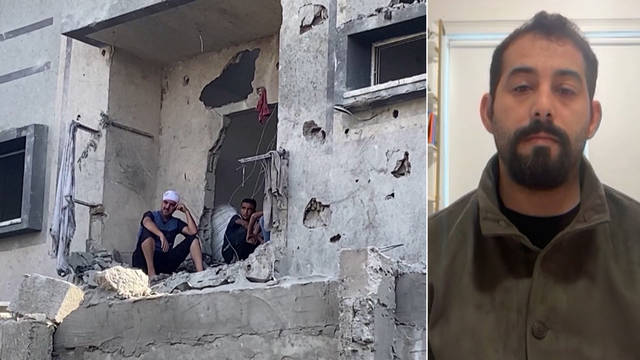
The situation in Gaza remains critical despite recent claims of a ceasefire, according to acclaimed Palestinian poet Mosab Abu Toha. He describes the ongoing violence as “a genocide, ongoing,” pointing to the stark realities faced by residents. His comments come in the wake of a troubling report published in The Lancet, which estimates that over 75,000 Palestinians have died since the onset of Israel’s military operations, significantly higher than the 49,000 deaths reported by the Palestinian Health Ministry.
Abu Toha, who left Gaza in 2023 after facing imprisonment and violence from Israeli forces, spoke with Amy Goodman on the program Democracy Now!. He provided a harrowing account of the conditions in Gaza, where many families remain displaced and live in makeshift tents. “People do not have access to water or healthy food,” he stated, emphasizing the dire humanitarian crisis that persists.
Despite the so-called ceasefire, which was brokered by the United States, Israeli military operations have continued. Since the ceasefire began in October, more than 642 people have reportedly been killed, including 197 children. This translates to an average of five deaths per day, illustrating the ongoing violence that contradicts claims of a cessation in hostilities.
Abu Toha highlighted the plight of those in need of urgent medical care. He noted that approximately 20,000 patients are waiting for evacuation, with only a fraction receiving the necessary approval to leave Gaza. Among these patients are 4,500 children and a similar number suffering from cancer. Tragically, many have died while waiting for access to treatment.
The poet also addressed recent comments made by Mike Huckabee, the U.S. ambassador to Israel, who suggested that Israel has a biblical claim to expand its territory. Abu Toha found Huckabee’s remarks shocking, questioning the implications of such rhetoric for the Palestinian people. “As a Palestinian, I don’t belong to anywhere else than Palestine,” he asserted, recalling his grandparents’ expulsion from Jaffa in 1948.
With increasing international scrutiny, the humanitarian situation in Gaza calls for urgent action. Abu Toha urged global leaders to prioritize justice over political maneuvering. He expressed disappointment over the lack of adequate response to the humanitarian crisis, stating, “Instead of raising money to rebuild Gaza, it is important to stop sending bombs that are killing our families.”
The poet’s poignant reflections resonate with many who continue to advocate for the rights of Palestinians amidst ongoing conflict. As international reactions to the situation evolve, voices like Abu Toha’s remain crucial in highlighting the human cost of political decisions.