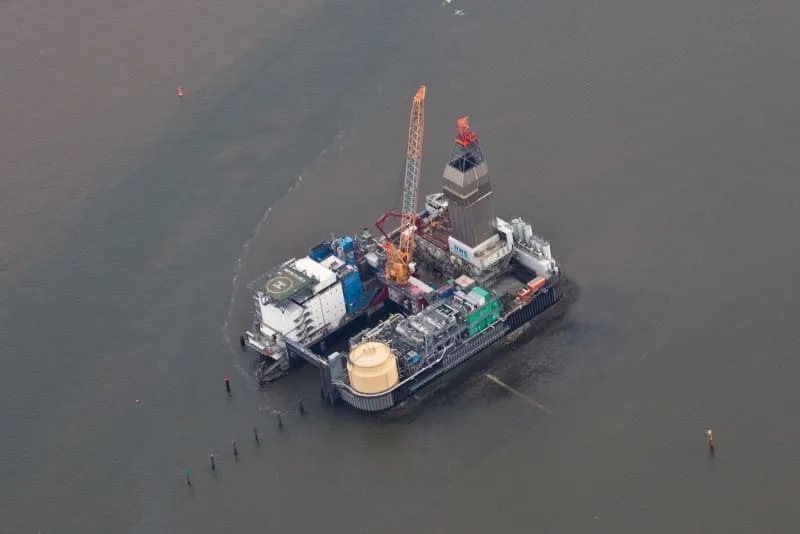
A state court in Germany has intervened to halt oil drilling operations in the northeastern Wadden Sea, siding with an environmental organization that argued a necessary environmental impact assessment had not been conducted. The ruling by the Schleswig-Holstein Administrative Court prohibits oil production from the Mittelplate drilling platform, marking a significant victory for conservation efforts in the region.
According to a court spokeswoman, the drilling platform currently lacks an enforceable production permit. The German Environmental Aid Association (DUH) initiated the lawsuit, leading to the court’s decision. The court emphasized that an inventory check is required every two years, and it noted that the required assessment under the Flora-Fauna-Habitat Directive (FFH) had not been performed. As a result, the court ordered that oil production be suspended until further notice.
The ruling has been described as a historic victory by the DUH. Sascha Müller-Kraenner, the Federal Executive Director of the DUH, stated, “Germany’s largest World Heritage Site must not be exploited without a thorough assessment of the nature conservation implications of oil production.” He expressed concerns about the platform’s outdated technology, adding, “The risk of an accident increases with each day.”
In response, a spokesman for Wintershall Dea Deutschland, the operator of the drilling platform, indicated that the company would meticulously review the court’s decision. He asserted that the main operating plan for the Mittelplate platform was approved in accordance with all applicable legal requirements. Furthermore, he emphasized that the operations have consistently been conducted under close government supervision, noting that the facility has safely produced over 40 million tons of oil since its inception in 1987.
The court’s ruling not only pauses production but also raises broader questions about environmental oversight in critical ecosystems. The Wadden Sea, recognized as a UNESCO World Heritage Site, is known for its unique biodiversity and ecological significance. As the legal proceedings unfold, the implications of this ruling may resonate beyond the immediate concerns of oil drilling, influencing future environmental regulations and conservation efforts in similar regions.