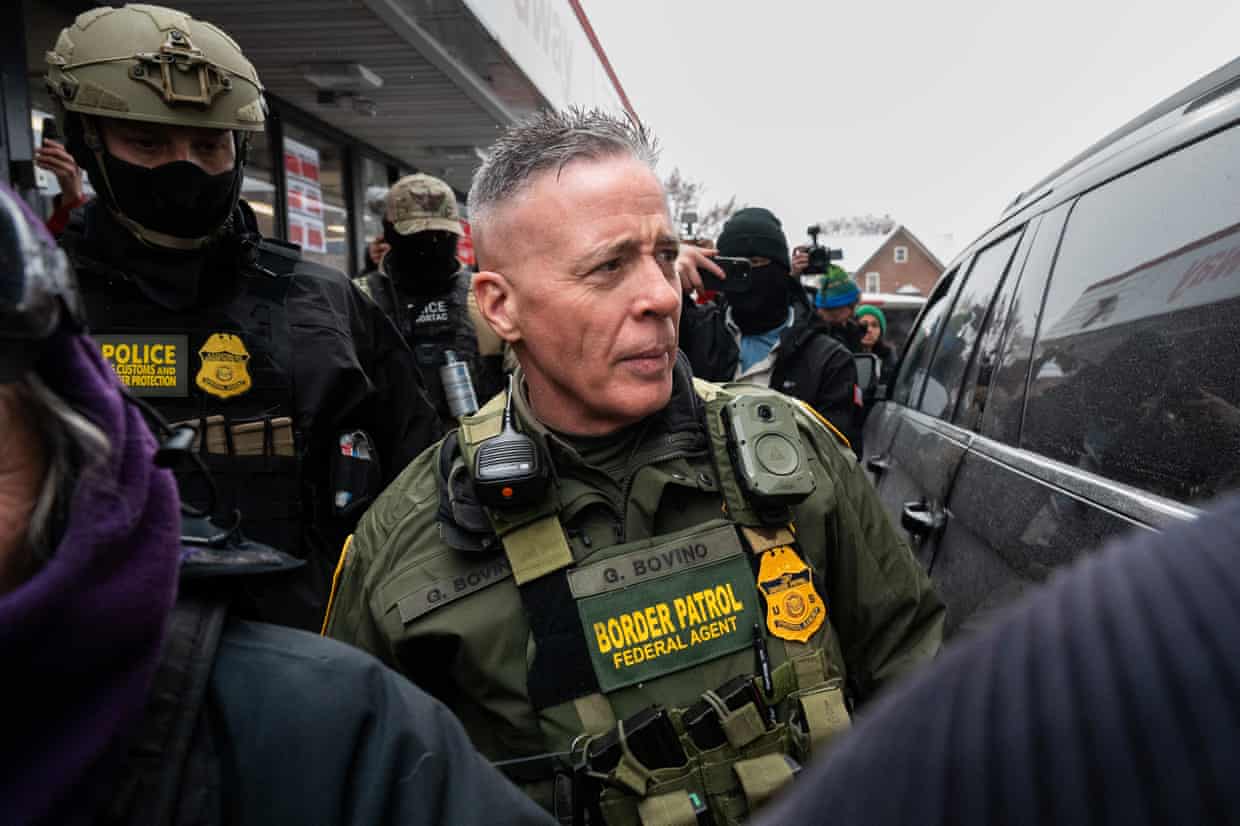
The political landscape surrounding U.S. immigration enforcement shifted dramatically following the controversial actions of senior border patrol official Gregory Bovino in Minneapolis. His remarks and behavior after the fatal shooting of Alex Pretti, a 37-year-old American citizen, by border patrol agents have drawn significant criticism and led to his suspension from frontline duties. The incident marks a significant turning point for Bovino, who had previously gained notoriety for his aggressive stance on immigration policies under the Trump administration.
Bovino’s rise through the ranks of the U.S. border patrol has been marked by his provocative statements and actions in cities like Los Angeles and Chicago. Initially, he was seen as a key figure in the administration’s hardline immigration strategy, but his recent comments following Pretti’s death have sparked considerable backlash. Instead of being lauded for his approach, he has become a focal point of criticism, even within the Trump administration, which is under pressure to recalibrate its response to growing public outrage.
After the shooting incident, which was followed by protests, the Department of Homeland Security announced that Bovino would be removed from his role in Minneapolis. This decision coincided with the appointment of Tom Homan, Trump’s “border tsar,” to oversee operations in the city. The move underscores the administration’s need to address the fallout from Pretti’s shooting, which has ignited a fierce public outcry.
Bovino’s comments on various media platforms, particularly during an appearance on CNN’s State of the Union, further exacerbated the situation. He maintained that Pretti posed a threat to law enforcement, claiming the deceased intended to “massacre” agents. As video evidence began to surface, contradicting his assertions, Bovino’s credibility was called into question. He continued to label Pretti as a “suspect,” rather than acknowledging him as a victim, which intensified the scrutiny on his leadership.
The backlash against Bovino was not limited to his remarks regarding Pretti. His earlier actions in Minneapolis, including throwing a teargas canister at protesters, received widespread condemnation. His choice of attire—a long winter coat with brass buttons, reminiscent of militaristic styles—also drew attention and mockery, with some commentators likening it to a fascist aesthetic.
Bovino’s controversial tactics have included defending the detention of children by claiming that agents are “experts in dealing with children.” His remarks regarding the treatment of a five-year-old boy, who was detained with his father, were met with outrage. He stated, “That child is in the least restrictive setting possible… I don’t think it gets any better than that,” a comment that many found deeply troubling given the emotional weight of family separations at the border.
His history of aggressive immigration enforcement tactics dates back to his tenure in Los Angeles, where he led operations resulting in thousands of arrests. These actions frequently drew criticism for targeting individuals based solely on their appearance or language. Masked agents engaged in confrontational tactics, including breaking car windows and conducting intimidating patrols, which many viewed as excessive.
Bovino’s ascent as a prominent figure in immigration enforcement has been shaped by personal experiences, including a troubled family background that contrasts with his current role. According to investigations by local media, his inspiration to join the border patrol stemmed from a Hollywood film, which left him feeling disillusioned when it did not portray agents as heroes. His rhetoric often invokes themes of safety, despite evidence suggesting that his aggressive tactics are not effective in urban environments.
Critics argue that Bovino’s approach is misguided, particularly when policing urban areas such as Minneapolis. Gil Kerlikowske, a former commissioner of Customs and Border Protection, has emphasized the need for specialized training when operating in cities, stating, “Border patrol is trained and at their most effective on the border or within 25 miles of the border.” The challenges faced in urban policing are vastly different from those at the border, and seasoned officers have raised concerns about the potential for conflict arising from Bovino’s aggressive methods.
As the fallout from Pretti’s shooting continues, the implications for Bovino’s career and the future of immigration enforcement under the Trump administration remain uncertain. His suspension from frontline duties signals a significant shift, reflecting the administration’s attempts to navigate the turbulent waters of public opinion and policy reform. The events in Minneapolis expose the complexities and challenges of managing immigration enforcement in a politically charged environment, illustrating how swiftly the tides can change for even the most prominent figures in the field.