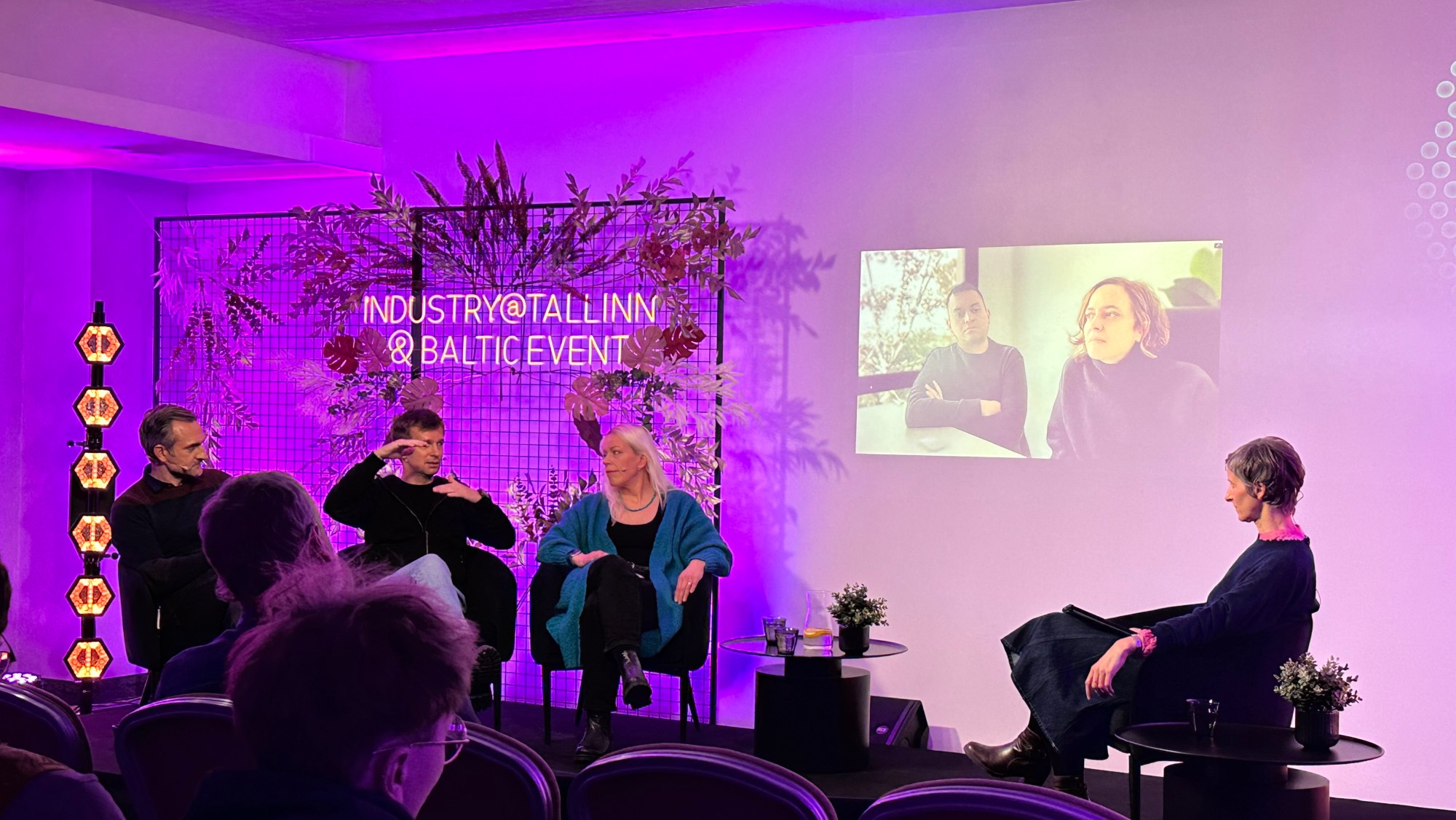
The *Tallinn Black Nights Film Festival* served as a platform for discussions on the evolving role of artificial intelligence (AI) within the film industry. On December 6, 2023, during the Industry@Tallinn & Baltic Event, a panel titled “Moving Forward With AI: Beyond Constraints” gathered industry experts to explore how AI can enhance creativity while establishing necessary guidelines.
The session featured insights from various speakers, including director-producer Matt Szymanowski, who is currently in post-production on his hybrid dystopian film, *Captive Mind*. He highlighted that AI could significantly improve production efficiency, suggesting that post-production timelines could be reduced by *25-40 percent* through AI integration. Szymanowski noted that this technology allows for greater sustainability and innovation in filmmaking.
Also on the panel was AI expert and script consultant Maciej Zemojcin, who emphasized the importance of adapting to new technologies. He argued that the traditional film production process is becoming increasingly *iterative and continuous* rather than linear. This shift can enable real-time iterations during production, facilitating narrative, visual, and sound testing as projects develop.
Screenwriter Katri Manninen discussed her personal experiences using AI tools. She mentioned that while she utilizes AI for various tasks, such as formatting and research, she does not rely on it for generating original story ideas. “I use AI for everything but writing so I can focus on storytelling,” Manninen stated, expressing concerns that AI-generated text often lacks depth and originality. Her approach involves using AI to streamline her workflow, allowing her to concentrate more on crafting compelling narratives.
The panel, moderated by former IT and innovation director at the *New York Times International*, Kristen Davis, underscored the need for filmmakers to embrace AI technologies while adhering to ethical practices. Davis pointed out that adapting to AI will necessitate significant changes in skill sets and mindsets within the industry, leading to what she described as “augmented creativity.”
As part of the discussion, the panel also featured a unique contribution from an AI agent that utilized the voice of film legend Charlie Chaplin. This AI, developed by Zemojcin, provided insights into best practices and potential risks associated with AI in filmmaking. The AI suggested that the future of cinema hinges on transparency regarding AI usage, consent from creators, and fair compensation for those whose work informs AI systems.
The executives from Artefacto Studio, Anna Giralt Gris and Jorge Caballero, joined the session via video conference from Barcelona. They echoed the sentiment that AI represents a paradigm shift in film production. “The age of AI means redefining how we approach creativity and production,” they stated, emphasizing the need for filmmakers to adapt to these changes.
In closing, Zemojcin urged attendees to embrace the transition rather than resist it. He remarked, “If you are not ready for this shift, this will not shift for you,” encouraging industry professionals to view AI as a tool for enhancing storytelling rather than a threat. The panel ultimately concluded that the future of film will depend on how filmmakers leverage AI responsibly to foster creativity while maintaining the integrity of the art form.