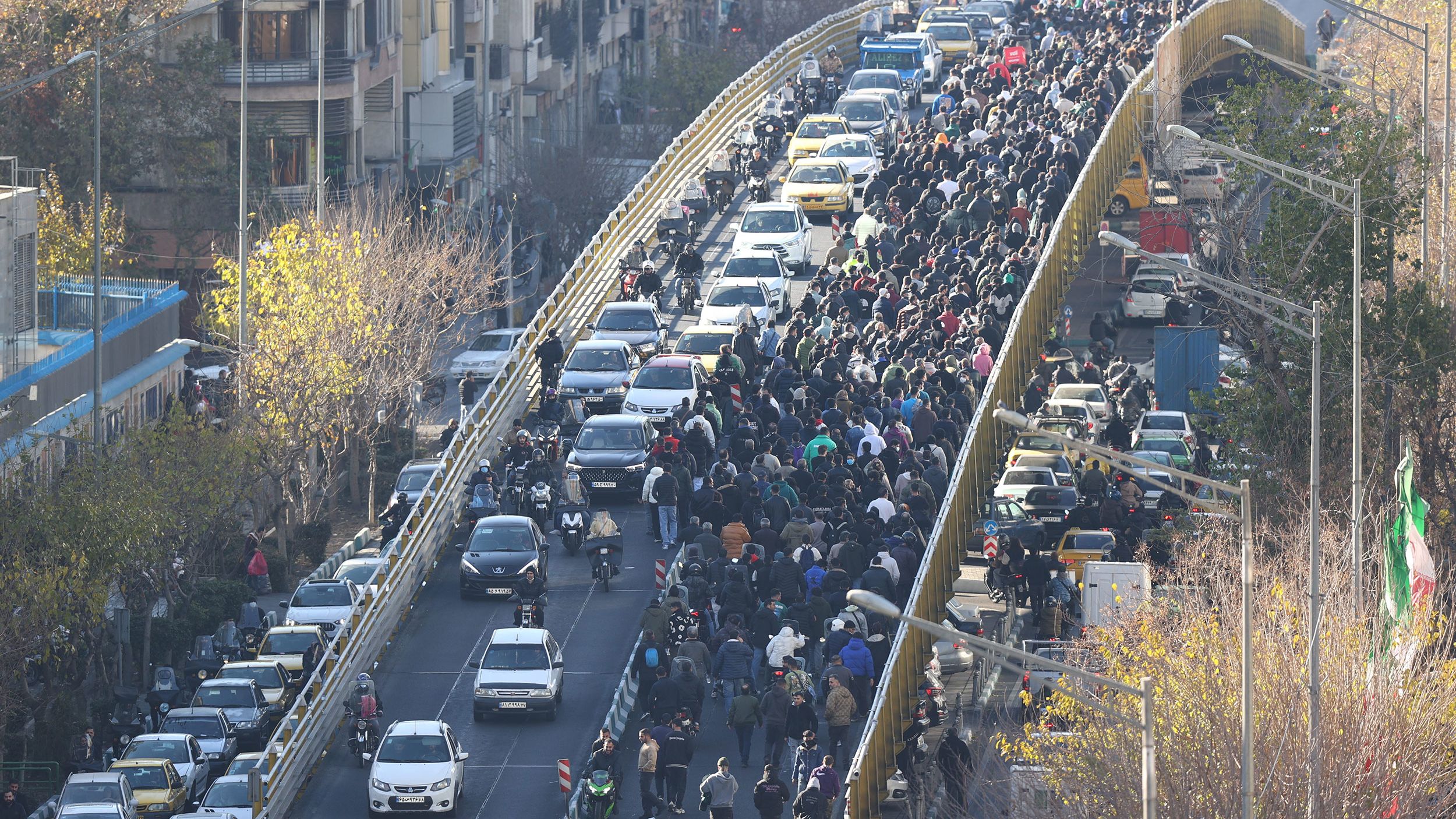
Iran has appointed a new governor for its central bank as the country grapples with a severe economic crisis, marked by mass protests and a historic decline in the value of its currency. On Wednesday, President Masoud Pezeshkian announced the appointment of Abdolnasser Hemmati, a former economics minister, to lead the Central Bank of the Islamic Republic of Iran. Hemmati replaces Mohammad Reza Farzin, who resigned just one day after large-scale protests erupted across the nation, driven by the rial’s plunge against the U.S. dollar.
The Iranian rial fell to an unprecedented low, trading at approximately 1.38 million rials per dollar on Wednesday, a staggering increase from 430,000 rials when Farzin assumed office in 2022. The current economic climate, characterized by a staggering 40% inflation rate, has fueled public frustration, prompting many traders and shopkeepers to close their businesses and join protests in cities such as Tehran, Shiraz, and Kermanshah.
Hemmati’s immediate agenda will focus on controlling inflation and stabilizing the currency, as well as addressing the mismanagement issues plaguing Iran’s banking system. According to government spokeswoman Fatemeh Mohajerani, Hemmati’s experience as Minister of Economic and Financial Affairs under Pezeshkian will be crucial during this tumultuous period.
Previously, Hemmati faced criticism from parliament, which dismissed him in March amid accusations of mismanagement that allegedly weakened the rial. The current crisis is further exacerbated by rising prices for essential goods, as the combination of currency devaluation and inflation puts additional strain on households already beleaguered by Western sanctions related to Iran’s nuclear program.
Recent changes in gasoline prices are expected to worsen inflation, prompting Mohammad Movahedi Azad, the Prosecutor General, to assert that any attempts to shift the narrative of protests from economic grievances to issues of insecurity will be met with a robust response.
In 2015, the Iranian currency traded at around 32,000 rials per U.S. dollar, following the nuclear accord that lifted international sanctions on Iran in exchange for limitations on its nuclear activities. The situation shifted dramatically after the United States withdrew from the agreement in 2018 under President Donald Trump.
On the local front, unrest has escalated, with reports of violence during protests. A judiciary official in southern Iran claimed that a young man had not been killed during demonstrations, despite reports to the contrary. He noted that protests turned violent when demonstrators breached the governor’s office, injuring three policemen, leading to the arrest of four individuals.
As Iran continues to face significant economic challenges, the public’s patience grows thin. The government’s response to the protests and Hemmati’s strategies for economic stabilization will be closely watched in the coming weeks.