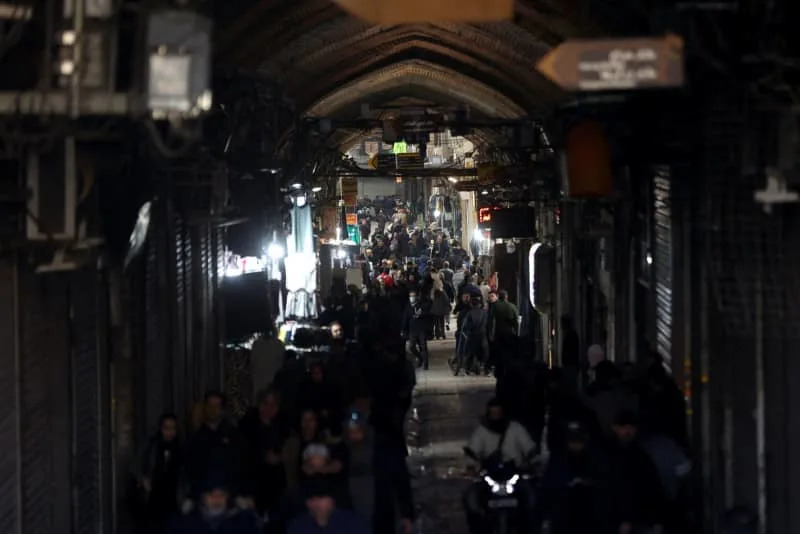
Protests across Iran have intensified as the regime responds with tear gas and mass arrests amid widespread economic dissatisfaction. Protests erupted in various cities, including Tehran, where demonstrators voiced their anger over the collapsing value of the currency, the rial. Footage from Tehran’s Jomhuri Street showed protesters pushing back against authorities, leading to confrontations that resulted in the use of tear gas by security forces.
Authorities have begun a crackdown on dissent, detaining numerous individuals. Among those arrested was Mehdi Biek, the political editor of Iran’s Etemad newspaper, who was covering the events when he was taken into custody. His wife reported that she had not heard from him for over 24 hours, until he was released on Tuesday. Reports confirmed that at least 11 individuals were arrested on Sabunian Street, highlighting the escalating tensions in the capital.
In Kermanshah, security forces deployed tear gas against large crowds, as protesters shouted slogans such as “shame, shame!” The unrest, which began as a response to the rial’s rapid decline, has evolved into broader discontent with the regime’s policies. Videos shared by dissident media captured protesters chanting, “Neither Gaza nor Lebanon, I will sacrifice my life for Iran,” reflecting their frustrations with both domestic and foreign policies.
The economic backdrop of these protests is dire. The rial fell to a record low of 1.4 million rials per US dollar on March 5, 2024, a significant drop from 817,500 rials per dollar at the start of the year. The currency has lost nearly 90 percent of its value since 2018, leading to soaring inflation and increasing dissatisfaction among the populace.
The protests represent the largest wave of dissent since the murder of Mahsa Amini, a 22-year-old Kurdish woman, who died in custody in September 2022 after being detained for allegedly violating the country’s strict dress code. The ongoing unrest is fueled by multiple factors, including rising inflation, government funding of foreign militant groups, and a severe water crisis.
In response to the growing unrest, Iranian President Masoud Pezeshkian stated that addressing the livelihood of the people is a priority. He announced plans for reforms in the monetary and banking systems to help preserve purchasing power. In a bid to quell dissent, he has tasked the Interior Minister with engaging in dialogue with protesters to address their legitimate demands. Following this, a spokesman for Iran’s Budget Consolidation Commission confirmed an increase in government salaries, now set to rise by 30 percent next year, up from the initially planned 20 percent.
Despite this shift in strategy, the regime continues to face significant challenges. Some officials have resigned in the wake of public outcry, with one member of the information council stating, “I cannot defend the government” in light of widespread criticism heard from the streets and markets.
The crackdown on dissent has extended to educational institutions as well. Reports indicate that a student was severely injured when the IRGC’s Basij paramilitary forces attacked a gathering at Amirkabir University in Tehran. Several other students were also reported arrested on campus, further illustrating the regime’s harsh response to any form of protest.
The situation in Iran remains fluid, with authorities attempting to manage the unrest while facing mounting pressure from the public. The depth of discontent suggests that this is not merely an economic protest but a profound challenge to the regime’s legitimacy. As Masih Alinejad, an Iranian dissident journalist, remarked, “When money collapses, lies collapse too,” indicating the potential for significant change amidst ongoing turmoil.