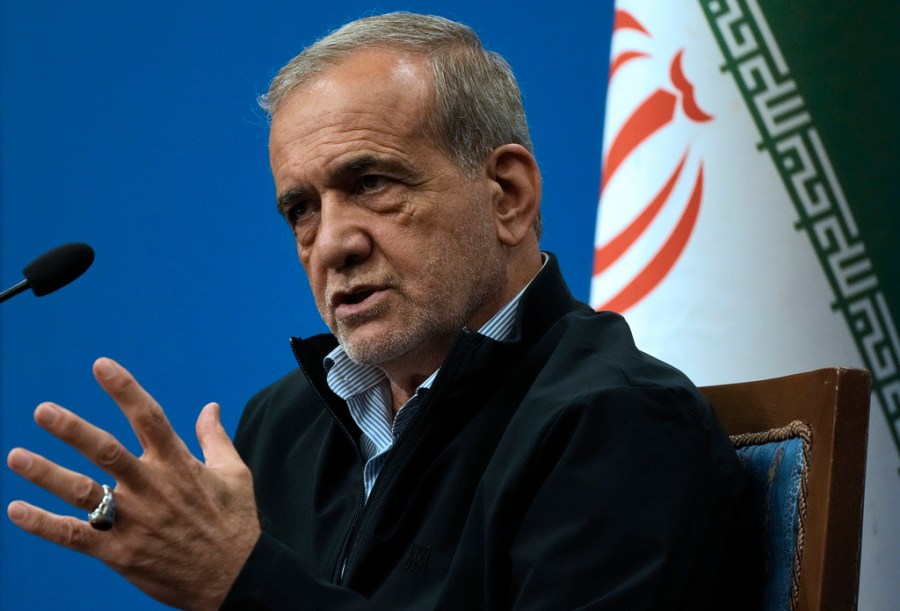
Iranian President Masoud Pezeshkian issued a stark warning on Sunday, urging foreign nations to refrain from any aggression directed at the country’s Supreme Leader, Ali Khamenei. This statement comes amid widespread protests across Tehran and other provinces, which have sparked international concern regarding the political and social climate in Iran.
In his remarks, Pezeshkian highlighted the hardships faced by the Iranian people, attributing part of their struggles to what he termed “longstanding enmity and inhumane actions” from foreign nations. He emphasized that any perceived attack on Khamenei would be viewed as an act of war against Iran. This declaration underscores the heightened tensions within the region and the Iranian government’s sensitivity to external criticism.
The protests, which have seen thousands of citizens taking to the streets, reflect widespread dissatisfaction with the government’s policies, economic conditions, and restrictions on personal freedoms. Reports indicate that demonstrators have called for greater freedoms and reforms, leading to a significant government crackdown on dissent. The unrest has drawn attention not only from local observers but also from international human rights organizations.
As the protests continue, the Iranian government has sought to frame the unrest as a response to external provocations. In his statement, Pezeshkian reiterated that the country would respond decisively to any threats against its leadership. He urged foreign leaders to engage in dialogue rather than confrontation, emphasizing the need for mutual respect and understanding.
The international community has responded with a mix of concern and skepticism. Human rights advocates have called for investigations into reported abuses during the protests, while some governments have issued statements expressing support for the rights of the Iranian people to peacefully assemble and voice their opinions.
As of now, the situation remains volatile, with both internal and external pressures continuing to shape the narrative around Iran’s governance and stability. The Iranian leadership’s response to these protests and foreign relations will be critical in determining the country’s trajectory in the coming months.
With the world watching closely, the actions taken by both the Iranian government and foreign powers will likely have significant implications for regional stability and diplomatic relations. The unfolding events in Tehran and beyond highlight the complex interplay of domestic discontent and international politics that continues to define Iran‘s current landscape.