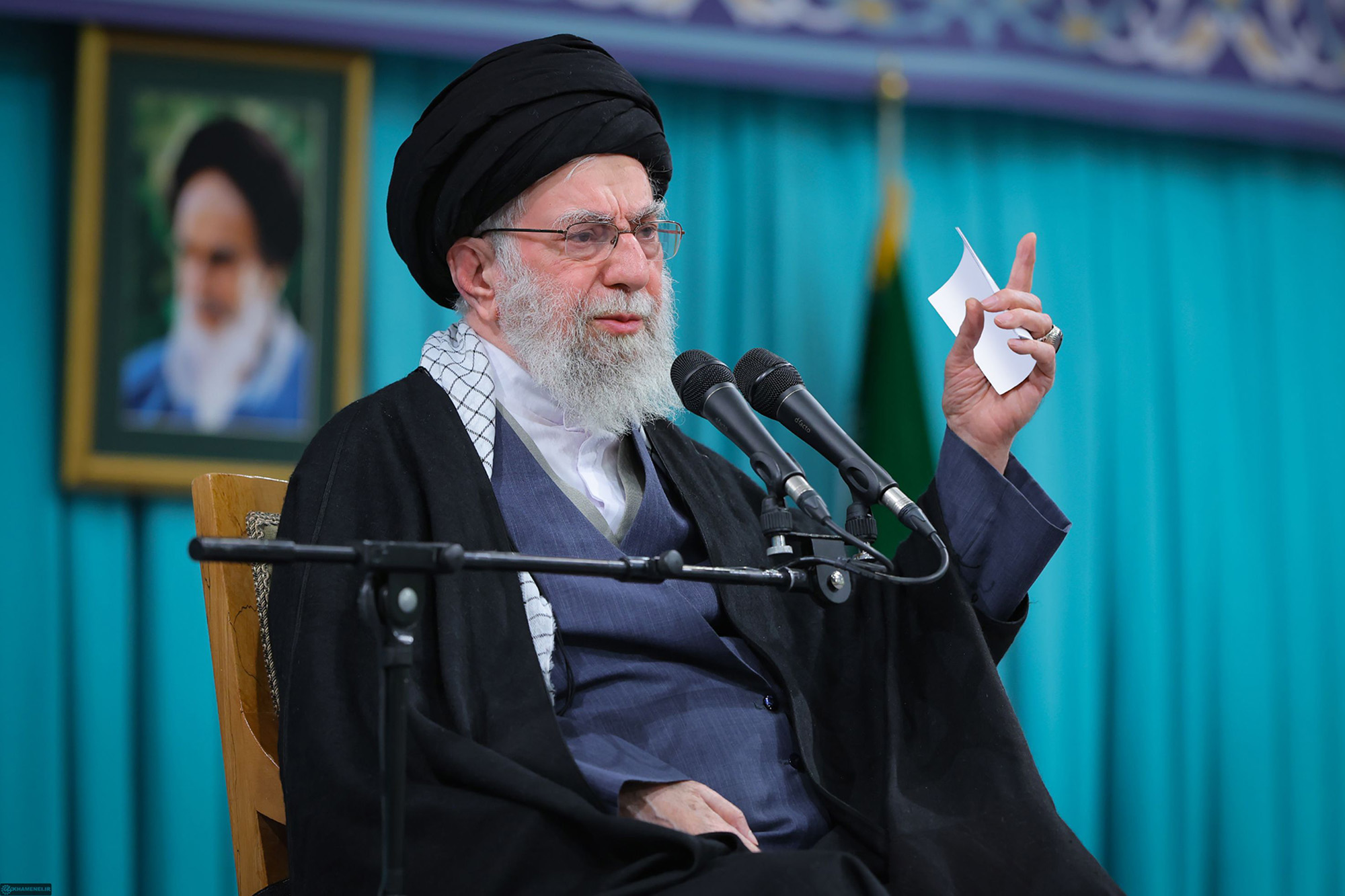
Ayatollah Ali Khamenei, Iran’s supreme leader, has reportedly retreated to an underground bunker amid escalating tensions with the United States. The move follows warnings from senior military officials about the increasing likelihood of US airstrikes as the aircraft carrier USS Abraham Lincoln approaches the Persian Gulf.
Khamenei, aged 86, has relocated to a fortified shelter in Tehran, connected to a network of underground tunnels. His youngest son, Masoud Khamenei, 53, has taken over day-to-day management of the Islamic Republic during his absence, serving as the primary communication channel with the regime’s executive branch, according to reports by Iran International and the Jerusalem Post.
The heightened concern over potential US military action intensified after President Donald Trump announced on March 15, 2024, that warships were being dispatched to the Middle East as a warning to Iran. Trump referred to the deployment of a substantial “armada,” which includes the USS Abraham Lincoln Carrier Strike Group, now moving from the Indian Ocean towards Iranian waters.
Iran’s government has responded defiantly, with President Masoud Pezeshkian threatening that any attack on Khamenei would be viewed as “an all-out war against us.” Furthermore, Iran’s national security parliamentary commission declared that an assault on Khamenei would trigger a declaration of jihad, as reported by the Iranian Students News Agency.
Publicly, Tehran maintains a stance of resistance against the US. Despite Khamenei’s usual activity on social media, he has not posted on X since January 17, 2024. It remains unclear when he entered hiding. This is not the first instance of Khamenei seeking refuge underground; he similarly went silent following his retreat to a bunker during the 12-Day War with Israel in June 2023.
In his last public remarks, Khamenei issued threats against both internal and international “criminals” he accused of inciting widespread protests in Iran since late December. These protests have been driven by economic hardship and the worst drought the country has experienced in decades. Reports indicate that regime forces have killed at least 3,000 civilians during these demonstrations, with some organizations estimating the death toll could be as high as 20,000.
As the situation continues to evolve, the international community watches closely, aware that actions taken in the coming days could have significant ramifications for regional stability. The US military buildup near Iran underscores the seriousness of the threat perceived by both nations, raising tensions to levels not seen in recent years.