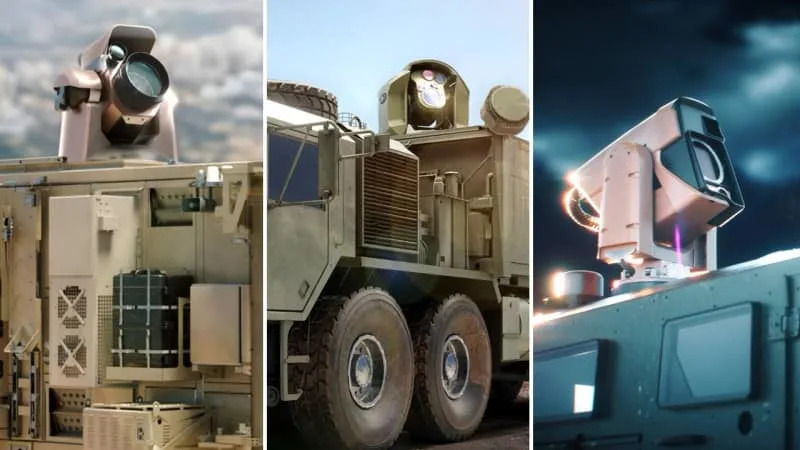
Israel is set to fully deploy its advanced Iron Beam laser defense system on December 30. This cutting-edge technology aims to intercept aerial threats, including drones, rockets, missiles, and mortars, at unprecedented speeds. The announcement was made by Dani Gold, the chief of research and analysis at the Defense Ministry, highlighting a significant advancement in Israel’s air defense capabilities.
In mid-September, the Israeli Defense Ministry revealed that Iron Beam had already become operational. A full series of batteries will be strategically placed across the country, enhancing Israel’s air defense framework within the coming months. This deployment follows earlier news in June that the Lite Beam—a smaller variant of Iron Beam—was also operational. The Lite Beam was credited with intercepting approximately 40 Hezbollah drones in October 2024.
The Iron Beam system offers several enhancements over its predecessor. First, it boasts greater power and longer range, allowing it to target a wider array of threats. Unlike Lite Beam, which was primarily focused on drone interception, Iron Beam is capable of countering multiple types of aerial attacks. This versatility positions it as a more formidable defense option for Israel.
The decision to deploy Iron Beam widely means that its batteries will be available in numerous locations, ensuring a quicker response to threats as opposed to being limited to just one or two sites. The Defense Ministry and the Israel Defense Forces (IDF) anticipate that this system will significantly reduce the costs associated with intercepting aerial threats, which have surged during recent conflicts. Operating the Iron Beam is described as being “as cheap as turning a light on,” in stark contrast to traditional interceptors, which can cost tens of thousands of shekels.
Amir Baram, Director-General of the Defense Ministry, previously indicated that Iron Beam would revolutionize aerial defense, potentially altering battlefields worldwide through the adoption of more affordable laser technologies. Additionally, security officials have noted that Iron Beam can handle simultaneous attacks from multiple aerial threats, enhancing its operational effectiveness.
According to Brig.-Gen. Yehuda Elmakayes, head of the R&D Division, the Knesset approved a substantial budget two years ago to ensure the availability of Laser Dome batteries for this extensive deployment phase. As part of the preparations, a reservist identified as M. Sgt. “A” shared his experiences on the laser team, describing the operation of this innovative system as “incredible.” He noted the need for real-time adjustments and collaboration with developers from Rafael to optimize the system’s performance in live combat scenarios.
While several countries, including the United States, England, Russia, China, Germany, and Japan, are at various stages of developing laser defense systems, the Israeli Iron Beam has progressed beyond testing to active field use. This advancement could potentially eliminate the need for civilians to seek shelter during aerial attacks. Lasers operate at the speed of light, enabling them to intercept threats shortly after launch, often while remaining within enemy territory.
The Iron Beam system comprises several variants. The Lite Beam functions as a short-range system that can be mounted on ground vehicles, operating with a 10 kilowatt beam. Iron Beam M, capable of firing a 50 kilowatt beam, is designed for mobility but cannot be equipped on smaller vehicles. The full-sized Iron Beam, which fires a 100 kilowatt beam, is intended for stationary use but can be relocated as needed, similar to existing Iron Dome batteries.
As Israel prepares for the deployment of Iron Beam, the enhanced capabilities of this laser defense system mark a significant milestone in its ongoing efforts to bolster national security amid evolving threats.