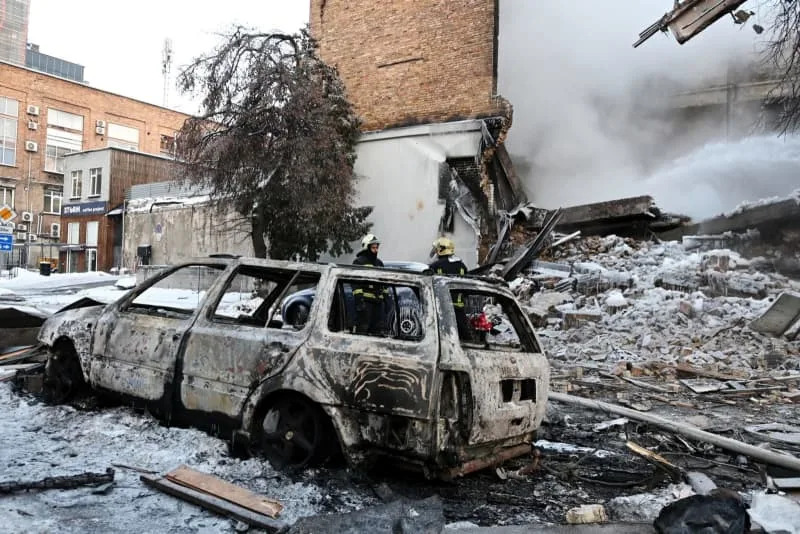
As temperatures in Kiev drop to as low as minus 20 degrees Celsius, hundreds of thousands of residents are enduring the harsh winter without electricity or heating. This situation arises from persistent Russian strikes targeting energy infrastructure, leaving the capital and other major cities like Kharkiv, Dnipro, and Odesa vulnerable as Russia’s war against Ukraine approaches its fifth year.
The ongoing conflict has exacerbated an already dire situation, with relentless drone and missile attacks causing widespread power outages. In Kiev, home to about 3 million people, many residents navigate icy streets under severe conditions, struggling to find warmth and basic necessities. The atmosphere is grim, with generators sputtering outside shops and queues for essentials dwindling.
In a coffee kiosk near a government building, a saleswoman expressed frustration, stating, “We cannot make coffee. We can only sell baked goods.” Nearby, a café managing to remain operational faces its own challenges, experiencing intermittent power failures that leave customers without hot drinks for long periods.
Impact of Power Outages on Daily Life
Power cuts have become a regular part of life in Kiev, especially since the resumption of systematic attacks on substations and heating plants last autumn. Following severe strikes in early January, many districts in the eastern part of the city were left without electricity for days. Over 6,000 apartment blocks, affecting hundreds of thousands of residents, currently lack heating. As conditions worsen, public transport systems, reliant on electricity, are faltering, and many residents cannot predict when they will be able to wash clothes or cook meals.
Kiev’s Mayor, Vitali Klitschko, acknowledged the struggle, saying that energy company staff are working tirelessly to restore power. Despite their efforts, around 300 apartment blocks remain completely without heating. Many residents report that even when heating is restored, radiators often provide only lukewarm temperatures, with some homes seeing single-digit temperatures.
In a desperate attempt to stay warm, some residents have resorted to using gas cookers to heat bricks, wrapping them in towels to use as makeshift heat sources. On social media, Ukrainians are sharing their experiences, mixing humor with hardship. One resident jokingly likened his situation to being on holiday in the “Canaries,” while lamenting his flat’s temperature of just 13 degrees Celsius.
Community Response and Government Initiatives
In response to the crisis, the Ukrainian government has implemented several measures to assist residents. The state has introduced “Points of Invincibility” in schools and public buildings, designed to provide warmth, device charging, and internet access. In Kiev alone, more than 1,200 such points have been established to help the community cope with the ongoing challenges.
Mobile operators have ensured their networks can function for at least 10 hours without external power, facilitating communication during emergencies. Additionally, Prime Minister Yulia Svyrydenko announced extended holidays for schoolchildren until February 1 to mitigate the impact of the cold and power outages.
Civil protection warming tents are also operating around the clock in areas particularly affected by heating failures. These initiatives aim to provide support, especially for vulnerable populations such as the elderly and disabled, who are often unable to access basic services.
Despite these efforts, criticism has emerged regarding the preparedness of the city for such a harsh winter. President Volodymyr Zelensky publicly addressed the situation, stating that the city administration has not acted swiftly enough in addressing infrastructure needs. Klitschko has countered this criticism, accusing Zelensky of politicizing the issue while maintaining that the city is doing all it can under the circumstances.
As the war continues and temperatures remain low, the humanitarian situation in Kiev is expected to worsen. With Russian attacks likely to persist, the city faces an ongoing challenge in restoring power and heating to its residents, leaving many to wonder how long they can endure this crisis.