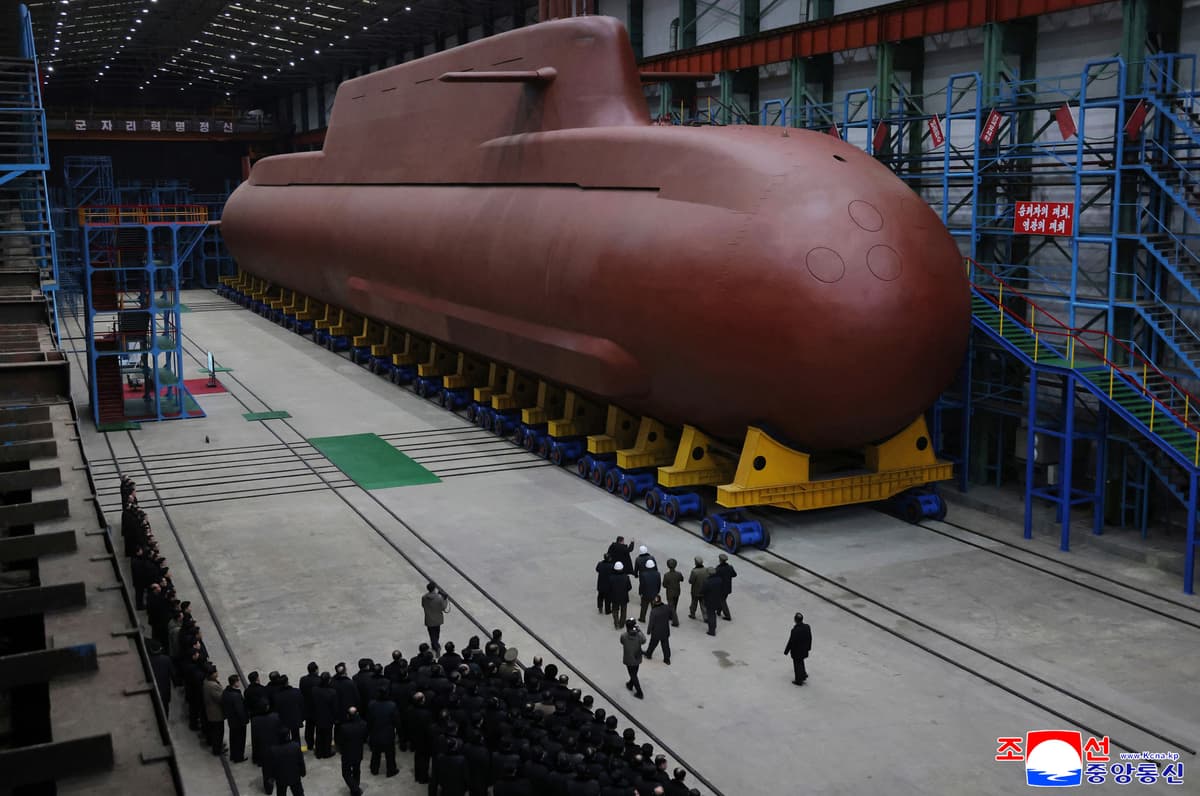
Tensions on the Korean Peninsula are escalating as both North and South Korea advance their nuclear submarine programs. North Korea is nearing the completion of what it claims to be its first nuclear-powered submarine, while South Korea is set to begin construction of its own nuclear submarine at a shipyard in Philadelphia. This development signals a significant shift in the military capabilities of both nations.
North Korea’s Nuclear Ambitions
In September 2023, North Korean leader Kim Jong-un announced that the country is finalizing its first nuclear submarine, which is expected to enhance its maritime defense strategies. The submarine is designed to carry ballistic missiles, bolstering North Korea’s second-strike capability. The announcement was made during a visit to a shipyard, where Kim emphasized the importance of strengthening the country’s naval forces.
The submarine is part of a broader strategy to modernize North Korea’s military capabilities amid ongoing tensions with the West and South Korea. Analysts suggest that this advancement may further complicate diplomatic efforts in the region, as North Korea seeks to solidify its status as a nuclear power.
South Korea’s Strategic Response
Responding to North Korea’s advancements, South Korea is moving forward with plans to construct its first nuclear submarine. The vessel will be built at a shipyard in Philadelphia, reflecting a significant investment in enhancing its naval defense capabilities. South Korea’s decision to pursue nuclear submarines comes amid increasing concerns about North Korea’s military developments, as well as its own security needs.
The South Korean government has not disclosed precise timelines for the submarine’s completion, but military officials have indicated that it will be equipped with advanced technology and weapons systems. This strategic initiative is expected to further strengthen South Korea’s defense posture in the face of growing threats from the North.
Implications for Regional Security
The simultaneous development of nuclear submarines by both countries raises questions about regional security dynamics. Experts warn that an arms race could emerge, with both nations seeking to outpace each other in military capabilities. Such competition may lead to increased military tensions and a higher risk of miscalculation in the region.
Moreover, the international community is closely monitoring these developments, as they could impact stability in Northeast Asia. The United States has reaffirmed its commitment to South Korea’s defense, which may influence North Korea’s future military decisions.
As both North and South Korea continue to enhance their naval capabilities, the potential for conflict remains a pressing concern. The ongoing developments in their nuclear submarine programs highlight the complex and evolving security landscape on the Korean Peninsula.