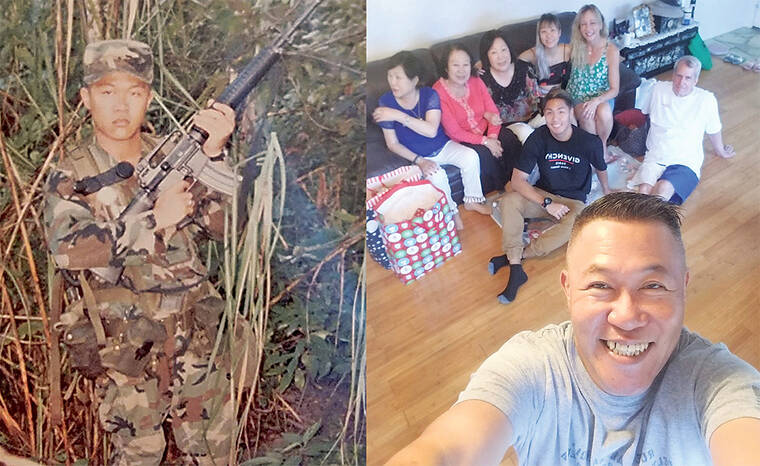
A congressional hearing on immigration policy turned contentious as lawmakers questioned Department of Homeland Security Secretary Kristi Noem regarding the deportation of military veterans, including Army veteran Sae Joon Park. Park, who has connections to Hawaii, was forced to self-deport to South Korea earlier in June 2023 after a series of legal troubles, raising concerns about the treatment of veterans under the current administration’s immigration policies.
During the hearing, U.S. Representative Seth Magaziner, a Democrat from Rhode Island, pressed Noem on the implications of deporting veterans who have served their country. He highlighted Park’s military service and sacrifice, stating that he had “sacrificed more for this country than most people ever have.” In response, Noem asserted, “Sir, we have not deported U.S. citizens or military veterans,” which prompted further scrutiny from lawmakers.
As the hearing progressed, an aide displayed a live video connection with Park in South Korea, making the situation even more poignant. Magaziner urged Noem to investigate Park’s case, pointing out that she had the discretion to do so as a Cabinet member. Noem responded affirmatively, promising to “absolutely look at his case.”
Park, now 56, expressed skepticism about whether Noem would follow through with her commitment but was visibly moved by the attention his story received. “I’m so very grateful for everything that happened today,” he said, recalling the flood of support he received from friends back in the United States. He noted that his appearance at the hearing was featured on ABC’s “Jimmy Kimmel Live!”, where Kimmel questioned the deportation of a veteran with a Purple Heart, criticizing Republican claims of caring for veterans.
Originally, Park immigrated to the United States from South Korea at the age of seven. He grew up in Los Angeles, particularly in Koreatown and the San Fernando Valley, and later joined the Army after graduating from Notre Dame High School in Sherman Oaks in 1988. He served in Panama during the U.S. military intervention against General Manuel Noriega, where he was wounded in combat, earning the Purple Heart.
After his military service, Park faced significant challenges, including untreated PTSD and struggles with substance abuse. The situation worsened when his family’s business was destroyed during the 1992 Los Angeles riots. Seeking a fresh start, Park moved to Hawaii with his family, where he married and had two children. However, his ongoing battles with mental health issues and addiction ultimately led to the collapse of his marriage.
Following a series of legal issues, including an arrest in New York for attempting to buy drugs, Park was issued a removal order by immigration officials. Despite his military background and previous good behavior, he was given the choice to self-deport or face immediate detention. Ultimately, he opted to leave voluntarily, though he described the transition back to South Korea as challenging.
“Of course, I miss home like crazy,” he said, referring to his life in Hawaii. Park also expressed concern for his 86-year-old mother, who is suffering from dementia. He noted that her lack of awareness about his situation has provided a strange comfort. “In a weird way, it’s kind of good because she doesn’t have to worry about me all the time,” he explained.
As Park adjusts to life in South Korea, he remains hopeful about returning to the United States. He continues to navigate the complexities of his situation while reflecting on the support he has received from those who advocate for veterans like him. The congressional hearing has not only brought attention to his case but also highlighted broader issues surrounding immigration policy and the treatment of veterans in the United States.