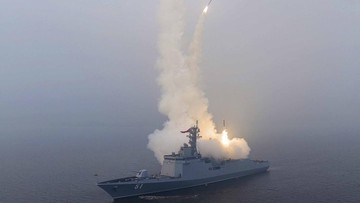
North Korea’s Supreme Leader, Kim Jong Un, oversaw a series of naval tests on October 22, 2023, as tensions escalated in the Middle East following a coordinated military campaign by Israel and the United States against Iran. This demonstration of military capability comes at a time when global attention is focused on the potential implications of the conflict in the region.
The naval exercises, held in the waters off the Korean Peninsula, involved various types of warships and showcased advancements in North Korea’s naval technology. Footage released by state media depicted Kim Jong Un on the deck of a warship, emphasizing the nation’s commitment to strengthening its military forces. The timing of these tests appears to be a strategic move to assert North Korea’s military readiness amidst the backdrop of international conflicts.
Military Show of Force
During the drills, North Korean state media reported that the exercises were designed to enhance the operational capabilities of the navy and ensure preparedness in the face of perceived threats. Analysts suggest that these tests are not only aimed at showcasing military strength but also serve as a signal to both regional and global powers that North Korea remains a formidable player in international affairs.
The backdrop of the recent conflict in the Middle East, particularly the ongoing tensions between Iran and its adversaries, has drawn significant media attention. As the situation unfolds, military analysts are closely monitoring North Korea’s actions, which could have ramifications beyond the Korean Peninsula.
Geopolitical Implications
The military tests underscore the complex web of global relations and the potential for escalation in various regions. North Korea’s assertiveness could be seen as a direct response to the U.S. and Israeli military actions, suggesting a potential shift in strategic dynamics. With Kim Jong Un asserting his authority domestically, the implications for regional stability are significant.
Furthermore, the international community is watching closely for any signs of retaliatory actions or further military developments from North Korea. The implications of these tests extend beyond mere military demonstration; they raise questions about the future of security in Northeast Asia and the broader geopolitical landscape.
As the situation continues to evolve, the interplay between military actions in the Middle East and North Korea’s naval capabilities will likely remain a focal point for analysts and policymakers alike. The developments in this context highlight an increasingly interconnected world where regional conflicts can influence military posturing and strategic decisions across the globe.