In a striking display of frustration, Palestinian citizens of Israel are demanding government intervention to combat escalating crime rates within their communities. The catalyst for this outcry was the recent experience of Ali Zbeedat, a shopkeeper from Sakhnin, who received a threatening message warning him of imminent violence if he did not comply with criminal demands. This incident, combined with a history of targeted attacks on his businesses, has led to widespread protests and temporary closures of shops in Sakhnin.
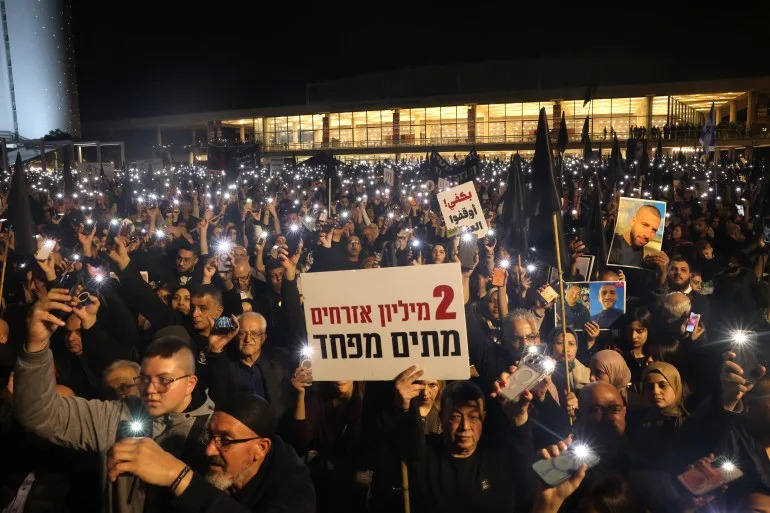
Zbeedat’s situation is emblematic of a larger crisis affecting Palestinian towns and villages across Israel. Following the closure of his businesses, many others in Sakhnin joined him in protest against the rampant organized crime that they believe the government has neglected. As news of the protests spread, tens of thousands of demonstrators, both Palestinian and Jewish Israeli, flooded the streets in cities like Tel Aviv and Jerusalem, expressing their anger over the violence that has permeated these communities.
Aida Touma-Suleiman, a Palestinian member of the Israeli parliament representing the left-wing Hadash-Ta’al faction, highlighted the severity of the situation, noting that in 2025, a staggering 252 Palestinians were murdered in Israel. She emphasized that this figure does not reflect the full scope of the crisis, which includes the fear and disruption experienced by countless families.
Government Inaction and Community Struggles
Palestinian citizens in Israel, who make up approximately 21 percent of the national population, often live in isolation from the rest of society. They face significant challenges, including government neglect, poverty, and a lack of resources. According to the National Insurance Institute, around 38 percent of Palestinian households fall below the poverty line, with many struggling to make ends meet. The situation has been exacerbated by high unemployment rates, particularly following restrictions on movement after the 2023 Gaza conflict.
Touma-Suleiman described the conditions in these communities as “Hobbesian,” alluding to the philosopher’s depiction of life without the protection of a governing authority. She argued that the absence of effective policing creates a fertile environment for organized crime to flourish, allowing gangs to operate with impunity. Many residents feel abandoned by the state, which has historically failed to provide adequate policing or support for their communities.
The gangs in these areas have grown increasingly sophisticated, resembling organized crime syndicates found in other parts of the world. They engage in various illicit activities, including drug trafficking and extortion, while simultaneously controlling local businesses. This situation has been compounded by the influence of families who have relocated from the occupied territories and established criminal operations within Israeli Palestinian communities.
A Call for Change
The recent protests have drawn significant attention from Israeli society and government officials. In response to the growing public concern, Israeli Prime Minister Benjamin Netanyahu is reportedly considering appointing Itamar Ben-Gvir, the Minister of National Security, to lead a task force aimed at addressing the problem of organized crime in Palestinian communities. This proposed action reflects a recognition of the urgent need for change, although many remain skeptical about the government’s commitment to genuine reform.
During the protests, demonstrators held aloft banners proclaiming messages such as “Enough violence and murder” and “Arab Lives Matter.” The outpouring of anger illustrates a widespread demand for safety and justice within these communities. Prominent Israeli sociologist Yehouda Shenhav-Shahrabani noted that many Jewish Israelis often overlook the systemic issues that allow violence to persist, focusing instead on the perceived dangers of Palestinian neighborhoods.
The stark contrast between the experiences of Palestinian and Jewish children in Israel further underscores the urgent need for reform. As highlighted by Hassan Jabareen, director of the Arab rights organization Adalah, the safety and security of youth can vary dramatically based on their community. While one child may go to sleep with the assurance of safety, another in a Palestinian area may lie awake, fearful of gun violence.
As protests continue and public pressure mounts, the demand for effective government action against organized crime in Palestinian communities has never been more pronounced. The situation remains critical, and the path forward will require not only acknowledgment of the problem but also a genuine commitment to meaningful change.