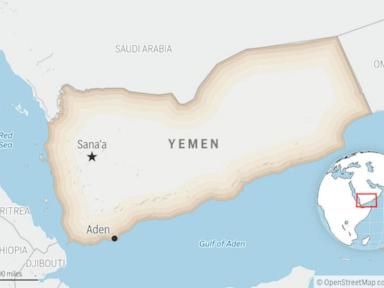
Saudi Arabia has officially called on the Emirati-backed separatists in Yemen to withdraw their forces from two governorates they currently control. This announcement, made on December 25, 2023, heightens tensions within a fragile coalition that has been engaged in conflict against the Houthi rebels since 2015. The statement from the Saudi Foreign Ministry aims to exert public pressure on the Southern Transitional Council (STC), which has received long-standing support from the United Arab Emirates.
The Saudi Foreign Ministry emphasized the necessity for cooperation among all Yemeni factions, urging restraint to avoid actions that could destabilize the region. The ministry warned that any such measures could lead to “undesirable consequences.” The STC has recently established a presence in the Yemeni governorates of Hadramout and Mahra, prompting Saudi Arabia to call for the council’s forces to revert to their previous positions outside these areas. The intention is for the STC to hand over control of the camps in these regions to the National Shield Forces.
As the STC has increasingly raised the flag of South Yemen—once an independent state from 1967 to 1990—calls for demonstrations in Aden surfaced to support political factions advocating for another secession from Yemen. The outcome of these planned protests remains uncertain in light of Saudi Arabia’s intervention. Aden has historically served as the base for forces opposing the Houthis.
This confrontation has implications for the relationship between Saudi Arabia and the UAE, both of which are members of OPEC and have maintained close ties. However, their competition for influence in the region has intensified in recent years.
The conflict in Yemen began when the Houthis captured the capital, Sanaa, in September 2014, displacing the internationally recognized government into exile. Iran has been accused of supporting the Houthis, although Tehran denies providing arms, despite evidence of Iranian-manufactured weaponry found in Yemen.
The Saudi-led coalition, supported by U.S. weaponry and intelligence, intervened in March 2015 to aid Yemen’s exiled government. Years of protracted fighting have pushed Yemen to the brink of famine, with more than 150,000 people reported dead, including both combatants and civilians. The war has created one of the world’s most severe humanitarian crises, resulting in the deaths of tens of thousands more.
The Houthis have also disrupted shipping in the Red Sea corridor, launching attacks on numerous vessels amidst the ongoing Israel-Hamas conflict. Although recent weeks have seen a slight increase in shipping traffic, many companies continue to reroute around Africa to avoid the Red Sea and the Gulf of Aden.
Further instability in Yemen could again draw in the United States, which has engaged in military actions against the Houthis, including airstrikes with B-2 bombers targeting alleged Houthi bunkers. As tensions escalate, the Houthis have increasingly threatened Saudi Arabia and taken several workers from U.N. agencies and other humanitarian organizations as prisoners, accusing them of espionage—a claim firmly denied by the U.N. and other entities.
The situation remains fluid, and the potential for further conflict in Yemen continues to pose significant challenges for regional stability.