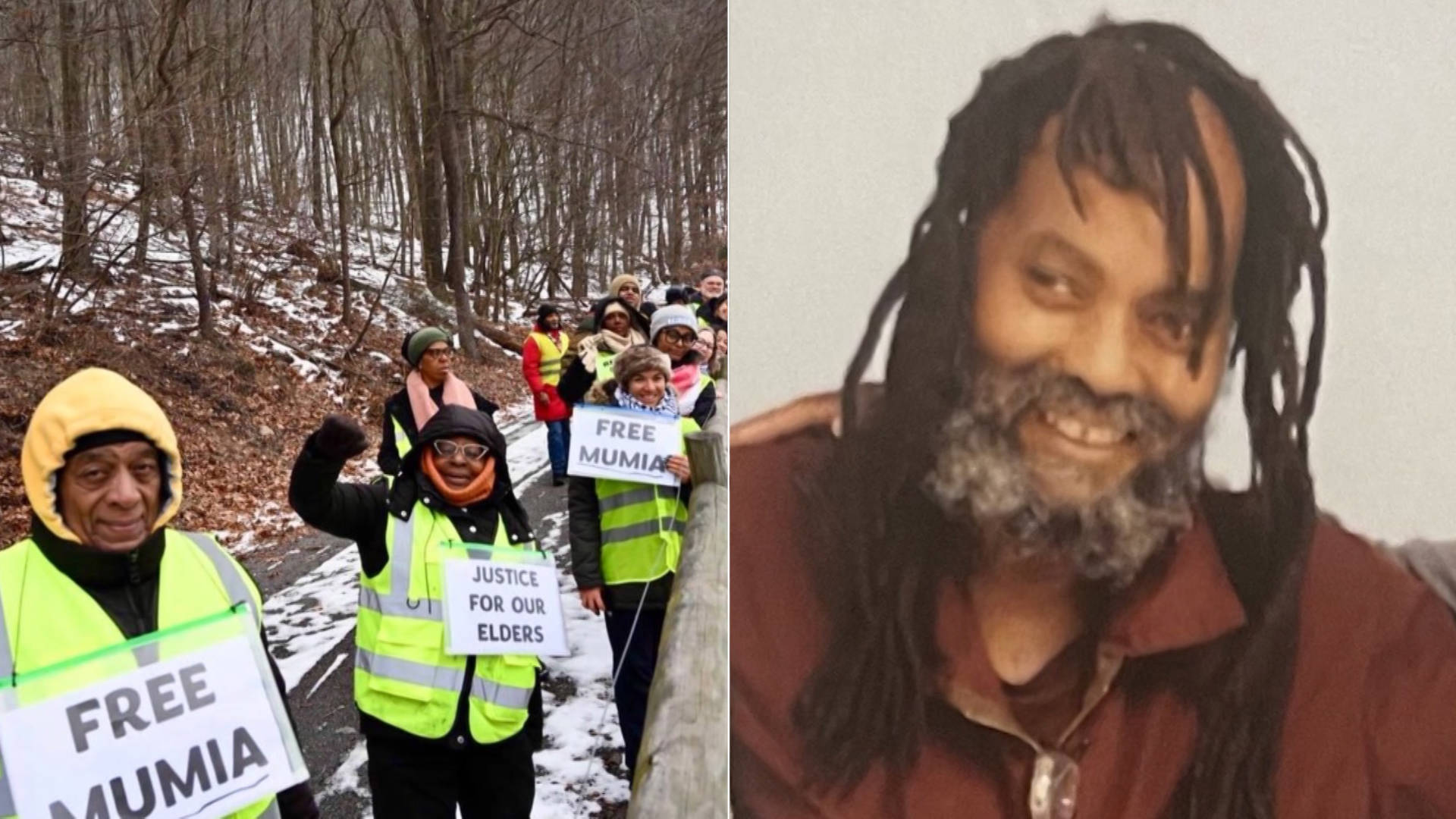
Supporters of renowned political prisoner Mumia Abu-Jamal have embarked on a significant 103-mile, 12-day march to advocate for his medical care and the rights of aging prisoners. The march culminates today in Frackville, Pennsylvania, near the State Correctional Institution (SCI) Mahanoy, where Abu-Jamal is currently incarcerated. This date, December 9, 2023, marks the anniversary of his arrest in 1981 for the murder of Philadelphia police officer Daniel Faulkner, a crime he has consistently denied committing.
Abu-Jamal’s case has drawn international attention as he is one of the most well-known political prisoners globally. Before his incarceration, he was an acclaimed journalist and co-founder of the Philadelphia chapter of the Black Panther Party. Human rights organizations, including Amnesty International, have raised concerns about the fairness of his trial, citing evidence of judicial bias and misconduct by police and prosecutors. Findings from 2019 revealed serious issues, including the suppression of evidence and witness coercion.
At 71 years old, Abu-Jamal’s health has deteriorated, leading advocates to claim that he is not receiving adequate medical care. His legal team states that he faces permanent loss of vision unless he receives urgent treatment. “We are marching today to demand freedom for Mumia and all political prisoners,” said activist Larry Hamm, who is participating in the march. “We ration healthcare in this country, especially for prisoners,” added Noelle Hanrahan, a member of Abu-Jamal’s legal team. “We demand that he is given the treatment that he deserves.”
The march reflects a broader concern regarding the healthcare treatment of elderly prisoners. Supporters aim to raise awareness about systemic neglect and the urgent need for humane care. “The walk for freedom is a long walk,” remarked Zayid Muhammad, another activist involved in the march. “Under no circumstances can we allow the state to take any more of our freedom fighters. It’s time to get Mumia all the healthcare he needs.”
Abu-Jamal’s health issues have become acute following a period of blindness that lasted eight months until he underwent cataract surgery. Advocates are pressing for further specialized treatment for conditions such as glaucoma and diabetic retinopathy, which could lead to irreversible vision loss.
In light of these developments, Hanrahan highlighted the obstacles Abu-Jamal faces in accessing adequate care. “There are contracts that limit ophthalmological care in prison to on-site monitoring,” she explained. “We had to fight just for post-cataract surgery care.” This struggle for medical attention is emblematic of broader issues within the prison healthcare system, where financial constraints often dictate the level of care inmates receive.
Supporters are also calling on the Philadelphia District Attorney, Larry Krasner, to reopen Abu-Jamal’s case based on new evidence of bias. Despite a progressive reputation, Krasner faces significant pressures that complicate moves toward justice for Abu-Jamal and others in similar situations.
As the march reaches its final destination, participants will hold a press conference to reiterate their demands for medical care for Abu-Jamal and for all political prisoners. “Today we will march the last three miles to Mahanoy prison, where Mumia is incarcerated,” said Hamm. “We will make the call for Mumia to get the medical care that he needs, and for all prisoners, especially our elders, to receive the medical attention they deserve.”
The ongoing struggle for Mumia Abu-Jamal is not just a fight for one individual; it encapsulates broader themes of justice, human rights, and the treatment of vulnerable populations within the prison system. As advocates continue their efforts, they emphasize the importance of solidarity and persistent activism in the quest for justice.