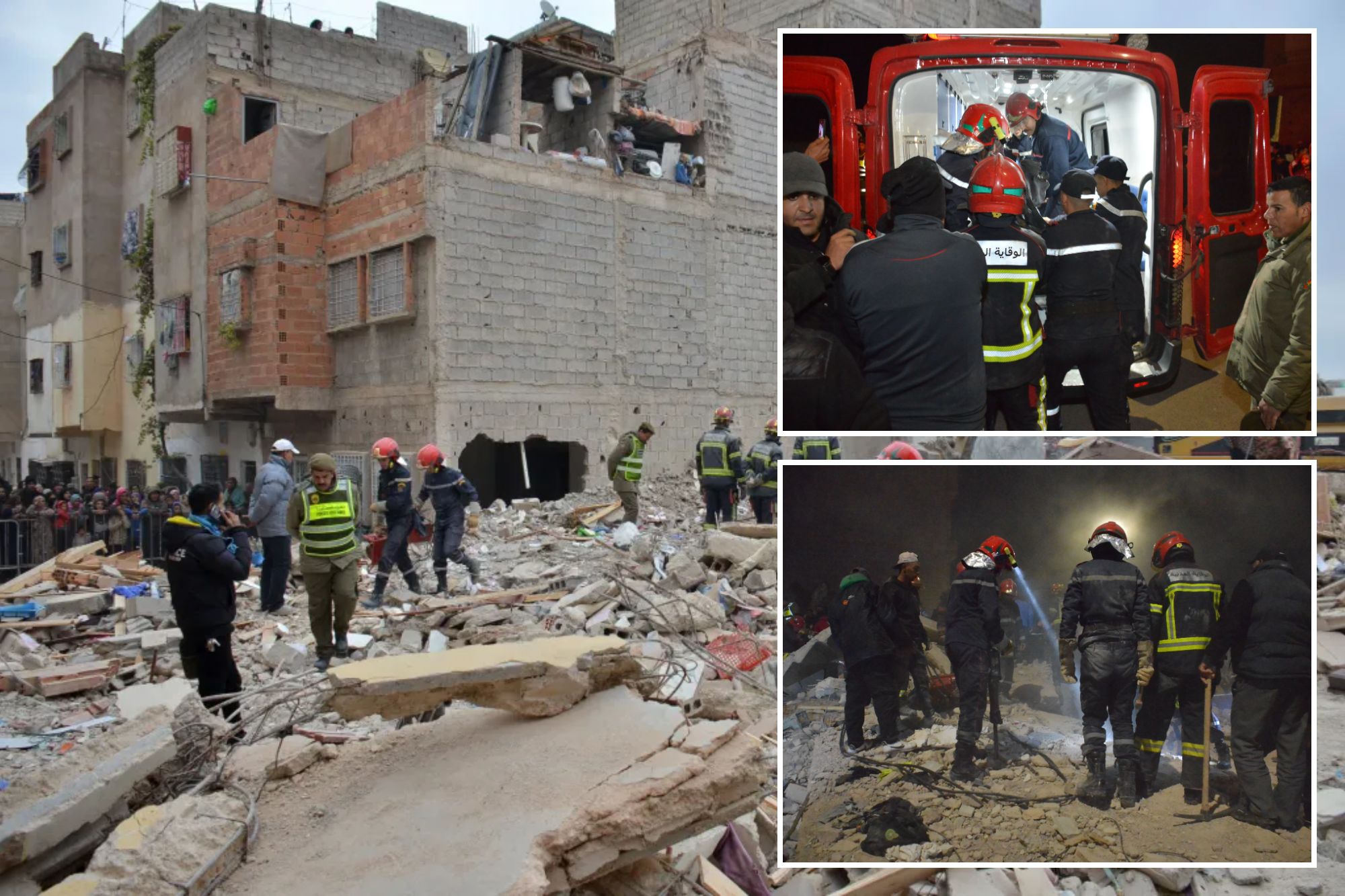
At least 22 people have died and 16 others sustained injuries following the collapse of two adjacent buildings in Fez, one of Morocco’s oldest cities. The incident occurred overnight on March 6, 2024, during a traditional Muslim celebration known as an Aqiqah, which marks the birth of a child. According to the Fez prosecutor, one of the buildings was unoccupied at the time of the collapse.
The prosecutor noted that the death toll is preliminary and an investigation has been initiated to determine the cause of the disaster. Local authorities reported that eight families resided in the building where the celebration was taking place. Both structures were four stories high and had been showing signs of distress prior to the collapse.
Rescue Efforts and Eyewitness Accounts
Survivors have shared harrowing accounts of the tragedy. One man, who lost his wife and three children, recounted that rescuers managed to retrieve one body from the rubble but he is still waiting for the others to be found. Footage from state-owned broadcaster SNRT News depicted rescue workers and residents digging through the debris in a desperate search for survivors.
An eyewitness, an elderly woman wrapped in a blanket, described the moment the buildings began to give way. “My son who lives upstairs told me the building is coming down. When we went out, we saw the building collapsing,” she told SNRT News without revealing her name.
Witnesses in the densely populated Al-Mustaqbal neighborhood noted that the buildings had exhibited cracks for some time before the collapse. While the Interior Ministry has not yet commented on the incident, state television indicated that the buildings’ structural issues were likely known to local officials.
Context of Deteriorating Conditions in Fez
The collapse has raised concerns about the state of housing in Fez, a city that has been the focal point of recent anti-government protests over deteriorating living conditions and inadequate public services. Two months ago, residents expressed their frustration over poverty and the lack of basic amenities during protests.
In January, Adib Ben Ibrahim, housing secretary of state, revealed that approximately 38,800 buildings across Morocco are classified as at risk of collapse. With the recent incident being one of the deadliest in Morocco since the fall of a minaret in Meknes in 2010, which claimed 41 lives, the situation has prompted urgent calls for action to address the structural integrity of buildings across the country.
Most of Morocco’s urban population, including key economic and industrial hubs, is concentrated in the northwest region. Meanwhile, rural areas primarily depend on agriculture, fisheries, and tourism. The youth-led unrest in October exposed widespread frustration over poverty and inadequate public services, particularly as the government promotes ambitious infrastructure projects ahead of the 2030 FIFA World Cup and the ongoing African Cup of Nations tournament.
Fez, which is set to host matches for both significant events, is home to many impoverished neighborhoods. The recent tragedy underscores the urgent need for effective governance and investment in public safety to prevent further loss of life.