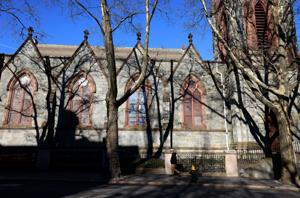
A significant development in the investigation of the mass shooting at Brown University occurred when authorities discovered the primary suspect, Claudio Neves Valente, dead in a storage facility in New Hampshire on Thursday. Valente, a 48-year-old former student of Brown and a Portuguese national, was found with a self-inflicted gunshot wound. He is suspected of fatally shooting two students and injuring nine others during a lecture on Saturday, followed by the murder of Nuno F.G. Loureiro, a professor at the Massachusetts Institute of Technology (MIT), two days later at his home in Brookline, approximately 80 kilometers from Providence.
According to Col. Oscar Perez, the chief of police in Providence, investigators believe that Valente acted alone in these violent incidents. Christina Paxson, president of Brown University, confirmed that Valente was a graduate student studying physics at the university from the fall of 2000 until the spring of 2001, stating, “He has no current affiliation with the university.”
Valente and Loureiro were previously connected through their studies in Portugal, where they both attended the same academic program between 1995 and 2000. Loureiro graduated from the Instituto Superior Técnico, a prestigious engineering school in Portugal, in 2000. U.S. Attorney for Massachusetts Leah B. Foley noted that Valente was dismissed from his position at the Lisbon university in February 2000. Valente moved to the United States on a student visa and obtained legal permanent residency in September 2017. His last known residence was in Miami, but details remain unclear regarding his activities between 2001 and 2017.
After Valente’s identity was revealed, President Donald Trump suspended the green card lottery program that facilitated Valente’s residency in the United States. Rhode Island Attorney General Peter Neronha highlighted the ongoing uncertainty regarding the suspect’s motives, stating, “We don’t know why now, why Brown, why these students and why this classroom.”
Investigation Details and Breakthroughs
The investigation’s progress was significantly aided by a witness who recognized Valente from images released by the police. This individual shared their suspicions on the social media platform Reddit, which ultimately led investigators to locate Valente’s vehicle. The police were able to track a Nissan sedan with Florida plates using a citywide network of over 70 street cameras operated by Flock Safety.
After leaving Rhode Island, Valente attempted to conceal his identity by placing a Maine license plate over the rental car’s original plate. Surveillance footage captured him entering an apartment building near Loureiro’s residence before he was last seen entering a storage facility in Salem, New Hampshire. At the time of his death, Valente was in possession of a satchel and two firearms, according to Neronha.
Loureiro, who joined MIT in 2016, was appointed to lead the school’s Plasma Science and Fusion Center, making significant contributions to the understanding of astrophysical phenomena, including solar flares. Despite the tragic connections between the two men, the FBI has stated that no links exist between the two shootings.
Public Reaction and Historical Context
The tragic events at Brown University have sparked a wave of public concern and grief. In the wake of such targeted attacks, it is common for perpetrators to take their own lives or be apprehended. History shows that manhunts can extend over days, as seen in the 2013 Boston Marathon bombing, where suspects were identified four days post-incident. Similarly, the case of Army reservist Robert Card, who was found dead after a mass shooting in Lewiston, Maine, illustrates the complexities faced by law enforcement in these situations.
As the investigation continues, officials emphasize the need for answers regarding the motive behind these violent acts. The community is left to grapple with the aftermath of these tragedies, seeking clarity and understanding in the wake of profound loss.