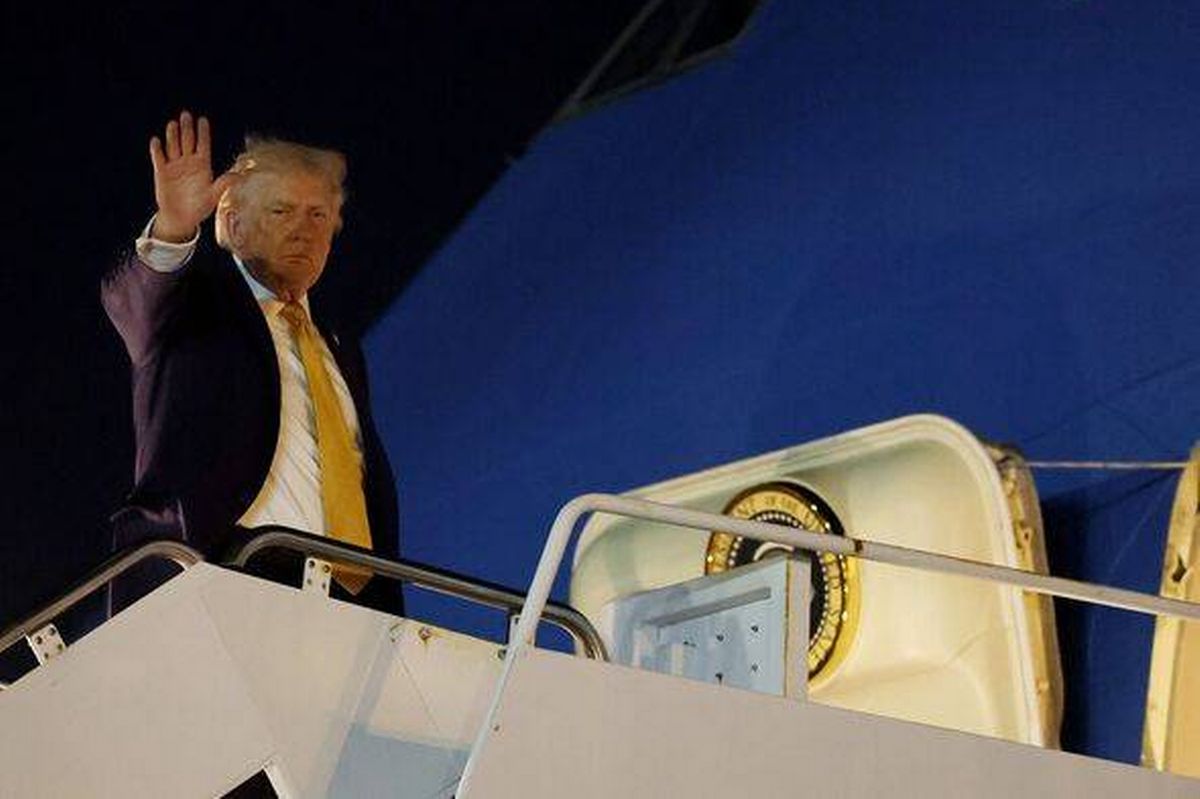
The new U.S. National Security Strategy reveals President Donald Trump‘s ambition to secure a foreign policy legacy as a “President of Peace.” This comes amid claims of eight peace agreements achieved over the past year, including one related to Gaza. Trump has also campaigned for a Nobel Peace Prize and received an inaugural FIFA Peace Prize. However, elements of this strategy could inadvertently enable Russian President Vladimir Putin to miscalculate and instigate further conflict in Europe.
The strategy draws upon over a century of previous U.S. foreign policy, prioritizing the Western Hemisphere and introducing a new Trump Corollary to the Monroe Doctrine. This mirrors earlier interventionist approaches seen during the presidencies of Teddy Roosevelt and William McKinley. While it advocates for a strong defense capability, it also carries hints of isolationism reminiscent of post-World War I sentiments.
One key aspect of the strategy is its call for European nations to enhance their own defense capabilities. Administration officials have suggested a deadline of 2027 for Europe to become the primary defender of its security, a timeline many experts deem unrealistic. The transition will require significant time and resources, particularly to establish independent nuclear deterrents and battlefield support systems.
While the strategy emphasizes military deterrence in Asia, it does not convey the same urgency regarding Europe. Instead, it appears to downplay the existential threat posed by Russia, placing Europe as the third priority in terms of regional focus. This could lead to doubts about America’s commitment to NATO’s Article 5, which asserts that an attack on one member is an attack on all.
Critically, Trump’s strategy also reflects a non-interventionist approach, which may provide comfort to some Latin American countries but raises concerns among European allies who depend on U.S. support to deter Russian actions. The call for a swift cessation of hostilities in Ukraine and a return to strategic stability with Russia overlooks the fact that Russia is the aggressor in this conflict.
“The strategy goes so far as to blame European governments for having unrealistic expectations and for delaying the peace process,”
observed Hans Binnendijk, a distinguished fellow at the Atlantic Council. His insights highlight the potential for misunderstandings and miscalculations, reminiscent of historical precedents leading to war.
Past miscalculations, such as those by the Kaiser in 1917 and Saddam Hussein in 1990, serve as a stark reminder of the dangers of underestimating a rival. Putin has already misjudged the resolve of Ukraine, and he could easily do so again if he perceives a lack of commitment from the United States and its allies.
To bolster deterrence, Trump must reaffirm the U.S. commitment to NATO and resist significant troop withdrawals from Europe. Additionally, European nations should aim to meet the proposed goal of increasing defense spending to 5% of GDP by 2035 and continue providing support to Ukraine.
In the long term, a new transatlantic compact may be necessary to redefine roles and responsibilities within the alliance. With the potential for miscalculation looming large, both the United States and Europe must act decisively to ensure a stable and secure future, reinforcing their commitment to mutual defense and cooperation in the face of threats.