The United States has seized two oil tankers linked to Venezuela, taking significant action in the North Atlantic and Caribbean Sea. The U.S. European Command confirmed the seizure of the merchant vessel Bella 1 for violating U.S. sanctions, which was pursued since last month after attempting to evade a blockade targeting sanctioned vessels around Venezuela. Secretary of Homeland Security Kristi Noem later announced that U.S. forces also took control of the tanker Sophia, stating that both ships were either docked in Venezuela or en route to it.
Both vessels are part of a larger “ghost fleet” that transports oil from countries such as Russia, Iran, and Venezuela, defying Western sanctions primarily to clients in Asia. The U.S. government has initiated a selective removal of sanctions to facilitate the sale of Venezuelan oil on the global market. According to an outline released by the U.S. Energy Department, sales are set to begin immediately, with plans to sell between 30 million to 50 million barrels of oil from Venezuela. The generated revenue is expected to be deposited in U.S.-controlled accounts at recognized banks and distributed to both U.S. and Venezuelan populations.
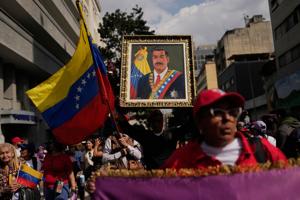
The seizure of the two tankers follows a recent U.S. military operation that resulted in the capture of former Venezuelan President Nicolás Maduro. The Trump administration has accused Maduro of collaborating with drug traffickers. Following this operation, officials indicated their intention to continue seizing vessels associated with Venezuela. Secretary of State Marco Rubio stated on NBC that the U.S. is committed to enforcing oil sanctions and will pursue legal actions to seize ships carrying sanctioned oil.
The Bella 1 was previously sanctioned in 2024 for allegedly smuggling cargo for a company linked to Hezbollah, a militant group supported by Iran. The vessel altered its course in mid-December after a previous seizure of another tanker, Skipper, which had been caught transporting oil from Venezuela. The U.S. Coast Guard reported that the Bella 1 was tracked prior to its seizure, which occurred under a warrant issued by a federal court.
In a recent statement, Russia’s Foreign Ministry expressed concern about the situation surrounding the Bella 1 and stated that no state has the right to use force against vessels registered in other jurisdictions, referencing the 1982 U.N. Convention on the Law of the Sea. Following the seizure, Russia’s Ministry of Transport confirmed the boarding of the tanker and reiterated its stance against the U.S. actions.
As these developments unfold, Maduro has appeared in court in New York, pleading not guilty to federal drug trafficking charges. His legal team plans to contest the legality of his capture, with Maduro asserting, “I was captured at my home in Caracas,” describing his situation as a kidnapping.
This series of actions underscores the ongoing tensions between the U.S. and Venezuela, as well as the complex interplay of international laws and sanctions affecting global oil markets. The U.S. continues to navigate these challenges, aiming to enforce its sanctions while managing the repercussions on international relations and local populations in Venezuela.