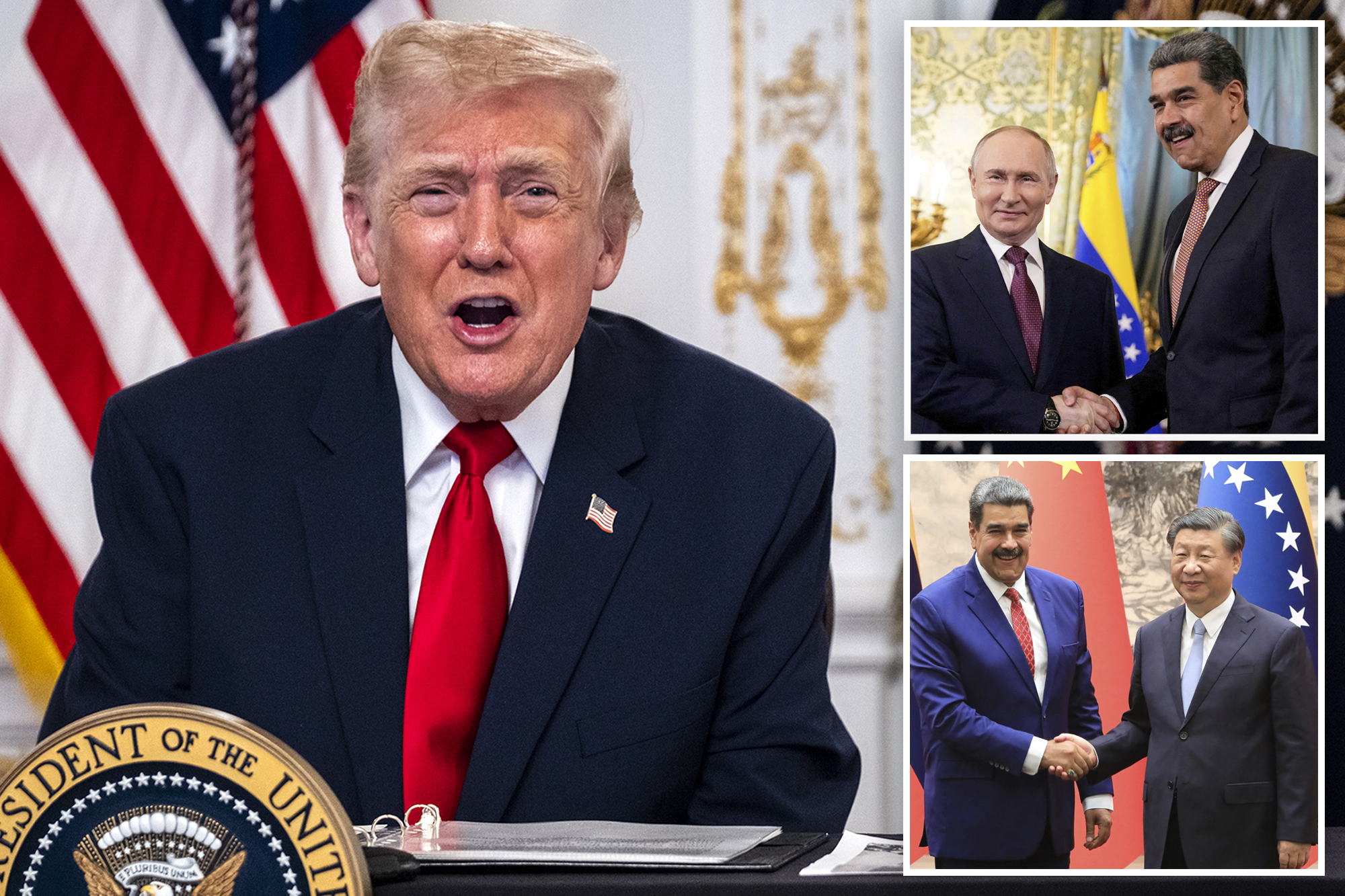
Venezuelan President Nicolás Maduro is experiencing a significant reduction in support from his traditional allies, Russia and China, as U.S. President Donald Trump intensifies military pressure on Caracas. Both nations, which have historically provided military equipment, financial assistance, and training to Venezuela, are now distancing themselves amid their own pressing military and economic challenges.
In the past, Russia showcased its support by deploying nuclear-capable bombers to Venezuela in 2018, signaling a united front against U.S. influence. However, the situation has shifted dramatically. As Vladimir Rouvinski, an international relations professor at Icesi University, noted in a recent interview with the Wall Street Journal, “These are small gestures that are not going to be sufficient if the U.S. moves to deadly force on Venezuela.” To date, Russia has only supplied two oil tankers to assist in Venezuela’s crude oil exports to China, a stark contrast to its previous military engagements.
Shifting Dynamics in Global Alliances
The decline in support from Moscow and Beijing comes as both nations find themselves embroiled in tense diplomatic and trade relations with the U.S. Rouvinski emphasized that neither country is inclined to provoke President Trump by making Venezuela a contentious issue. “Russia isn’t going to help Maduro beyond what they’ve already done,” he stated, highlighting the limitations of the current Russian engagement.
Historically, Venezuela has cultivated relationships with China, Russia, and other nations opposed to U.S. hegemony to foster an economic alliance. Under Maduro’s predecessor, Hugo Chavez, the country leveraged its substantial oil and mineral resources to secure over $30 billion in loans and agreements with countries like China and Russia to bolster its infrastructure. However, the deterioration of oil production and increasing civil unrest since Maduro took office in 2013 have complicated these alliances, particularly after the U.S. imposed sanctions on Venezuela’s oil industry in 2019.
The ramifications of a potential fall of Maduro’s government would be particularly detrimental for China, which has invested heavily in Venezuela. The Stockholm International Peace Research Institute reports that Beijing has supplied more than $30 billion in arms to Caracas since 2000, making it the largest beneficiary of Venezuela’s military contracts.
Venezuela’s Desperate Appeals for Assistance
In light of the escalating tensions, Maduro has reached out to both Russia and China for assistance. Reports from the Washington Post indicate that he directly requested aid from Vladimir Putin for defensive radars, aircraft repairs, and even missiles. Additionally, Maduro sought an expansion of military cooperation with Xi Jinping to address the perceived threat from the U.S.
Despite these requests, the response from Moscow and Beijing has been tepid. The current geopolitical landscape, particularly Russia’s ongoing war in Ukraine and China’s strategic focus on its own regional interests, has led to a notable withdrawal of support for Maduro. This situation mirrors events in other regions, such as Iran, where Russia and China provided limited assistance during heightened tensions with the U.S. over the summer.
As Venezuela grapples with increasing isolation, the long-term implications for Maduro’s administration and its relationships with global powers remain uncertain. The shift in support from Russia and China illustrates the complexities of international alliances in a volatile geopolitical environment, suggesting that Maduro may face mounting challenges in maintaining his grip on power.