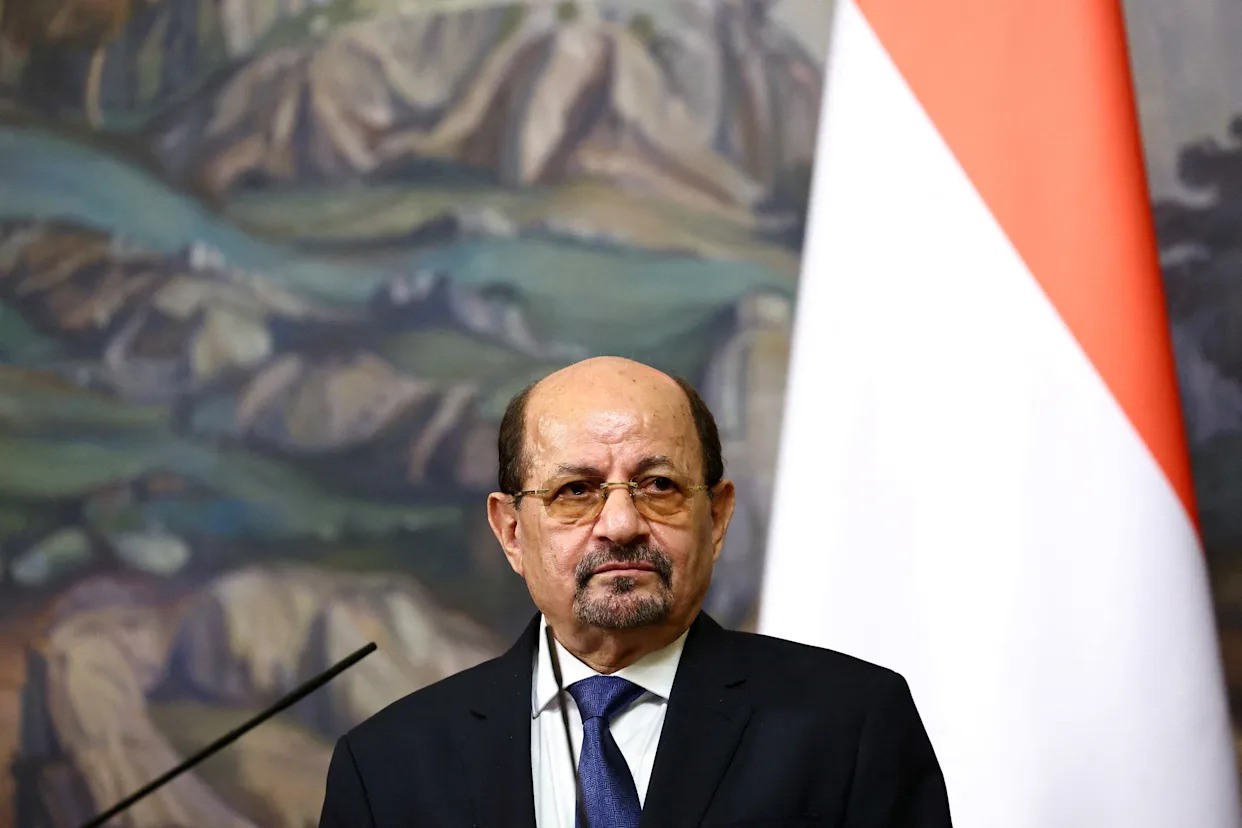
Yemen’s Saudi-backed presidential leadership council has appointed Foreign Minister Shaya Mohsin al-Zindani as the new prime minister following the resignation of Salem bin Breik. The announcement came from the state news agency Saba on Thursday, confirming that the council approved bin Breik’s resignation before endorsing Zindani to form the next cabinet.
This leadership change occurs against a backdrop of escalating tensions between Saudi Arabia and the United Arab Emirates (UAE) in Yemen. The Southern Transitional Council (STC), a prominent separatist group supported by the UAE, has gained control of significant territories in southern and eastern Yemen. In December, these forces advanced close to the Saudi border, a move perceived as a threat to Saudi national security. Although Saudi-backed fighters have since regained many of those areas, the friction between the two Gulf powers continues to rise, fueled by disagreements over geopolitics and oil production.
In a significant move consolidating Saudi Arabia’s influence, Yemen’s eight-seat presidential body dismissed southern separatist Faraj Salmeen Al-Bahsani, currently receiving medical treatment in the UAE. Al-Bahsani, who served as vice president of the STC and governor of the oil-rich Hadramout province, was removed as part of a resolution aimed at strengthening Saudi control over Yemen’s decision-making processes. The council stated, “It was decided to terminate the membership of Faraj Salmeen Al-Bahsani in the Presidential Leadership Council,” citing his support for the STC and recent statements he made.
Earlier this month, STC leader Aidarous al-Zubaidi was also dismissed and subsequently fled to the UAE, following accusations of “high treason.” Al-Bahsani’s removal highlights the ongoing power struggles within Yemen’s political landscape, particularly among factions vying for control.
In a recent interview with the AFP news agency, Al-Bahsani expressed that southern forces, including separatists, would resist unification under the Saudi-led coalition’s command. He urged Saudi Arabia to allow southern factions to hold discussions outside the kingdom to avoid undue pressure during negotiations. “I call on Saudi Arabia to give southerners an opportunity to meet outside Saudi Arabia,” he stated, emphasizing the need for a neutral setting for talks.
The situation escalated further last week when a high-level separatist delegation announced the dissolution of their group while in Riyadh for discussions. The STC claimed this decision was made under duress, accusing Saudi Arabia of detaining members of the delegation.
To reinforce its position, the Presidential Leadership Council introduced two pro-Saudi figures to fill the void left by Zubaidi and Al-Bahsani. Lieutenant General Mahmoud al-Subaihi, a former defence minister, and Salem al-Khanbashi, the governor of Hadramout, were named as new council members.
In a show of support for Yemen, Saudi Arabia announced a financial commitment of $90 million to cover two months of salaries for public servants and servicemen. This pledge follows a previous commitment of $500 million for humanitarian projects aimed at alleviating the ongoing crisis in Yemen, one of the world’s most severe humanitarian situations.
As Yemen navigates these complex political changes, the impact on its citizens remains profound, with the humanitarian crisis continuing to deepen amid political unrest. The new administration under Zindani will face the challenge of uniting a fractured nation while dealing with external pressures from regional powers.