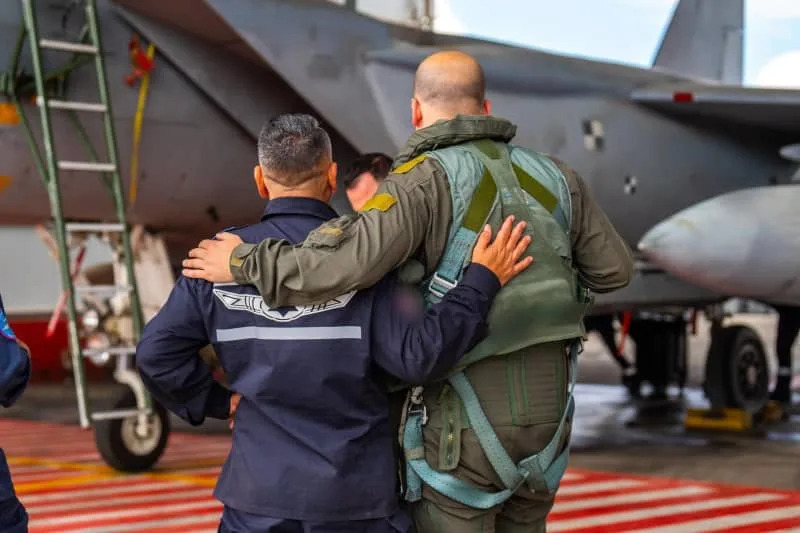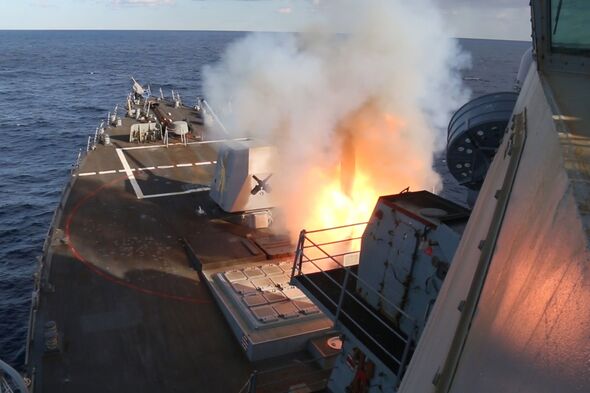
The U.S. Central Command has released striking images from “Operation Epic Fury,” a military operation conducted in conjunction with Israel targeting Iran. This operation marks a significant escalation in the ongoing tensions between the United States and the Islamic Republic of Iran (IRI). The military action has resulted in the death of Iran’s Supreme Leader, Ayatollah Ali Khamenei, and has led to a rapid deterioration of stability in the Middle East.
Prior to the strikes, former President Donald Trump significantly increased the U.S. military presence in the region. Notably, the deployment of the aircraft carrier USS Gerald R. Ford and four guided-missile destroyers from the Caribbean Sea bolstered American naval capabilities in the Middle East. This buildup, which included the arrival of the USS Lincoln and three additional destroyers at the end of January, aimed to enhance U.S. operational readiness in a volatile environment.
The joint military campaign has resulted in substantial loss of life, with reports indicating that hundreds have died, including at least six U.S. military service members. In a statement regarding the operation, Johnson, a senior military official, described the attack on Iran as a “defensive operation.” He emphasized that Israel was prepared to act against Iran independently, with or without American support, leading U.S. officials to conclude that Iran would likely retaliate against U.S. personnel and assets.
Images released from the operation depict the U.S. forces targeting multiple facilities associated with the Islamic Revolutionary Guard Corps (IRGC), showcasing the extensive military capabilities employed during the strikes. U.S. forces reportedly took control of significant portions of Iranian airspace as part of the operation.
The ramifications of this operation have the potential to expand the conflict throughout the region, raising concerns among global leaders about the broader implications of U.S.-Iran relations. As the situation evolves, it will be essential to monitor developments closely to assess the impact on both regional stability and international relations.