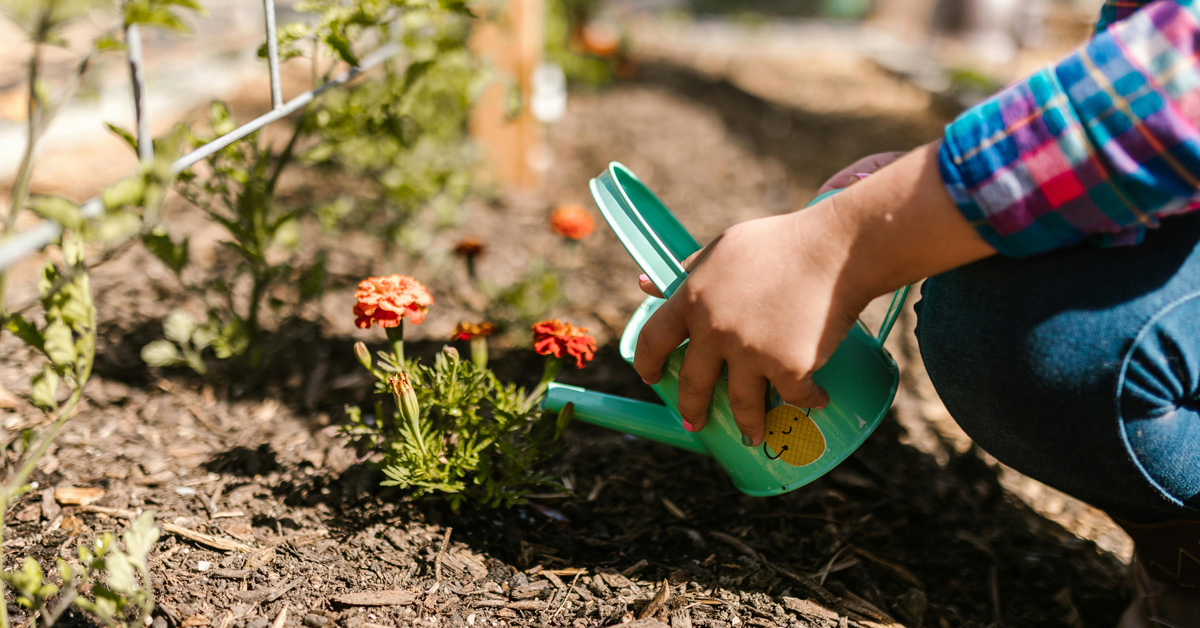
Schools nationwide are witnessing an urgent shift in how students connect with the environment, as school gardens emerge as powerful tools to spark positive attitudes toward science, farming, and sustainability.
Recent insights from agricultural specialist Shelley Mitchell of Oklahoma State University reveal that children involved in school gardening programs gain more than just a chance to grow food—they develop critical science skills, teamwork, and a deeper environmental awareness that could have lasting effects across America.
Hands-On Gardening Boosts Environmental and Science Literacy Nationwide
More than just a growing space, school gardens are becoming a vital educational laboratory in classrooms from rural Oklahoma to Ohio and beyond. Kids actively experimenting with factors like water, sunlight, and soil gain real-life science experience, sharply improving their understanding and retention.
Mitchell highlights that gardening “engages more regions of the brain” compared to passive classroom learning, fueling curiosity and helping students connect theoretical science to the natural world in practical, memorable ways.
With less than 2% of Americans now living on farms—a sharp decline from the 80% at the nation’s founding—school gardens fill an important gap. They reconnect children with agriculture, helping them appreciate the farm origins of their food and the challenges farmers face in today’s complex food systems.
Gardening Spurs Positive Attitudes, Health, and Food Choices
Engagement in gardens doesn’t just stay confined to school hours. Studies show children who garden at school tend to be more physically active outside school and develop healthier eating habits, including increased vegetable consumption.
These gardens also improve hand-eye coordination in younger children, underpinning success in handwriting, math, and reading. Most strikingly, allowing students freedom to experiment in the garden correlates with stronger positive feelings about school itself—an urgent win for educators striving to boost morale and engagement.
Barriers Remain But Benefits Outweigh Challenges
Despite obvious benefits, many schools hesitate to fully embrace gardening. Teachers often cite limited time, lack of funding, and insufficient gardening knowledge as major hurdles.
Additionally, administrators express concerns over space and the messy appearance of school gardens, which contrasts sharply with manicured botanical gardens. Yet Mitchell emphasizes that these imperfections are essential to hands-on learning, where students learn through trial, error, and discovery.
Cleaning up student experiments prematurely can dilute learning impact. Instead, letting students see the consequences of their choices—both successes and failures—builds responsibility and problem-solving skills critical for young futures.
National Support Strengthens School Garden Movement
The U.S. Department of Agriculture recognized the growing agriculture literacy gap and launched a task force in 1981 to combat it. This effort birthed the National Agriculture in the Classroom program, which today empowers teachers with curricula and tools to incorporate farming, gardening, and food systems education effectively.
Such programs are crucial in places like Ohio, where expanding urban and suburban development increasingly disconnects youth from agriculture and natural sciences.
What’s Next for School Gardens and Education?
As schools look to innovate and combat declining student engagement, school gardens offer an immediate, cost-effective solution that benefits children academically, physically, and emotionally. Educators, parents, and policymakers are urged to support and expand these hands-on learning environments nationwide.
With gardening proving it can boost science literacy and foster affection for the environment, the hope is that more American schools will plant the seeds now to cultivate a greener, smarter generation tomorrow.
Shelley Mitchell’s research remains a call to action: When students grow their own food, they grow their minds—and gain a vital connection to the world around them.