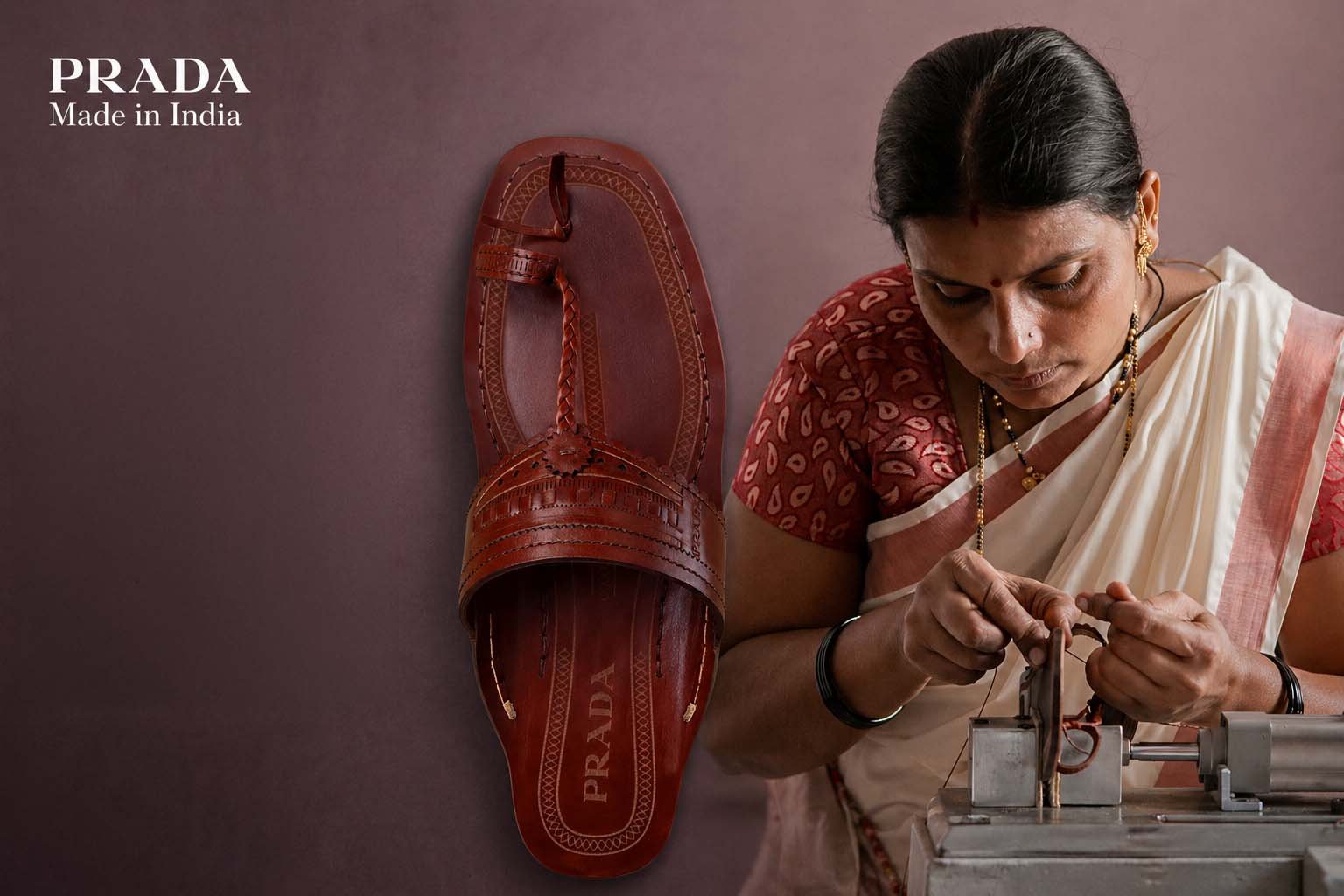
Prada Unveils Kolhapuri-Inspired Sandal Collection with Artisan Training Program
Prada has just launched a limited-edition sandal collection inspired by India’s iconic Kolhapuri chappals, paired with a groundbreaking artisan training program set to preserve this ancient craft. The announcement came April 27 from Bengaluru, signaling a major step in merging traditional Indian leatherwork with luxury global fashion.
The “Prada Made in India x Inspired by Kolhapuri Chappals” collection is now available at 40 Prada boutiques worldwide and online. Crafted by skilled artisans from Maharashtra and Karnataka—the historic hubs of Kolhapuri chappal production—the sandals combine age-old handcrafting techniques with Prada’s signature modern design and premium materials.
This launch marks an urgent move by Prada to sustain a historic craft under threat by mass production and changing consumer tastes. Beyond the commercial release, Prada announced a fully funded, three-year training program aimed at training 180 artisans from eight traditional Kolhapuri-producing districts. The program offers structured six-month modules covering design, technical skills, and market strategies.
Reviving a Heritage Craft With Global Backing
The initiative is a collaboration with government-backed bodies including Sant Rohidas Leather Industries, Charmakar Development Corporation, and Dr Babu Jagjivan Ram Leather Industries Development Corporation Ltd. These organizations work to promote and safeguard India’s leather industry and traditional skills.
Training is provided in partnership with leading fashion institutes such as the National Institute of Fashion Technology and the Karnataka Institute of Leather & Fashion Technology. Artisans will gain hands-on experience with advanced tools and materials, learning to adapt their craft to evolving global market demands.
“Education is a fundamental pillar in ensuring that craftsmanship remains a living practice,” said Lorenzo Bertelli, Prada Group’s Head of Corporate Social Responsibility. “This program translates a shared cultural dialogue into concrete learning and growth opportunities.”
Bertelli emphasized that structured education will not only preserve centuries-old knowledge but also strengthen local artisan communities, enabling them to innovate and compete in the luxury fashion space.
Why This Matters to US and Ohio Readers Now
Prada’s initiative signals a growing global trend in luxury brands investing in heritage crafts—a movement with potential ripple effects in global supply chains and artisan economies. For US consumers and fashion enthusiasts, it promises access to products that respect and revitalize ancient traditions.
As sustainability and ethical production continue to shape consumer preferences in Ohio and nationwide, Prada’s model represents how luxury brands can blend cultural preservation with commercial innovation. The project’s emphasis on education and market adaptation may inspire similar artisan support efforts across different crafts worldwide, including in the US.
The rollout is ongoing: Prada’s sandals are available now worldwide, while artisan training will continue for the next three years, charting a path for luxury fashion that is socially responsible and globally inclusive.
Looking Ahead
Watch for updates on how trained artisans impact future collections and whether Prada’s model sparks new collaborations linking global luxury brands with traditional crafts. The initiative highlights a vital intersection of culture, commerce, and community empowerment—driving fashion narratives into 2026 and beyond.
Prada’s Kolhapuri project delivers not just footwear but a timely message: preserving cultural heritage through innovation and education is a powerful formula for sustaining craftsmanship worldwide.