San Diego State’s men’s basketball program is grappling with an unprecedented player exodus worth an estimated $9 million to $10 million amid soaring college basketball payrolls, a trend reshaping the sport nationwide.
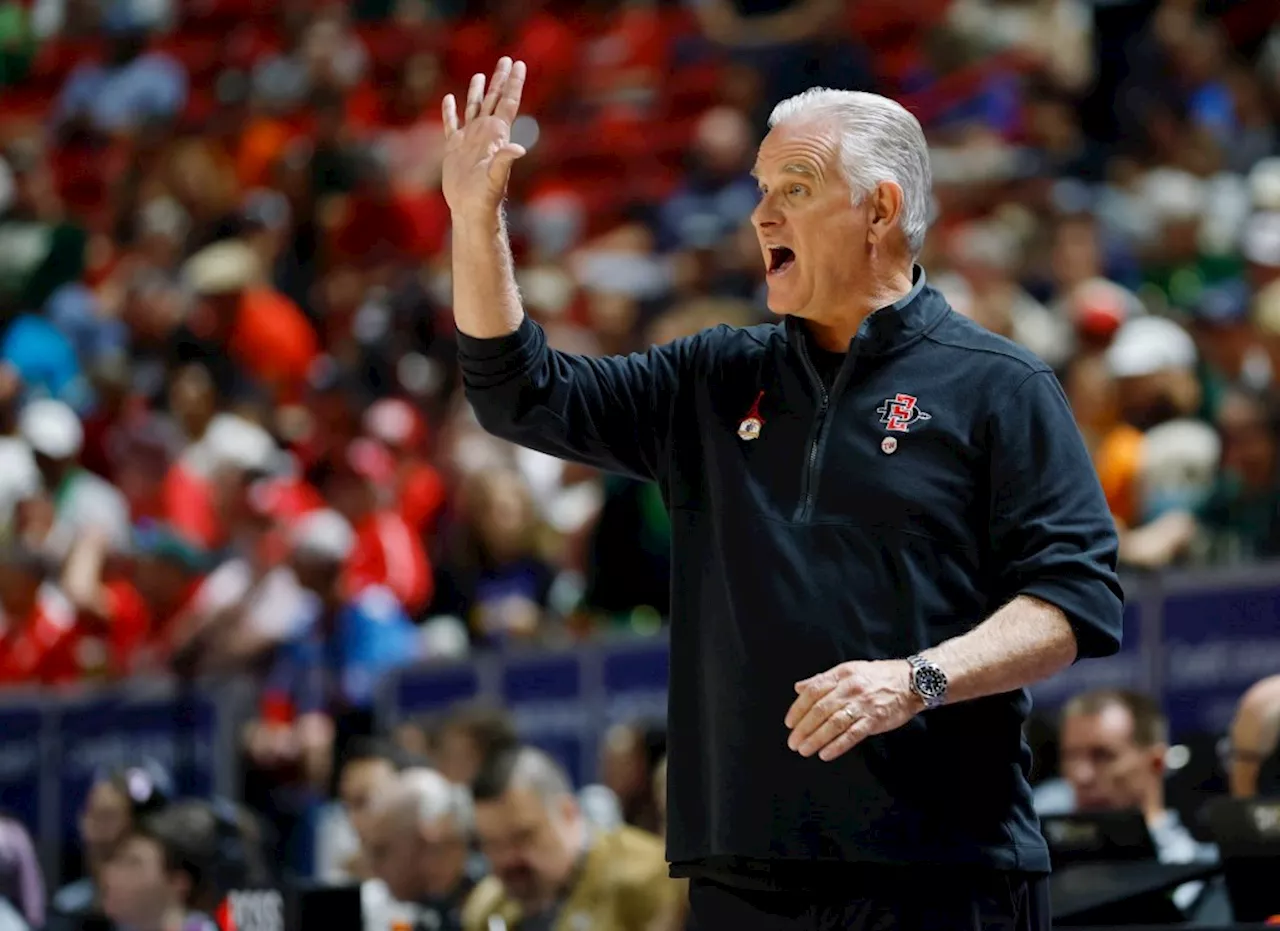
Aztecs head coach Brian Dutcher confirmed the team was caught in the middle of a widening financial divide as power conference programs aggressively outspend mid-majors to secure top talent via the transfer portal. In a recent spring transfer wave, six SDSU players left for power conferences, with combined NIL and revenue-sharing deals amounting to nearly double the Aztecs’ entire annual roster budget.
“There’s a lot of money available out there,” Dutcher said after watching players like Kyle Evans and Jurian Dixon bypass what once would have been obvious landing spots at San Diego State in favor of Atlantic Coast Conference programs like North Carolina State and Virginia. “Power conference schools have more money than anybody. That’s just the reality of college basketball now.”
Power Conferences Drive Massive Payroll Growth
College basketball payrolls are exploding. This season, at least 20 to 25 programs are expected to top $20 million in player compensation, largely driven by NIL and expanded revenue sharing. Every current Sweet 16 school carries budgets north of $10 million, setting a new standard that mid-major programs like SDSU struggle to match.
Analytics expert Evan Miyakawa notes transfer market spending has surged over 35% in just a year, with insiders pegging starting player prices at $1.5 million to $3 million-plus depending on talent level. Mid-majors are increasingly “bleeding top 20% talent upward while absorbing below-average players in return,” accelerating competitive disparities.
SDSU’s Shift: From Transfer Magnet to Undervalued Talent Hunter
In a dramatic reversal, San Diego State has seen only one power conference player transfer in the last four years—Reese Dixon-Waters from USC in 2023—while losing 11 to power programs. The Aztecs once welcomed 26 power conference transfers over 23 years but now must mine overlooked prospects from unconventional pipelines, including international pros and overlooked domestic players.
Among their newest recruits for the 2026-27 season, SDSU signed a 6-foot-11 center recovering from knee surgery wanting to return home, an overlooked guard who carved a path from Division III, and two European pros including Italy’s David Torresani, a speedy point guard and under-20 European champion.
Dutcher emphasized the need to “do more with less,” trusting deep scouting and player development instead of competing dollar-for-dollar with power conferences. “We will continue to find players who have upside, work ethic, and fit our culture,” he said, promising fans a competitive team despite financial realities.
NIL Growth Offers Some Relief but Not Enough
The MESA Foundation, SDSU’s NIL collective, saw its budget balloon from $350,000 at its 2022 launch to a projected $4 million to $5 million next season. However, even this doubling pales next to power conferences’ multi-million dollar player paydays, forcing the Aztecs to strategic recruiting within stringent fiscal limits amid an athletic department reportedly facing eight-figure annual deficits.
A High-Stakes Chemistry Test Ahead
With only four players returning from last year’s rotation and a nonconference schedule loaded with national powerhouses, the Aztecs face a daunting challenge assembling a cohesive unit by November tipoff. Dutcher remains cautiously optimistic, noting the team’s evolving identity and recruiting pivots represent adaptability in a fractured college basketball landscape.
Brian Dutcher: “I’ve dealt with every era of basketball changes… I’m embracing it, I’m good at it, and I will put a team together that Aztec fans will be proud of.”
For Ohio and U.S. college basketball fans, SDSU’s struggle is a stark example of the widening gap between the financial haves and have-nots in the sport. As power conferences leverage richer TV contracts and boosted NIL markets, programs like San Diego State become laboratories in innovation, resilience, and finding gems in unexpected places.
The landscape is changing fast. This season’s transfer portal battles and skyrocketing payrolls signal a new era—and for mid-majors, survival means rethinking every aspect of roster building and wallet size.