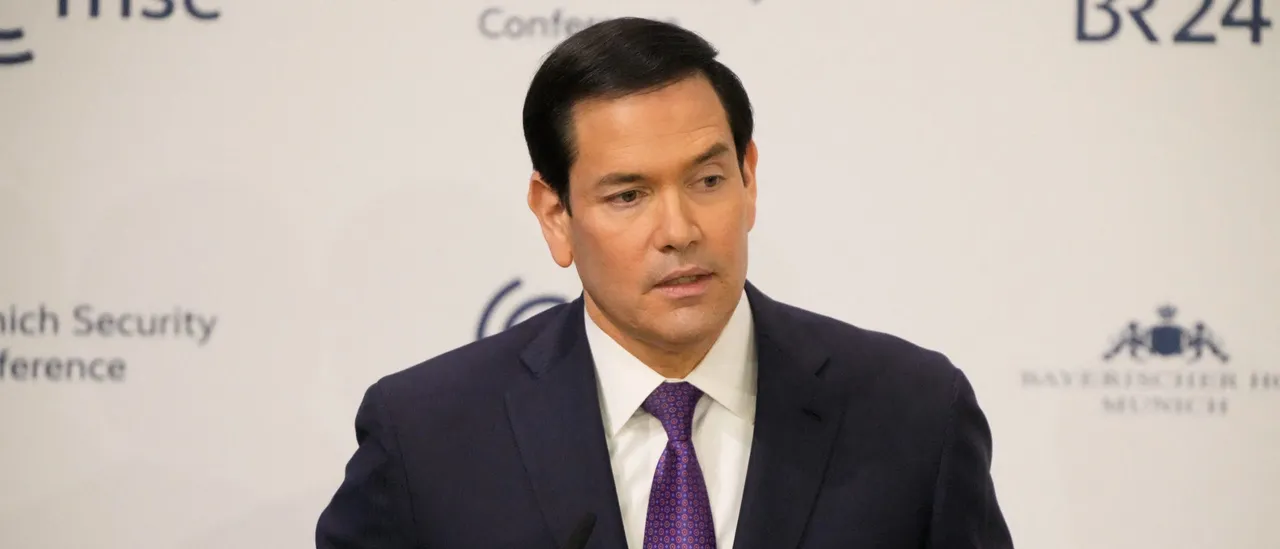
At the recent Munich Security Conference, United States Secretary of State Marco Rubio called for an end to Europe’s regulatory overreach that he argues undermines free speech and hinders American innovation. Addressing European leaders, Rubio emphasized the urgent need to protect the foundational values that unite the West, warning against a trend of excessive bureaucracy that could threaten both economic and civil liberties.
Rubio’s remarks came in the context of growing concerns regarding European regulations, which he described as a “regulatory war” against free expression and innovation. He criticized the European Union for its increasingly stringent measures, stating, “We in America have no interest in being polite and orderly caretakers of the West’s managed decline.” This statement underscores a rising sentiment among American lawmakers who view Europe’s regulatory landscape as detrimental not only to its own economy but also to transatlantic relations.
The evidence of this regulatory burden is becoming increasingly apparent. Earlier this month, a Berlin court mandated that Elon Musk’s platform X disclose data related to Hungarian elections, illustrating how European authorities are using “disinformation” laws to infringe upon free expression. This court ruling follows a significant €120 million fine imposed on X under the Digital Services Act (DSA), a vague regulatory framework that grants Brussels extensive powers to oversee online speech and content.
In light of these developments, Donald Trump criticized the EU’s fine, labeling it “nasty” and emphasizing that such actions do not align with the principles of freedom. The implications of these regulations extend beyond mere financial penalties; they signal a shift in Europe’s role from a partner in promoting liberty to a potential exporter of authoritarianism disguised as consumer protection.
The complexities of Europe’s regulatory framework, including initiatives like the Corporate Sustainability Due Diligence Directive (CS3D) and the Corporate Sustainability Reporting Directive (CSRD), present daunting challenges for businesses, particularly for small and medium-sized enterprises. The CS3D, for instance, imposes rigorous audits on companies operating in Europe to assess compliance with environmental and human rights standards. This creates a compliance burden that is often only manageable for larger corporations, leaving smaller enterprises to grapple with extensive paperwork and legal requirements.
Moreover, the Digital Markets Act (DMA) has emerged as a controversial measure that disproportionately affects American technology firms. Research from the Information Technology and Innovation Foundation indicates that compliance with the DMA costs U.S. tech companies over $1 billion annually. This expenditure diverts funds away from crucial investments in research and development, ultimately hindering innovation.
The situation escalated further in early 2025 when the EU levied a €500 million penalty against Apple under the DMA. Alongside this, investigations into cloud computing services are underway to determine whether further actions should be taken against major American cloud providers like Amazon Web Services. These regulatory measures not only impose financial burdens but also grant European regulators increased control over American companies, potentially stifling competition and innovation.
The DSA, which aims to combat illegal content and misinformation, is perhaps the most concerning regulation. It allows the European Commission to impose fines and exert control over online platforms, setting a precedent for stringent oversight that could affect global standards for free expression. In 2024 alone, EU fines on U.S. tech companies surpassed the total tax revenue generated from its own tech sector, highlighting a troubling shift in focus from fostering competitiveness to penalizing American firms.
These developments raise significant questions about the future of free speech in Europe. The same officials who advocate for democratic values are seen as dismantling the very freedoms they profess to uphold. With an increasing number of regulatory demands, these bureaucratic practices may extend beyond Europe, urging global platforms to conform to European speech standards.
In response, the U.S. State Department has initiated programs such as Freedom.gov, which assists European users in circumventing their government’s censorship. This initiative underscores America’s commitment to defending free expression, especially when allies seem to abandon these principles.
Rubio’s call for a renewed partnership based on shared values and mutual respect is timely. He articulated the need for Europe to reassess its regulatory approach, suggesting that a prosperous future depends on liberating businesses from excessive compliance requirements and fostering an environment conducive to innovation and free speech.
The path forward appears clear: the West must unite in defending both free markets and free expression. As conversations evolve at the highest levels, it remains essential for Europe to recognize the importance of these foundational principles. The future of transatlantic relations hinges on addressing these challenges collaboratively, ensuring that both regions can thrive in an increasingly interconnected world.