Choosing a tattoo involves significant psychological and physical commitment. The process begins with excitement but can quickly turn into anxiety, especially concerning the final appearance. Many individuals worry that their chosen text may not align with their vision, particularly with script and typography-based tattoos. Unlike static images, text tattoos are affected by flow, alignment, and legibility. Given that the human body is not a flat surface, a font that appears perfect on a computer screen can become distorted on skin.
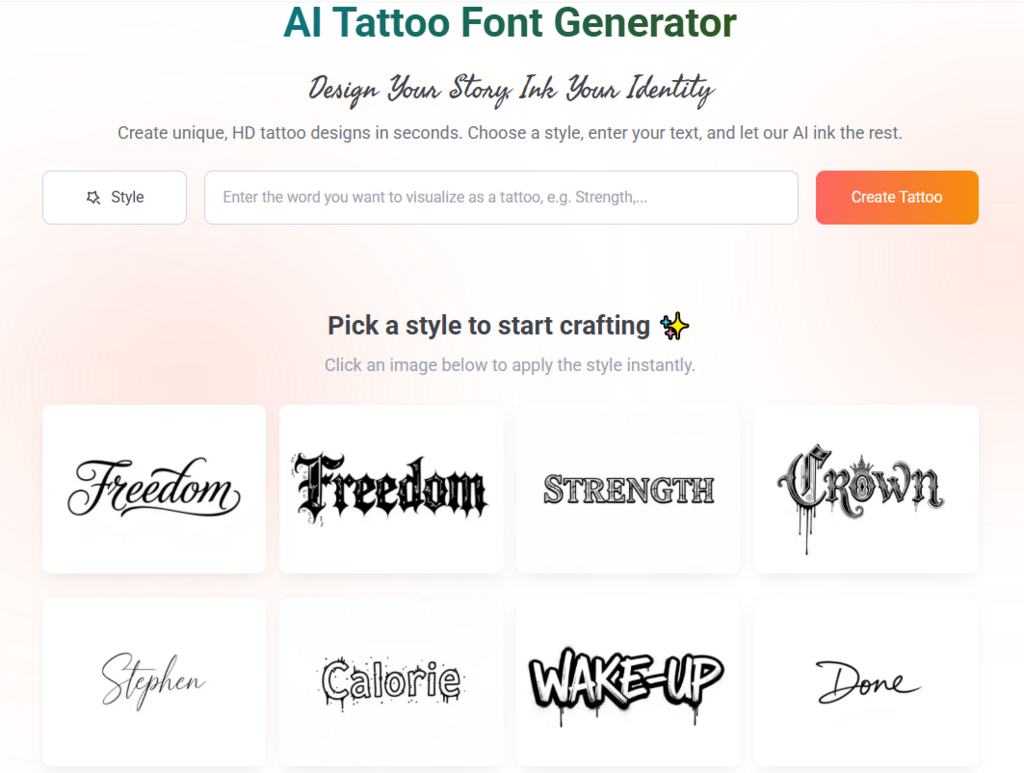
To mitigate this common concern, digital tools like tattoo font generators can serve as invaluable resources. This approach offers a way to “stress-test” designs virtually before committing to the needle. By adopting this method, individuals can transform their uncertainty into confidence, ensuring their tattoos are both aesthetically pleasing and legible.
Understanding the Shortcomings of Static Previews
Many people mistakenly base their tattoo font choice on two-dimensional previews. They often type their desired text into a word processor, print it out, and present it to the tattoo artist. This method fails to account for the complexities of human anatomy. The limitations of static previews frequently result in tattoos that appear “off-center” or “cramped.”
Utilizing a high-quality tattoo font generator can help avoid these pitfalls. Such generators provide the necessary high-resolution, transparent assets for a “virtual fitting.” By experimenting with various weights, slants, and decorative elements, users can adapt the font to match their body’s unique contours. For example, a geometric font may look awkward on a muscular shoulder, while an elongated script may complement the natural lines of the arm.
Conducting a Movement Simulation
A notable feature of tattoo font generators, such as those offered by Refont, is the ability to conduct a “movement simulation.” Since skin is elastic, the appearance of a tattoo can change significantly based on muscle movement. If a font is too delicate, skin stretching may cause the lines to appear faint or broken. Conversely, a bold font may compress when muscles contract, leading to a cluttered look.
To perform this simulation, follow these steps:
1. **Exporting the Design**: Use the generator to create your preferred text. Export the design as a high-resolution PNG with a transparent background. This step is crucial, as it allows users to overlay text onto real photos of their body without obstructions.
2. **Virtual Fitting**: Capture high-quality images of the tattoo area in various poses, such as flexed, relaxed, and rotated. Using an editing app, overlay the transparent PNG onto the skin.
3. **Analyzing Distortion**: Assess how the letters align across joints. For instance, does the “L” disappear into an elbow crease? If the text loses clarity during movement, adjustments may be necessary, such as altering letter spacing or selecting a more robust font.
This digital “anti-regret” protocol guarantees that the tattoo remains visually striking, regardless of body movement.
Implementing the EEAT Principles in Tattoo Design
When considering tattoo design, the principles of Experience, Expertise, Authoritativeness, and Trust (EEAT) play a vital role. Using a specialized tattoo font generator ensures informed decisions about ink placement and typography.
– **Expertise**: A dedicated generator understands the nuances of “ink spread” and “needle precision,” offering fonts that are viable for tattoo artists.
– **Experience**: By digitally “wearing” the tattoo, users can visualize how the design will look before it becomes permanent.
– **Authoritativeness**: Professional tools provide typographically sound designs, ensuring that curves and weights are visually appealing.
– **Trustworthiness**: When the final tattoo aligns with the original vision, trust is established.
Digital stress-testing represents the best way to ensure a satisfying tattoo experience.
Ensuring Long-Term Clarity and Legibility
It is essential to consider long-term clarity in tattoo design. Just as digital analysts evaluate “lifetime value,” individuals should assess tattoos for legibility over time. Fine-line scripts are currently trendy but can blur as skin ages.
While using the generator, perform a “Blur Test” by squinting at the screen. If letters merge into a single line when slightly blurred, they may be too close together. Adjust the spacing accordingly to create a design that maintains clarity and elegance for decades.
This proactive approach transforms the generator from a simple font list into a sophisticated design consultant. It enables a more informed dialogue with tattoo artists, allowing for precise discussions about spacing and weight adjustments.
Conclusion: Creating Confidence in Your Tattoo Choice
The journey to a perfect tattoo can be enhanced through digital preparation. With access to powerful tools like tattoo font generators, individuals no longer need to enter tattoo shops uncertain about their choices. By exporting designs, testing them on actual skin, and simulating body movements, the element of chance is significantly reduced.
Choosing a tattoo becomes less about hoping for the best and more about crafting a design that flows seamlessly with the body. By treating skin with the respect it deserves, individuals can ensure their tattoos are beautiful and meaningful, standing the test of time in every pose and from every angle.