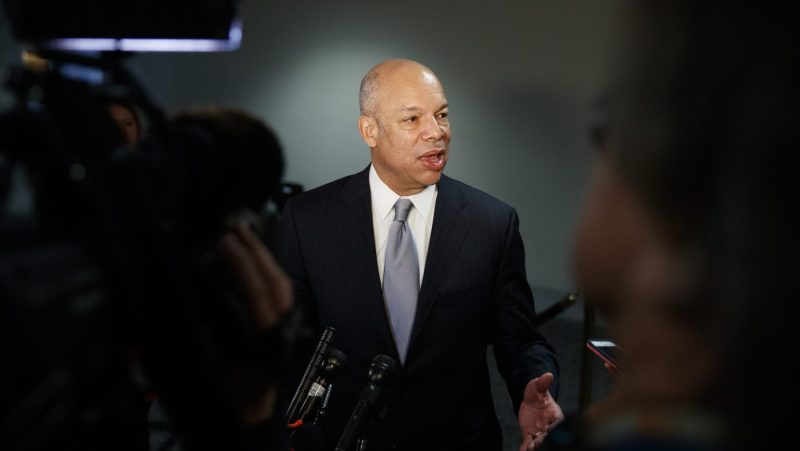
URGENT UPDATE: Former U.S. Secretary of Homeland Security, Jeh Johnson, has voiced serious concerns about the recruitment strategies being employed by U.S. Immigration and Customs Enforcement (ICE). In a striking commentary made earlier today, Johnson highlighted the troubling implications of their recent call to “Defend your culture,” suggesting it serves as a coded message linked to the controversial Great Replacement theory.
The former secretary’s remarks come as ICE intensifies its recruitment efforts. Johnson warns that such rhetoric risks appealing to individuals with extremist views. “What does that mean? I think that’s a dog whistle, basically, for ‘Let’s go after the great replacement,'” Johnson stated, raising urgent questions about the types of candidates being attracted to the agency.
The implications of this recruitment rhetoric are significant, particularly in light of ongoing national debates surrounding immigration and cultural identity in the United States. Johnson’s comments arrive amidst heightened scrutiny of ICE’s tactics and its impact on communities across the nation.
With a recruitment campaign that many see as divisive, ICE’s approach raises critical concerns about the future of immigration enforcement. This issue resonates deeply with communities who may feel targeted by such narratives, underscoring the emotional stakes involved.
The agency’s recruitment strategy has not only garnered attention for its potential to attract a controversial candidate pool but also for its timing. As discussions surrounding immigration policy heat up, Johnson’s warnings prompt a closer examination of the motivations behind ICE’s messaging.
As this story develops, observers are urged to keep an eye on ICE’s recruitment activities and any subsequent responses from officials. The impact of these strategies on community relations and public safety remains a top priority for many advocacy groups and concerned citizens.
Stay tuned for more updates as this story unfolds and as more voices weigh in on the implications of these recruitment tactics. The conversation surrounding immigration and cultural identity is more critical than ever, and the actions of ICE will undoubtedly shape the narrative moving forward.