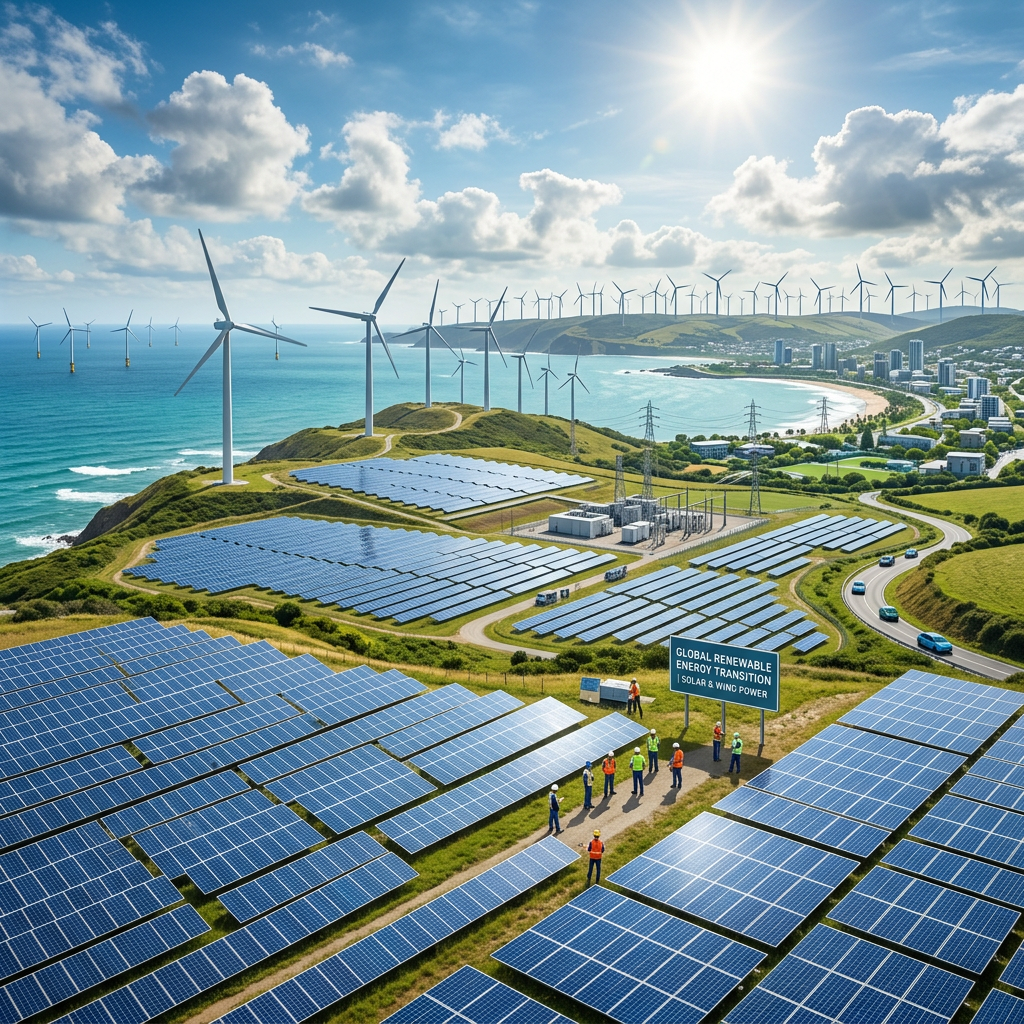
IRENA Calls for Rapid Renewable Energy Action to Combat Global Crisis
The International Renewable Energy Agency (IRENA) has issued a critical policy advisory urging countries worldwide to accelerate their transition to renewable energy to address the ongoing global energy crisis now destabilizing economies and key services.
With conflicts in the Middle East disrupting vital oil and gas supplies and causing steep price spikes, IRENA stresses that the quickest path to energy security and economic stability lies in a swift, comprehensive shift away from fossil fuels. The crisis is driving up costs for food, transportation, and heating — directly impacting millions of households across the United States and beyond.
Urgent Actions Needed Now, Over Months and Years
The report lays out immediate, medium-term, and long-term strategies governments must deploy. In the immediate term — covering the next six months — IRENA recommends prioritizing essential services such as healthcare and agriculture by rapidly installing small-scale renewable systems like solar PV and battery-powered mini-grids, particularly in remote and vulnerable areas of the globe. These systems reduce dangerous reliance on expensive diesel fuel and create resilience amid supply disruptions.
Governments are also urged to cut trade barriers on importing renewable equipment, like solar panels and batteries, and launch public campaigns promoting energy conservation to ease the impact on consumers right now.
Medium-Term Focus on Infrastructure and Clean Technologies
Between six and twelve months, IRENA calls for the formation of national task forces to secure stable funding for renewable projects and grid upgrades. Enhancing flexibility through expanded battery storage and smarter electricity demand management can smooth out energy supply volatility. The advisory also emphasizes expanding clean heating solutions — such as heat pumps and biogas — and fast-tracking approvals for electric vehicle (EV) charging infrastructure to support growing clean transport networks.
Building Long-Term Stability With Policy and Manufacturing
Over the next one-to-three years, the agency presses for clear, stable renewable energy policies designed to attract investment and boost domestic manufacturing of green technologies. Tying fossil fuel subsidies directly to companies’ progress on renewable energy targets will help accelerate decarbonization.
Renewables Are Already Cheaper Than Fossil Fuels
IRENA highlights a powerful economic case: by 2024, 91 percent of new renewable power projects were cheaper than fossil fuel alternatives. The cost of solar power has plunged by 87 percent since 2010, and battery storage costs have fallen an even more dramatic 93 percent. This historic drop makes renewables essential not only for environmental reasons but as a financial imperative for governments and consumers alike.
Global Leaders Best Positioned To Manage Crisis
Countries with high renewable energy adoption are faring far better in the current turmoil. The European Union has saved billions in fossil fuel expenses by ramping up solar and wind power. Spain and Portugal have significantly cut their gas dependence, moderating electricity price shocks.
China, with very low oil and gas reliance, is largely insulated from global fossil fuel price swings. In South Asia, Pakistan and India have expanded solar energy and electric cooking programs, easing the energy burden on millions of households.
Growth in electric vehicles (EVs) is another key resilience factor. China and Vietnam lead with rapid EV adoption, shielding consumers from rising fuel prices and reducing demand for imported oil.
What This Means for the US and Ohio
Though this report has a global focus, its lessons resonate strongly for the United States and states like Ohio. As energy prices continue to fluctuate worldwide, accelerating investment in renewable energy infrastructure, like solar installations and EV charging networks, will help stabilize costs and create cleaner jobs locally.
Ohio’s emerging clean energy sectors stand to benefit from policy clarity and expanded domestic manufacturing. Removing trade barriers could also lower costs and speed the deployment of renewable solutions within the state and across the country.
Looking Ahead
IRENA’s advisory is a call to action. The window to avert deeper shocks and secure affordable, reliable, and clean energy is narrow. Policymakers at federal, state, and local levels must adopt these urgent strategies immediately to protect their citizens and economies.
The Ohio Observer will continue tracking local and national energy developments as this situation unfolds. The global energy crisis underscores the strategic importance of renewable energy for the security and well-being of Ohio and the entire country.