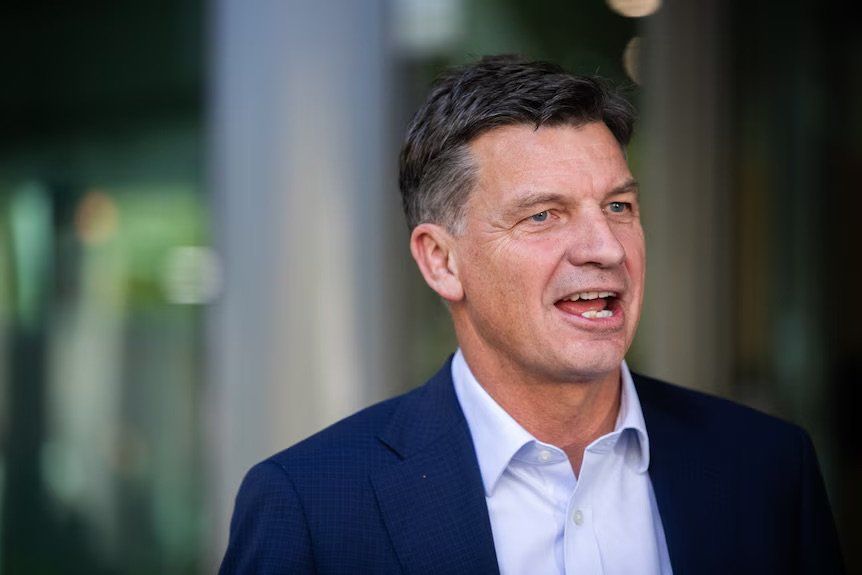
Opposition Leader Angus Taylor Calls Welcome to Country Ceremonies ‘Overused’ Amid Anzac Day Booing
Opposition Leader Angus Taylor ignited controversy this week, describing Welcome to Country ceremonies as “overused” just days after Aboriginal Elders were booed during Anzac Day commemorations in Melbourne, Sydney, and Perth. His remarks come amid a national backlash against the disruptions, drawing sharp criticism from politicians and Indigenous leaders alike.
Speaking on ABC Insiders on Sunday, Mr. Taylor condemned the booing but claimed he could “understand the frustration Australians feel about over-use” of the Welcome to Country ceremonies. “I feel that at times—often, actually. I think it is overused and as a result they are devalued,” he said. “I would like to see them used less and therefore not devalued, as I think they have been over time.”
Mr. Taylor further asserted that “it’s up to individual organising committees to decide whether they want to do it or not,” adding, “the general principle should be: let’s do this less and make it more special when it happens.” These combative remarks echo those from former Liberal leader Peter Dutton, who likened Welcome to Country ceremonies to political divides stirred by the controversial Voice referendum.
Welcome to Country ceremonies are traditional Indigenous acknowledgements that open many public events, recognizing the custodianship of Aboriginal and Torres Strait Islander peoples. However, Taylor and Dutton argue frequent use dilutes their importance, a view that has intensified an already sensitive debate following the Anzac Day disruptions.
Booing at Anzac Day Services Sparks National Outrage
On Anzac Day, numerous Aboriginal Elders were heckled and booed during Welcome to Country ceremonies at solemn memorial services celebrating Australian and allied military veterans.
At Melbourne’s Shrine of Remembrance, Bunurong Elder Mark Brown faced boos from the crowd. In Sydney, Ray Minniecon was interrupted during his Acknowledgment of Country, and in Perth, Whadjuk Noongar Elder and veteran Di Ryder was also targeted by hecklers during her address.
Stephen Barton, CEO of RSL WA, condemned the attacks, calling the booing “one of the most disgraceful things I have ever heard” and publicly thanking Aunty Di for her address on behalf of the veteran community.
Authorities revealed that in the days before the services, the anti-immigration group Fight for Australia used social media to mobilize supporters to attend and disrupt Welcome to Country ceremonies. A The Age report identified former members and associates of the now-disbanded National Socialist Network among the Melbourne disruptors.
Victorian Premier Jacinta Allan also denounced the disruptions, stating, “To break the stillness of Dawn Service is not just ugly behaviour towards our Aboriginal servicemen and women who defended this country — it disrespects everyone who fought for our freedoms.” She called politicizing Anzac Day “bastardry” and urged all leaders to condemn the behavior.
Indigenous Leaders Demand Accountability and Respect
Indigenous academic Marcia Langton condemned the booing, emphasizing the military contributions of Aboriginal and Torres Strait Islander men and women, including the 118 who served in the Australian Light Horse during WWI. Writing in The Guardian Australia, she called for those responsible for heckling to be banned from future events.
Langton described the actions as a malicious attempt “to snatch the sacred moment away” from Elders and those who honor them at dawn services, declaring the perpetrators “deserve more than contempt and a few words of rancour.”
Why This Matters to U.S. Readers
While these events unfold in Australia, they underscore broader global tensions surrounding Indigenous recognition, race relations, and national identity—topics of increasing relevancy in the United States. Indigenous acknowledgements and ceremonies are also common here during civic and military events, with ongoing debates about their role and significance.
The booing of Aboriginal Elders during solemn memorial events shocks not only Australians but raises questions about respect and reconciliation efforts worldwide, including Ohio’s diverse communities. As discussions about cultural recognition and inclusion intensify, political leaders’ comments like Taylor’s further inflame divisions.
What to Watch Next
With the 2026 election season approaching in Australia, politicians’ stances on Indigenous recognition, immigration, and national ceremonies are poised to dominate headlines. Taylor’s continued refusal to criticize far-right comments on immigration alongside his stance on Indigenous protocols signals these issues will remain deeply contentious.
U.S. audiences tracking Indigenous rights and political discourse globally should watch for further developments in Australia, especially as Indigenous leaders push for stronger protections and greater respect for their traditions—and as far-right groups escalate cultural conflicts.
The Ohio Observer will continue following these developments and their implications for Indigenous acknowledgment and social cohesion.