Scientists have just unveiled the largest-ever 3D map of the universe, charting an astonishing 47 million galaxies from our Milky Way to the distant cosmic era dubbed “cosmic noon.” This groundbreaking achievement offers an unprecedented glimpse at the vast structure of the cosmos and reshapes our understanding of matter distribution on a colossal scale.
Simultaneously, alarming new data confirms the Atlantic Meridional Overturning Circulation (AMOC) is edging dangerously close to a potential collapse, a shift that could trigger catastrophic global climate disruptions, experts warn. The AMOC—a vital ocean conveyor belt balancing temperatures and weather across the Atlantic and beyond—is showing signs of weakening at an unprecedented speed, raising urgent red flags for future climate stability across the United States, including Ohio’s own weather patterns.
Cosmic Breakthroughs and Life-Changing Missions
Meanwhile, NASA’s Artemis II crew has delivered an emotional update from space, describing the profound moment when Earth vanished from view during their mission, underscoring our planet’s fragile uniqueness. As they journey near the moon, stunning images taken from its far side are flooding in, including dramatic “Earthset” views and a total lunar eclipse visible only from space. These visuals promise to inspire awe and a renewed appreciation for our celestial neighborhood.
In a remarkable cosmic spectacle poised to affect US skywatchers, a newly opened giant hole in the sun’s atmosphere signals a surge in solar wind and charged particles. This event could produce vibrant Northern Lights visible from several US states, creating a rare opportunity for millions to witness the auroras closer to home than usual.
Hubble’s Stunning Return to the Trifid Nebula
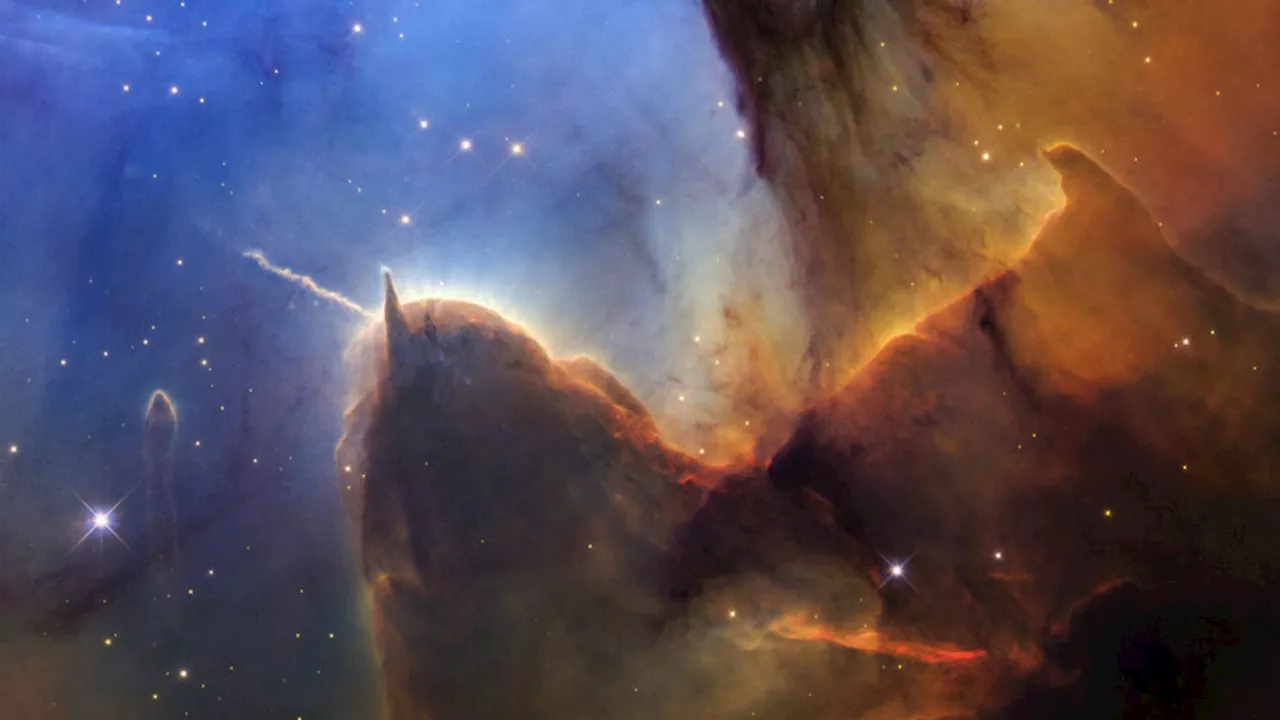
The Hubble Space Telescope continues to deliver dazzling revelations about star formation and cosmic evolution. Its recent revisit to the Trifid Nebula, located some 5,000 light-years away and nicknamed the “Cosmic Sea Lemon,” shows intricate, colorful ridges sculpted by young, massive stars. These glowing structures illuminate the intense interplay of stellar winds, ultraviolet radiation, and dust shaping the nebula over hundreds of thousands of years.
Scientists have even tracked a powerful jet erupting from a baby star in the nebula, estimating both its speed and the energy it blasts into its surroundings — vital clues in understanding star formation processes. Bright-orange stars scattered through the image mark mature stars that cleared their surroundings, while others remain cocooned within, preparing for eventual emergence millions of years from now.
Additionally, side-by-side Hubble images spanning 25 years reveal significant changes in the famed Crab Nebula, enabling astronomers to witness the dynamic aftermath of a supernova explosion with fresh clarity.
Beyond Space: Breakthroughs and Threats on Earth
Back on Earth, researchers have taken a giant leap in biotechnology by successfully creating artificial neurons. This advancement brings hope for revolutionary treatments targeting neurological disorders and integration of bioengineered systems with living tissue.
The ancient world has also yielded an unexpected treasure: an “Iliad” manuscript hidden inside an Egyptian mummy, offering new insights into literary and cultural exchanges millennia ago.
The battle against rare infectious threats continues with ongoing searches for effective treatments for brain-eating amoebas, deadly pathogens that, though uncommon, pose a life-threatening risk requiring urgent scientific attention.
What’s Next
This torrent of cosmic and earthly discoveries emphasizes humanity’s relentless quest for knowledge. Continuous data streams from telescopes like Hubble, coupled with rapid progress in climate, medical, and archaeological research, will keep unveiling new challenges and wonders.
For readers in Ohio and across the US, these breakthroughs matter now more than ever—reminding us of the fragility of our planet amid climate risks, inspiring curiosity about the universe we inhabit, and spotlighting the urgent need for scientific innovation.
Stay ahead of these fast-moving stories by following updates from trusted sources and signing up for science and technology newsletters to catch every breathtaking revelation as it happens.