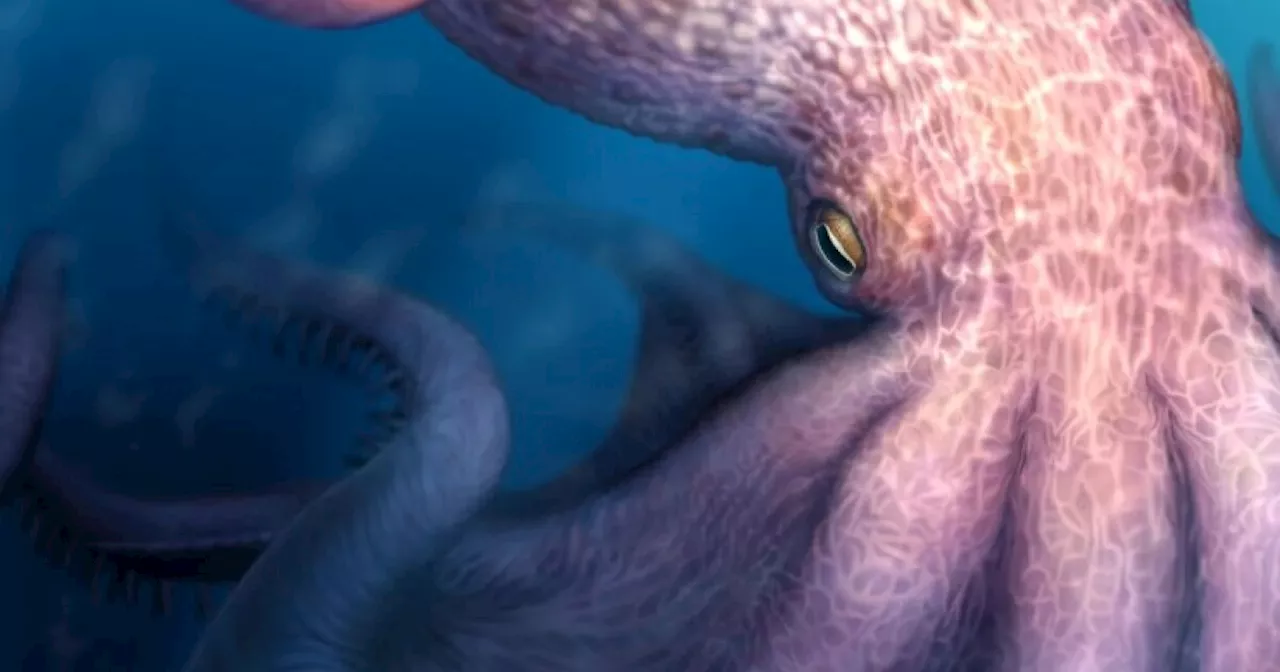
Colossal Octopus Fossils Unveiled After 100 Million Years
Scientists have made a stunning discovery deep in northern Japan: fossilized remains of giant octopuses dating back to the late Cretaceous period, some 100 million years ago. Using cutting-edge digital fossil-mining technology, researchers from Hokkaido University and Ruhr University Bochum extracted remarkably preserved octopus jaws locked inside ancient concretions on the seafloor, revealing creatures far larger than any modern octopus species.
These prehistoric octopuses, now dubbed the “real-life Kraken,” had jaws measuring bigger than ever previously found—suggesting these animals rivaled today’s apex marine predators. The study, led by paleontologist Iba and his colleague Mutterlose, estimates the body size of these creatures exceeded the already massive giant Pacific octopus, whose arms can span up to 20 feet.
Digital Fossil-Mining Unlocks Soft Tissue Secrets
The breakthrough came with a novel method called digital fossil-mining. Researchers sliced the rocks into incredibly thin layers, photographing every fossilized detail. Leveraging artificial intelligence, they created 3D reconstructions of octopus jaws—rare in fossil records due to octopuses’ predominantly soft tissue bodies.
“Octopus jaws are hard structures similar to bird beaks,” explained Mutterlose. “They consist of a shovel-shaped lower jaw and an upper jaw used to crush prey.” These jaws bear scratches and chips, evidence of an aggressive diet involving crustaceans like shrimp and lobsters with hard exoskeletons.
Unequal Jaw Wear Signals Advanced Intelligence
Detailed wear analysis revealed the right side of the jaws was more eroded than the left, suggesting early octopuses showed side preference while feeding—an indicator of a well-developed brain and early cognitive abilities.
“Some of the remarkable traits we see in modern octopuses, like intelligence and complex predation, may have already been emerging in these ancient giants,” said Iba.
The findings challenge previous assumptions about octopus evolution and paint a vivid picture of ancient oceans teeming with gigantic carnivores who may have preyed upon large and formidable animals.
Why This Discovery Matters Now
This discovery reshapes our understanding of prehistoric marine ecosystems in the late Cretaceous and the evolutionary history of cephalopods. It sheds light on evolutionary adaptations that led to the intelligence and predatory dominance modern octopuses exhibit today. For Ohioans and all Americans fascinated by the deep past, it’s a reminder of the ocean’s ancient mysteries still waiting to be uncovered.
As paleontologists continue to refine digital fossil-mining and AI tools, more hidden details of soft-bodied creatures may soon emerge, unlocking new chapters in Earth’s natural history.
Follow The Ohio Observer for ongoing coverage of this and other groundbreaking scientific discoveries.