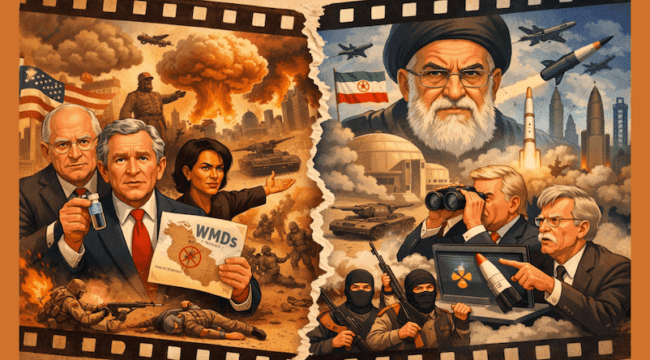
UPDATE: New reports reveal alarming parallels between U.S. war messaging surrounding Iran and the Iraq conflict of the early 2000s. Just as in October 2002, when two-thirds of Americans believed Saddam Hussein had weapons of mass destruction, current officials are claiming Iran is “a week away” from developing a nuclear bomb.
This situation comes at a critical time, with tensions escalating and military actions being considered. The implications are profound: a repeat of history could lead to significant loss of life, echoing the over 4,500 American soldiers and up to 1,000,000 Iraqis who died due to the Iraq War, which was based on false claims.
Critics are drawing attention to the similarities in the narratives being pushed by officials. In 2002, the U.S. government insisted that Saddam had ties to terrorism and was close to acquiring nuclear capabilities. Presently, the narrative surrounding Iran includes claims of decimated facilities and a pressing threat, yet questions arise: if facilities are indeed compromised, how is Iran still on the brink of nuclear capability?
The urgency is palpable. Reports indicate that U.S. military strategies are expanding to include not just nuclear sites, but also long-range missile arsenals and naval assets. This escalation raises concerns about mission creep, with experts warning that initial objectives may evolve into broader military engagements, reflecting a pattern seen in past conflicts.
In an environment where clarity is critical, the communication from the U.S. government appears fragmented. Different platforms are disseminating varying accounts of the military’s objectives, creating a fog of uncertainty that some fear may manipulate public perception and support for military action.
As Reuters highlighted, aides within the administration are reportedly debating how far the U.S. should escalate its military involvement. Such discussions during an ongoing conflict raise ethical questions about political motivations amidst warfare.
Political analysts contend that the U.S. political landscape incentivizes threat inflation. Statements about Iran’s capabilities are framed to evoke fear and urgency, aligning with historical precedents that have led to military action. Many citizens are urged to remember the lessons of the Iraq War, where misleading information was used to justify extensive military intervention.
The stakes are incredibly high, not only for U.S. servicemen and women but also for civilians in Iran and the broader Middle East. The potential for another drawn-out conflict looms large, with implications for international stability.
As tensions rise, the public must demand accountability and clarity from their leaders. The message is clear: before another costly military engagement, citizens should insist on comprehensive and honest assessments of the threats posed by foreign nations.
In a world where misinformation can lead to devastating consequences, history reminds us of the critical importance of skepticism and diligence in scrutinizing government narratives. As this situation develops, it is imperative to stay informed and engaged—our collective future may depend on it.