Activists accuse Odisha government of complicity in brutal attacks on Christians
A people’s tribunal of human rights activists has exposed alarming new evidence that the government of India’s eastern state Odisha is complicit in escalating violence against Christians, particularly among Dalit and indigenous tribal communities. The findings reveal that police forces and local officials have failed to protect targeted minorities, with some even collaborating with Hindu nationalist groups to enforce religious conversion and social exclusion.
Leading voices in the investigation include veteran journalist and activist John Dayal, political commentator Aakar Patel, activist Vidya Dinker, and renowned human rights advocate Harsh Mander. Their report, unveiled in early May 2026, details a chilling pattern of violent attacks, social boycotts, and systemic discrimination across multiple districts including the notorious Kandhamal and Keonjhar regions.
Police accused of forcing Christians to renounce faith under duress
According to the fact-finding team, law enforcement officials are actively partnering with Hindutva groups in orchestrated campaigns targeting Christian communities. John Dayal told UCA News that police often pressure pastors, priests, and worshippers into signing “compromise agreements” that demand an end to collective worship and the renunciation of Christianity.
“Police in several cases acted in concert with Hindu nationalist groups to pressure Christians into renouncing their faith,” Dayal said on May 6.
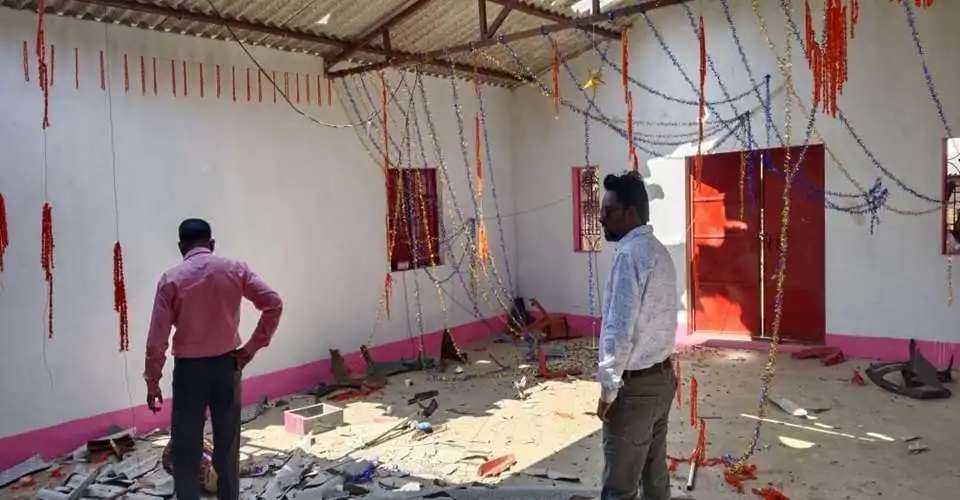
The report alleges that police routinely detain clergy on false charges of unlawful religious conversion, confining them in stations and jails as part of intimidation campaigns. Some victims have been physically assaulted, with incidents including tying victims to trees, beatings, forced expulsion from villages, and even attempts to burn people alive. There have also been reports of sexual violence targeting Christian women.
Social and economic exclusion amplifies suffering
The tribunal documents systematic harsh treatment beyond physical violence. Christians face social boycotts—ostracism from village life, denial of employment, and punitive fines imposed on anyone aiding or sheltering Christians. The economic marginalization compounds the crisis, stripping affected families of livelihoods and forcing many into dire poverty.
This marks a significant intensification of conflict in Odisha, which witnessed some of India’s worst anti-Christian violence previously in 1999 when Australian missionary Graham Staines and his sons were burned alive in Keonjhar district, and in 2008 during coordinated attacks in Kandhamal that killed hundreds and displaced tens of thousands.
Rights activists highlight “complete breakdown” in constitutional protections
The report strongly condemns Odisha’s government officials, from police to ministers, for their failure to uphold the law or protect vulnerable communities. It argues that “there is a complete breakdown in the constitutional machinery of the state in relation to its Christian minorities.”
Since the Hindu nationalist Bharatiya Janata Party (BJP) assumed power in June 2024, activist groups report that violence and persecution against Christians have only deepened. Experts warn that escalating religious intolerance in Odisha threatens broader democratic values and human rights in India.
Global implications and a call for urgent action
For readers in the United States and Ohio, this situation underscores ongoing risks to religious minorities worldwide amid rising nationalist movements. The complicity of state actors in suppressing religious freedom raises pressing concerns about the rule of law and minority protections in democratic nations.
The findings demand urgent international attention and pressure on Indian authorities to restore constitutional rights and protect all citizens regardless of faith. The activist team’s documentation provides critical first-hand evidence that human rights groups and global watchdogs should use to hold Odisha’s government accountable.
At a time when democracy and religious freedom face threats globally, this report from Odisha is a stark reminder that the fight to uphold fundamental human rights remains urgent and ongoing.