Rev. Adam Hamilton Signals Major Challenge in Kansas Senate Race
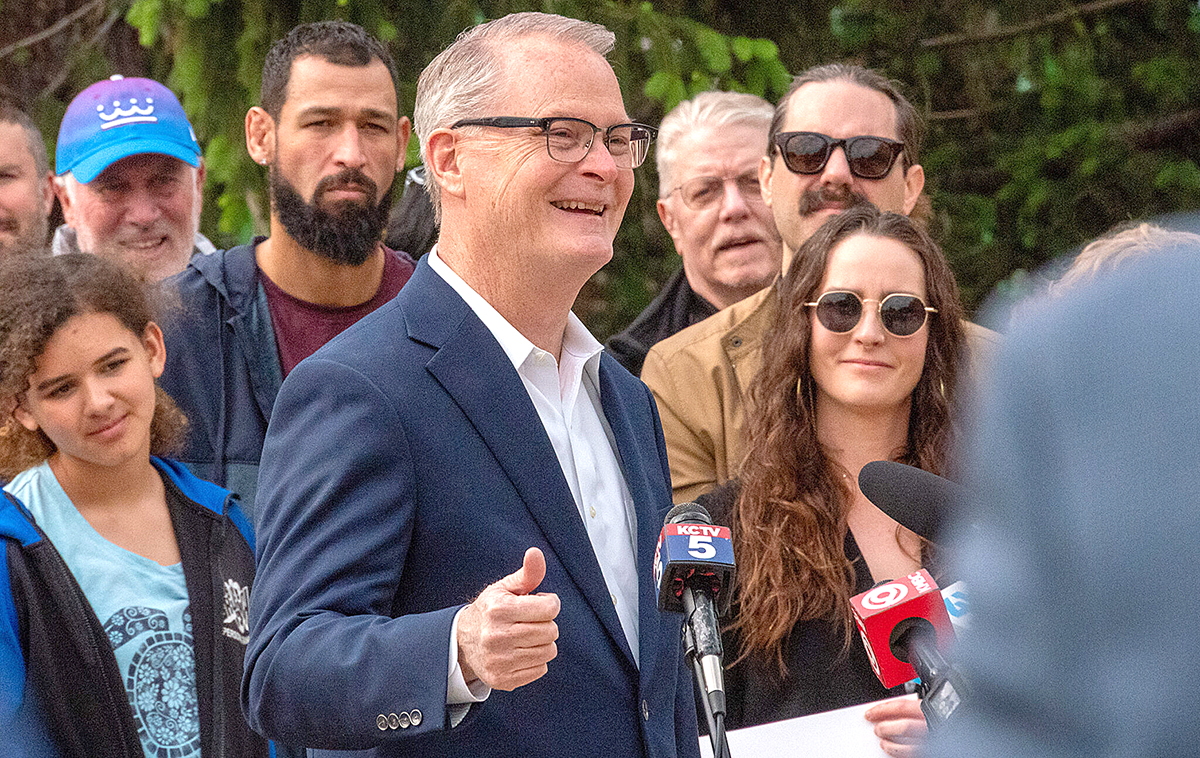
The race for the U.S. Senate in Kansas just took a dramatic turn as Rev. Adam Hamilton, senior pastor of the largest church in Kansas, officially announced his bid for the Democratic nomination to challenge incumbent Sen. Roger Marshall. Hamilton’s entry instantly reshapes the contest, positioning him as the front-runner in a crowded Democratic field ahead of the August primary.
Hamilton, known for founding and leading the United Methodist Church of the Resurrection in Leawood, a megachurch with 24,000 active members and a weekly attendance nearing 22,000, brings significant name recognition and community influence to this race. His decision to seek the Democratic nomination follows extensive outreach across 18 Kansas towns, where voters urged him to avoid an independent run that could hand an easy win to Marshall.
Hamilton’s Candidacy Exposes Vulnerabilities in Marshall’s Campaign
Senator Marshall, a reliable Republican in a historically conservative state, faces new headwinds as his close alignment with former President Donald Trump becomes a liability amid dropping approval ratings. A recent Reuters/Ipsos poll shows Trump’s approval at a record low of 34%, driven by voter frustration over the U.S.-Iran conflict and soaring fuel prices. Hamilton has already targeted these issues, emphasizing rising costs that hit Kansans hard:
“Kansans are paying 40% more for gasoline than last year, and our farmers and ranchers feel the pain deeply,” Hamilton stated during his launch.
Marshall’s image has also suffered locally. Revelations about his ownership of a $1.2 million Florida home contrasted with a modest Kansas residence, combined with a controversial town hall exit in Oakley, have fueled perceptions that he is out of touch with everyday Kansans.
Republican Challenge Reflects Raising Stakes in Senate Control
The Kansas GOP has responded aggressively. Last week, they filed a Federal Election Commission complaint accusing Hamilton of violating campaign finance rules by announcing his potential campaign in a February YouTube video aimed at church members. This move marks a rare invocation of church-state separation arguments by Republicans, ironically highlighting the longstanding ties between Kansas Republicans and conservative churches.
Despite Republican confidence, political analysts are recalibrating. The Senate balance remains razor-thin in Washington, where 270 to Win currently projects a narrow Republican edge with 50 seats leaning GOP, 46 favoring Democrats, and four tossups. Marshall’s seat remains “safe” but is now attracting more scrutiny following Hamilton’s announcement.
What’s Next?
Hamilton’s announcement signals a competitive primary and a potentially bruising general election. His moderate profile and strong community ties make him a formidable candidate capable of capitalizing on voter discontent over healthcare costs, economic pressures, and political transparency. Marshall will likely need to confront growing critiques and recalibrate his campaign strategy to defend his seat.
For Ohio and U.S. voters watching closely, this race adds tension to the broader battle for Senate control, where shifting political winds and candidate dynamics could reshape Washington for years to come.
The Ohio Observer will continue to follow developments in this pivotal race as they unfold.