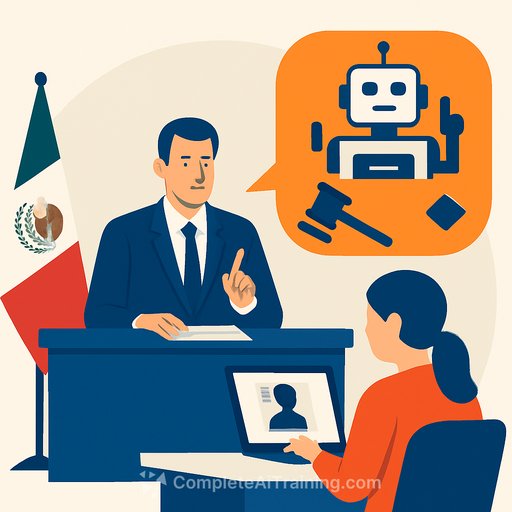
Mexico’s Senate is advancing urgent new rules to control how companies use artificial intelligence in the workplace, demanding transparency and stronger human oversight for AI-driven hiring, performance reviews, and employee monitoring.
The Senate proposal seeks to amend Mexico’s Federal Labor Law to close critical regulatory gaps as AI adoption surges across manufacturing, services, and administrative jobs. Under the plan, employers must disclose AI’s role in employment decisions and cannot rely solely on automated systems without human validation. Companies using AI for recruitment, task assignments, or monitoring must limit invasive surveillance and explain how algorithms function.
New AI Rules Force Transparency and Human Judgment
Introduced by Senator Pablo Angulo, the reform adds six provisions to Article 132 of the Federal Labor Law requiring employers to:
- Inform employees before implementing AI in workplace decisions
- Disclose general criteria behind AI algorithms
- Ensure all employment-impacting decisions include human review
- Prohibit disproportionate employee surveillance through AI tools
- Provide necessary AI-related technology without cost transfers to workers
The Ministry of Labor has 180 days to develop implementation guidelines. Companies would then have another 180 days—360 days total—to adapt internal policies and comply fully.
Why This Matters NOW
This legislative effort comes as AI reshapes millions of jobs globally. The OECD reports that around 27% of jobs in member countries are at risk of automation. Mexico faces particular challenges in traditionally AI-slow sectors like manufacturing and services, where most firms treat AI as an add-on rather than a core operational tool.
Despite 70% of Mexican workers believing AI improves productivity, adoption slows due to skill gaps and lack of formal training programs. Experts warn unchecked AI could subvert worker protections and complicate accountability.
Sofía Bentinck, CEO of Anchor Relocation Worldwide, warns,
“Organizations risk using AI as a substitute for human judgment. AI can process data but lacks context and responsibility.”
AI Governance Critical Amid Cybersecurity Risks
AI workplace rules intersect with escalating cybersecurity concerns. A 2026 Cybersecurity Ventures report highlights a global shortage of 35,000 CISOs managing digital risk across 359 million organizations. Small and medium enterprises frequently lack dedicated experts to govern AI and mitigate threats like ransomware and supply chain attacks. To close this gap, companies increasingly adopt hybrid models combining human oversight with AI-driven security tools.
Impact on Human Resources and Employers
If enacted, Mexico’s reform will deeply reshape HR practices, targeting automated recruitment, employee evaluations, and workforce analytics. HR leaders must now navigate strict transparency rules around AI decision-making and employee monitoring, ensuring human judgment remains central.
This change aligns Mexico with a growing global trend to regulate AI use in labor markets, extending protections beyond artists and content creators into core employment relations.
For US readers and Ohio companies watching AI’s rise, this move signals a cautionary approach emphasizing worker rights and accountability. As AI tools proliferate locally, understanding Mexico’s legislative framework offers insight into how sectors from manufacturing to services might regulate AI to better balance innovation and human oversight.
The Senate’s reform not only sets a precedent in Latin America but also contributes to a worldwide debate about how to integrate AI responsibly in workplaces—making clear that technological progress must include ethical boundaries.
Stay tuned as this legislation develops and Mexico’s Ministry of Labor defines enforcement rules in the coming months.