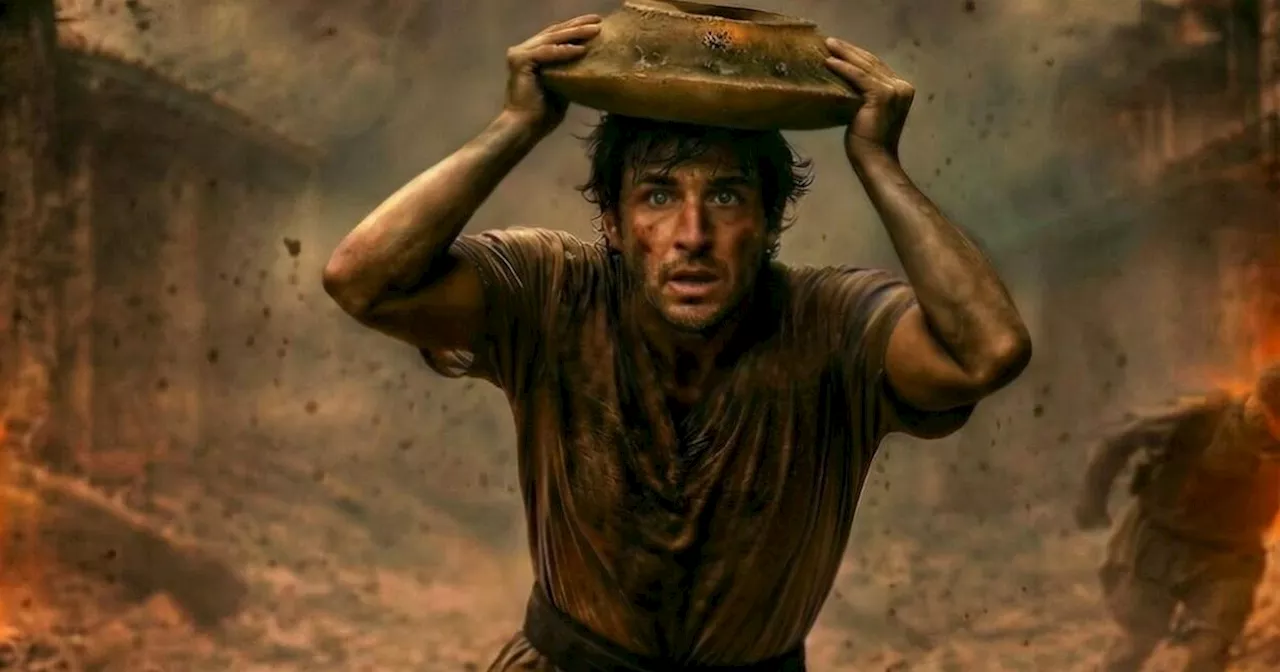
AI Technology Reveals Detailed Face of Pompeii Victim from Deadly Vesuvius Eruption
Pompeii Archaeological Park and the University of Padua have harnessed artificial intelligence to create a digital reconstruction of a victim caught fleeing the catastrophic AD 79 Mount Vesuvius eruption. This shocking breakthrough provides a vivid human connection to one of history’s deadliest natural disasters as the man’s face emerges for the first time nearly 2,000 years later.
Researchers uncovered the skeletal remains of an older man near the Porta Stabia necropolis, just outside the ancient city walls of Pompeii, now a UNESCO World Heritage site near Naples, Italy. The victim was found clutching a terracotta mortar, which experts interpret as an improvised shield to protect his head from falling lapilli—nails of volcanic debris that rained down during the eruption.
Accompanying personal items like an oil lamp, a small iron ring, and 10 bronze coins weave a poignant story of his final moments amid the chaos. Archaeologists say his death likely occurred early during the intense fall of volcanic material as he desperately tried to escape toward the coast.
AI Brings the Past to Life with Unprecedented Detail
This digital portrait marks the first major effort to use AI combined with photo-editing techniques to translate skeletal and archaeological data into a realistic human face. The project spearheaded by Pompeii’s park director Gabriel Zuchtriegel aims to renew the study of classical antiquity by making archaeological discoveries emotionally engaging and scientifically robust.
“The vastness of archaeological data is now such that only with the help of artificial intelligence will we be able to adequately protect and enhance them,” Zuchtriegel said. “If used well, AI can contribute to a renewal of classical studies.”
Italian Culture Minister Alessandro Giuli hailed the initiative as a game-changer, emphasizing the powerful new historical insights unlocked by innovative, careful methodologies. He stated, “Pompeii is perhaps the most prestigious place in the world for archaeological research where every new discovery illuminates enthusiastically the plot of ancient life.”
New Evidence Sheds Light on Pompeii’s Human Tragedy
The location of the victim near the city gates underscores the fact that many Pompeii residents died beyond the city walls while attempting to reach safety along the coast. The finding adds nuance to what is already a rich archaeological backdrop preserved by volcanic ash and pumice.
Last year, discoveries at Pompeii revealed signs of survivors reoccupying parts of the city after the eruption, suggesting some could not afford to abandon their homes and start anew elsewhere. This latest digital face reconstruction bolsters efforts to humanize and deepen public understanding of the disaster’s toll.
What’s Next for Pompeii Archaeology and Technology
With AI becoming an essential tool in handling the enormous and complex archaeological datasets, officials expect more breakthroughs that blend cutting-edge technology with ancient history. Research teams plan to expand this work to reconstruct additional individuals and uncover further vivid glimpses into daily life and tragic final moments of Pompeii’s citizens.
For Americans and especially Ohio residents interested in world history, this fusion of technology and archaeology highlights the power of AI worldwide—not just in tech hubs but as a pivotal tool unraveling human stories frozen in time. It also may spark more excitement and support for local museum efforts utilizing similar innovations.
The Ohio Observer will continue tracking developments as this AI-driven revolution in archaeology unfolds, offering readers immediate access to breakthroughs that connect us to the ancient past like never before.